
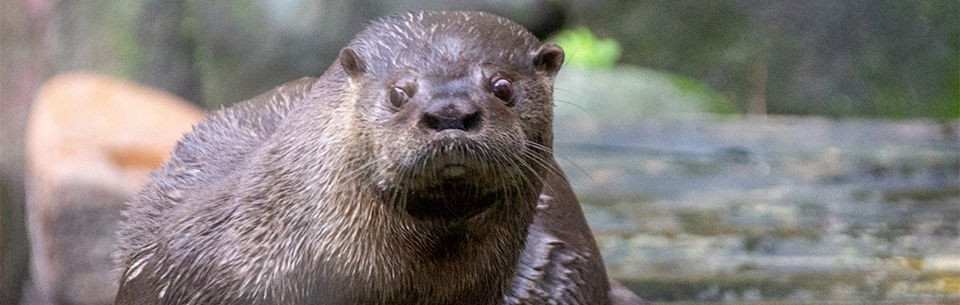
Image by Mike Peel, via Wikimedia Commons.

New Otter Species Confirmed—Evidence for Evolution or Creation?
What exactly is a species? Well, that depends on who you ask. Evolutionists struggle to define “species” because organisms won’t fit neatly into the classification system—and because species they think are separated by millions of years are often able to interbreed (for example, these amazing ant species I wrote about recently). So why are researchers saying they’ve confirmed a new otter species?
Scientists thought there was just one Neotropical river otter species living from northern Mexico to northern Argentina. But when they did genomic studies of 29 otters (some living east of the Andes Mountains and some west of the mountain chain), they discovered that the populations are genetically distinct. The method they used, called phylogenomics, “provides a reliable way to tell apart species that look almost the same. It works especially well for uncovering hidden diversity, where different species cannot be identified just by appearance.”
The otters look very similar on the outside, but genetically there is a great deal of variation between the populations. And that’s not surprising.
In other words, the otters look very similar on the outside, but genetically there is a great deal of variation between the populations. And that’s not surprising.
We know God created things “according to their kinds.” We expect to see great diversity within a kind, and we also expect to see new species still forming because the process doesn’t take millions of years—it happens quite quickly and would have happened exponentially more quickly immediately after the flood as the kinds from the ark spread around the world. The formation of new species has slowed over the millennia since the flood (about 4,350 years), but it still continues at a reduced rate.
Creationists are often accused of believing that God created each species exactly as it is today, but that’s not accurate. We believe God created animals as kinds, which is generally the level of family in our modern classification system (e.g., the family/kind Felidae includes all cats, such as lions, tigers, bobcats, house cats, etc.). There’s variety within kinds, and there are even different species (as we today use the term) now than at creation—but the boundary of change is at the level of kind. One kind will only produce more of its own kind.
And that’s exactly what we observe! Otters (part of the Mustelidae kind, along with weasels and badgers) will continue to produce more otters, and perhaps form new species, but they’ll never turn into something else.
You can learn more about a biblical model for the origin of species—and how observational science confirms this model—in Dr. Nathaniel Jeanson’s book Replacing Darwin.
Thanks for stopping by and thanks for praying,
Ken
This item was written with the assistance of AiG’s research team.
Support the creation/gospel message by donating or getting involved!

Answers in Genesis is an apologetics ministry, dedicated to helping Christians defend their faith and proclaim the good news of Jesus Christ.
- Customer Service 800.778.3390
- Available Monday–Friday | 9 AM–5 PM ET
- © 2026 Answers in Genesis