

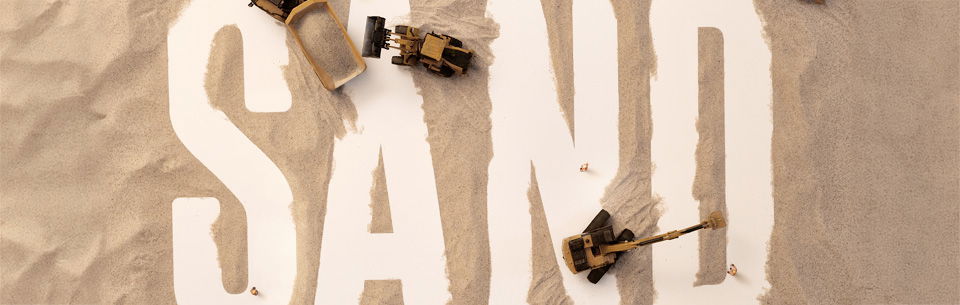
Sand—It Gets Everywhere
Sand can be a nuisance after a day at the beach. But a deep dig into our surroundings reveals that our world is built on sand.
Last summer, I took a mosaic-making class. With laser focus, I meticulously trimmed panes of multicolored glass into tiny squares and crescent moons, then polished the edges of the glass shapes against a grinding wheel. As tiny grains accrued at the base of the wheel, I found it ironic that my pane of glass had once been sand—and here I was, turning the edges back into sand! When the time came to mix up a batch of grout to smear over my creation, I researched the recipe for grout and discovered that sand is also one of grout’s main ingredients.
Beaches and sandcastles are the first things to materialize in my mind when I think of sand—not glass and grout. Was there more to these tiny grains than I realized?
Once I took stock of my immediate surroundings, it became clear that I encounter a lot of different sand products in a day. The mirror in my bathroom, the fiberglass insulation keeping my house warm, the light bulbs I casually flick on at night—all are made of melted silica sand.
When I got out of bed this morning, my feet hit the floor of my house which sits on a concrete foundation. Can you guess concrete’s primary ingredient? Sand! I then moseyed into the bathroom where I brushed my teeth with toothpaste, rubbed some lotion on my face, then applied my makeup. Another big shout-out to silica sand, the agent responsible for my products’ thickening, oil-absorbing, and moisture-locking properties.
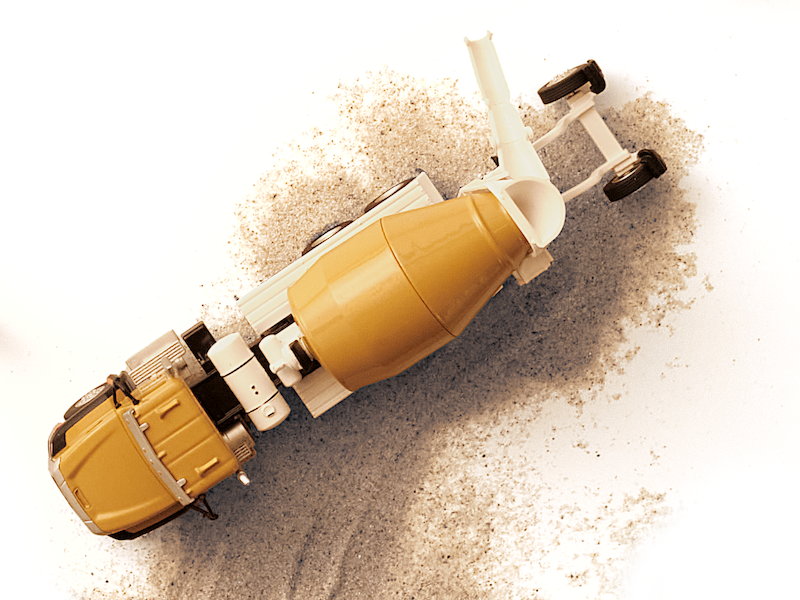
In the Mix
Concrete is made by mixing sand and aggregate rock (a blend of sand and gravel) with a binding agent such as cement and water.
While I drank orange juice from a glass cup (made of sand), I checked my email on my computer, which I discovered requires microchips made of high-grade silica sand to run. In fact, the very credit card I used to buy my computer is also powered by sand.
The lifestyle of most people in today’s modern societies would be impossible without the use of sand in some way, and God has graciously provided an abundance of sand across the surface of our planet. These grains slipping through our fingers have a much deeper story than what meets the eye. Let’s dig into one of the most abundant commodities on the planet and see where that story takes us.
What Is Sand?
Sand grains are not any one thing. Rather, they are a mixture of any combination of broken up rocks, minerals, corals, shells, and lava fragments. So what is the difference between, say, the tiny rocks used beneath the playground structure my kids like to climb and the sand that finds its way between my toes near the ocean? It’s all about grain size. At their thickest, sand grains are about the same width as the tip of a spaghetti noodle. To be classified as sand, grains must range between 0.06 mm to 2 mm. Grains any smaller than these measurements are called silt, while larger grains are called gravel.
-

The sugar-white sands of Florida beaches are mostly made of quartz or calcium carbonate—the stuff shells are made of.
-
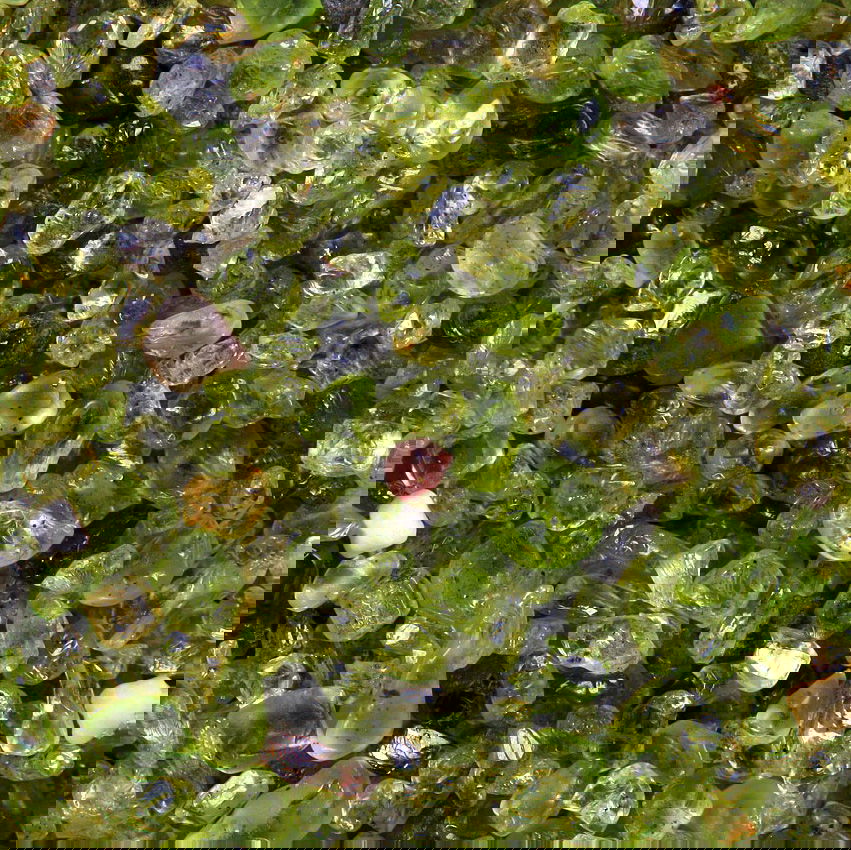
A beach on the Big Island of Hawaii features green sand thanks to a mineral called olivine. Photo by Siim Sepp (CC BY-SA 3.0)
-
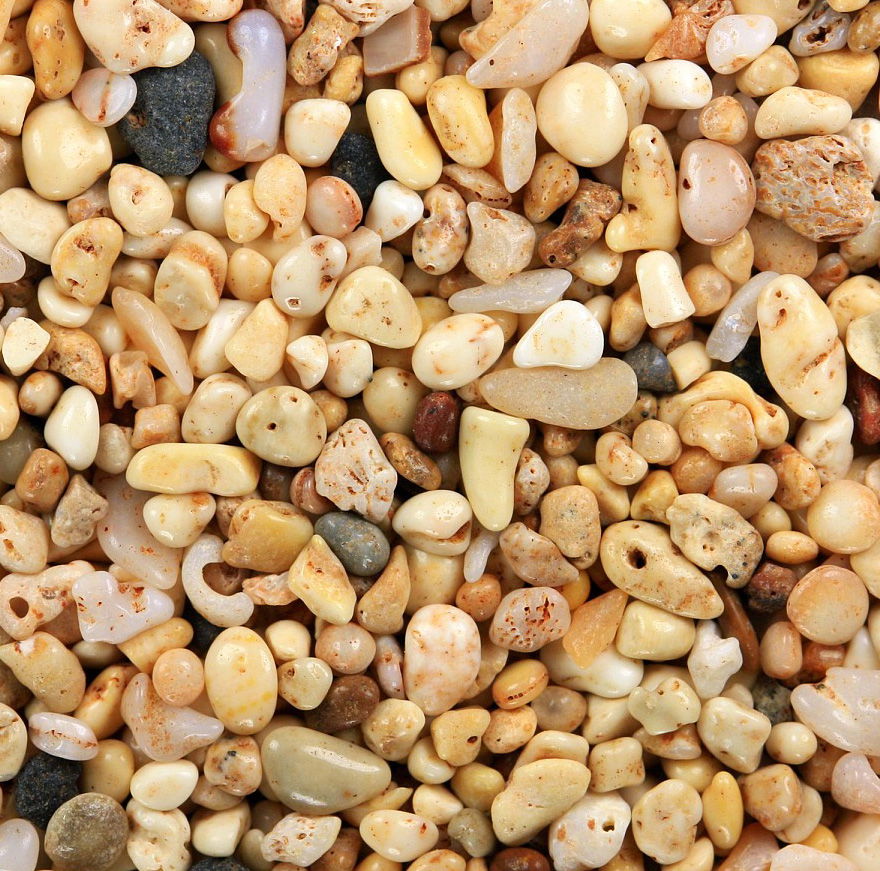
The world’s seven pink beaches blush with red coral mixed with white sand. Photo by Siim Sepp (CC BY-SA 3.0)
-
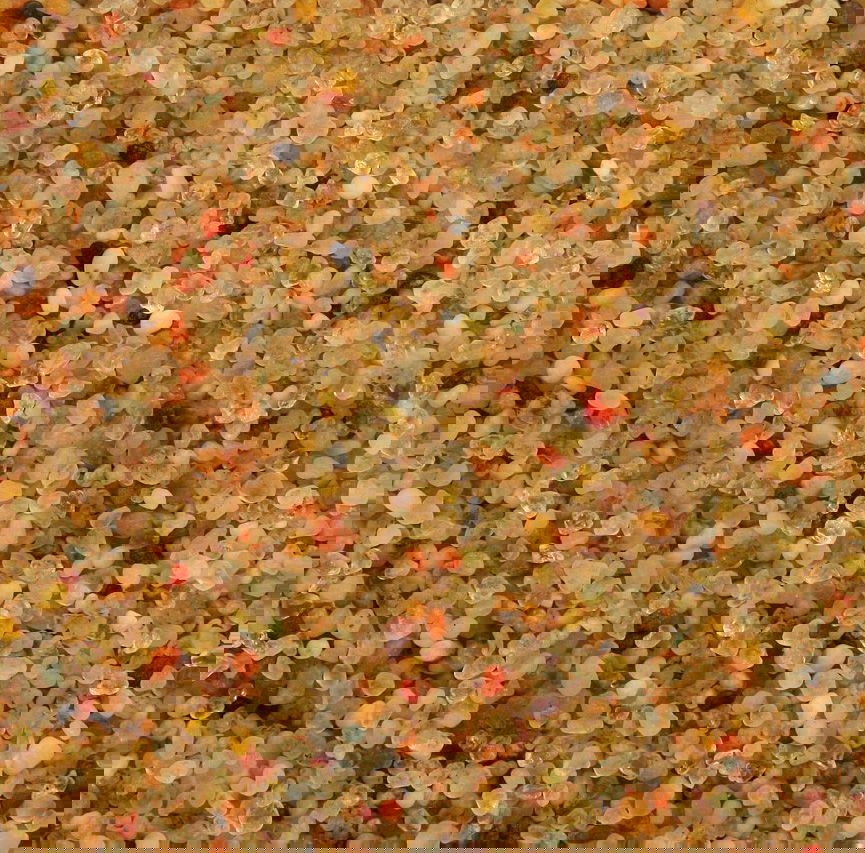
Orange beaches have a dose of iron mixed with the white sand. Photo by Siim Sepp (CC BY-SA 3.0)
-
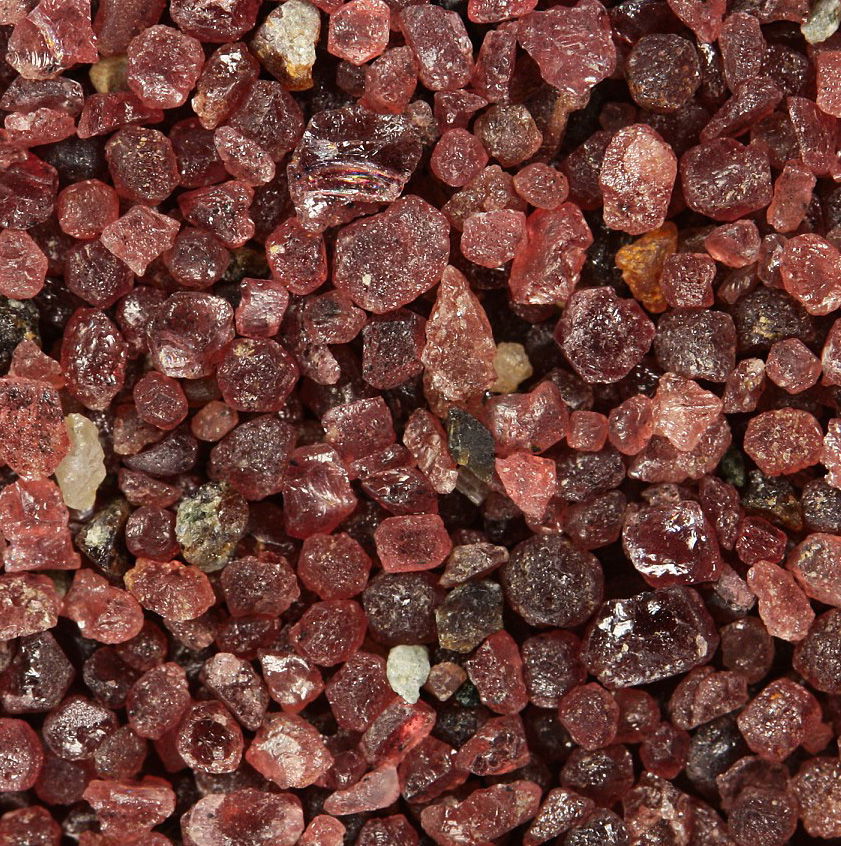
Pfeiffer Beach in California features sand which appears purple when white quartz grains mix with garnet particles. Photo by Siim Sepp (CC BY-SA 3.0)
-
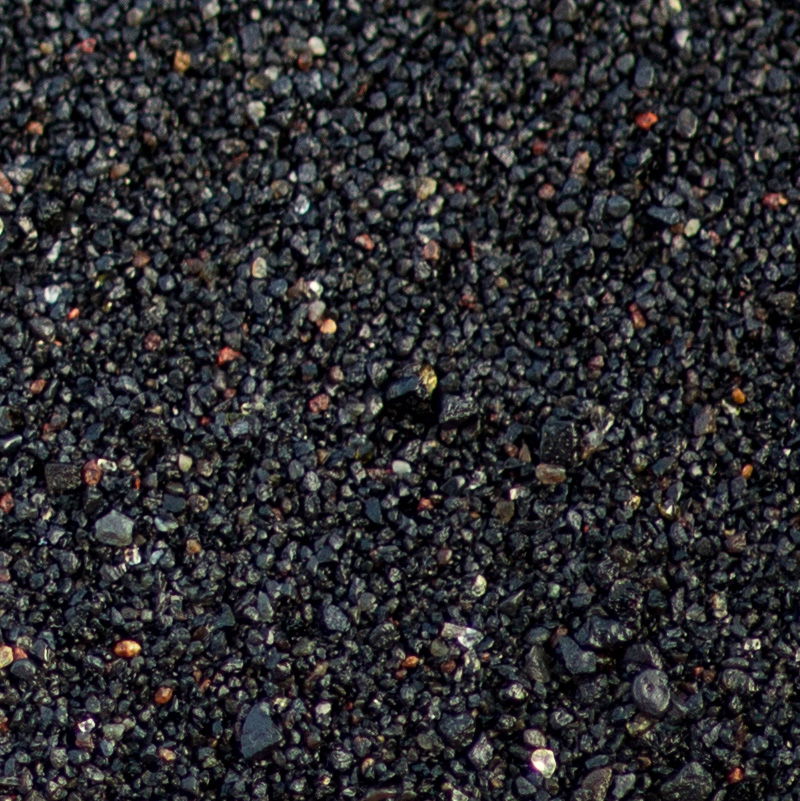
Black sand in Iceland formed from broken-down volcanic rock.
Where Did It Come From?
All sand is the broken-up leftovers of preexisting rocks and natural materials that have weathered and disintegrated. But why do we have so much sand all over the planet? Secular models suggest the origin of sand is the gradual erosional processes taking place over vast quantities of time.
At a 2019 roundtable event in Geneva, Switzerland, experts recognized that a large hurdle facing scientists and government officials is a lack of understanding of how sand is produced and how it moves from place to place in relation to earth’s processes. But when we turn to Genesis 6–9, we find the major source of earth’s sand. Rather than rocks breaking-up over the course of billions of years, most sand-creating forces would have occurred during the biblical flood only about 4,300 years ago.
During the global event, as rifts burst open and tectonic plates shifted, the earth became inundated with water. Catastrophic erosion took place, filling the swirling waters with sediments composed of pulverized rock grains, minerals, and organic materials, such as shells, bones, and corals. These sediments trapped and buried billions of land, air, and sea creatures. Then, the immense pressure of the stacked sediment layers compacted the sediments together, and chemicals from the trapped waters cemented the grains together in a process called lithification. As the sediments hardened, the trapped creatures fossilized, and the world’s sandstone rock layers were born.
After 150 days of inundation, the floodwaters began to surge into reshaped ocean basins and newly formed deep-water trenches. As the waters drained and receded—a process that took over half a year—they would have eroded the newly lithified sediments at a spectacular rate, the likes of which will never be witnessed again.1 The flowing waters would have carried these re-eroded sediments toward new coastlines, depositing sand in riverbeds along the way, then draining offshore. Ocean currents then redistributed the grains along the coastlines to form beaches.
Flood of Colors
The receding floodwaters would have eroded local rocks and minerals, which is why some beaches are composed of unique minerals that make for isolated color profiles.
God, in his infinite wisdom and perfect goodness, placed the sandy shores exactly where he wanted them (Jeremiah 5:22). Today, the world’s beaches act as giant sandbags, helping mitigate further erosion by providing a buffer between the land and ocean. Besides making beautiful vacation destinations, beaches also provide habitats for various species of plants and animals, and they help regulate the temperature of soil.
A History of Discovery
After the global flood, sand’s story had just begun. Many ancient cultures developed methods for turning those ubiquitous sand grains into glass. As I pored through online museum displays and artifact documents, I felt giddy with discovery. Some of the earliest glass artifacts ever found were roughly 4,000-year-old beads discovered in ancient Mesopotamia and Egypt. Only a few centuries later, the Egyptians were building royal glassmaking workshops to produce molded glassware for cosmetics as well as bars of glass to trade with neighboring peoples. Imagine! Bars of glass used as currency!
Around 100 BC, Syrian craftsmen living in the areas now known as Israel, Iran, Palestine, and Lebanon discovered the art of glassblowing, which opened a whole new world of vessel options for trade. Glass-blown vessels were transported to all areas of the Roman Empire and into the Far East to hold a variety of oils, liquids, and tinctures.
Then, during the fifteenth-century Renaissance, Italians came up with a process for turning sand into transparent glass. This technology paved the way for many scientific breakthroughs. With lenses made of highly polished, melted sand, our microscopes and telescopes have allowed us to understand more of the universe God designed.
Without sand, we wouldn’t have knowledge of the tiny bacteria hiding in the nooks and crannies of the physical world, nor of some of the largest and brightest celestial bodies burning through space. Microscopes have allowed us to be good stewards in improving human life with the knowledge we have gleaned from the discovery of diseases, genetics, forensics—the list goes on and on. At the same time, orbiting telescopes transmit pictures back to earth of blazing galaxies, towering clouds of interstellar dust, and stars millions of times more luminous than our own sun.
Sand Today
With the advent of modern industrialization around the turn of the twentieth century, people began using sand for manufacturing on a much larger scale. Rather than being used as a primarily artistic or scientific medium, sand became the building blocks of modern structures. Concrete foundations, cinder blocks, driveways, roads, glass windows, solar panels—the mass use of sand in manufacturing gave rise to suburban neighborhoods and the “concrete jungles” of the cities.
Concrete accounts for about half of all man-made things on the planet.
Recently, a team at the Weizmann Institute of Science in Israel attempted to calculate the weight of all human-made objects on earth.2 Their calculations reveal that concrete accounts for about half of all man-made things on the planet. We need sand for school buildings, hospitals, high rises, parking ramps, freeway systems, dams, bridges, and airport tarmacs—all the things that help us “fill the earth,” as God commanded (Genesis 1:28).
Sand is also the nexus of advancements in the technology industry. It’s how I set dentist appointments, text friends for coffee dates, and conduct granular research on sand. That’s because the most common mineral found in sand is quartz.
Quartz is comprised of two of the most abundant elements on the earth’s crust: oxygen and silicon. In the lab, engineers take sand grains made of 99% pure quartz, and they extract the silicon to create the microchips found in almost all modern technology. Whether we are using smartphones, laptops, advanced medical equipment, or aerospace technology, sand is the driving force behind the brains of these technological devices.
Quartz can survive much greater erosional forces than many other minerals because it’s durable and won’t dissolve in water. This explains why the floodwaters broke quartz grains down in size but didn’t chemically obliterate them. God knew we would need loads of this powerhouse mineral.
Granular Accounting
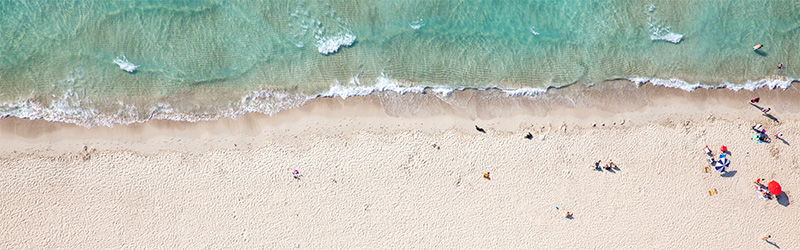
Do you recall the astonishing moment in Scripture when God told Abraham that he would bless him with offspring as numerous as the sand on the seashore (Genesis 22:17)? Is it even possible to calculate the grains contained within our planet’s beaches and deserts?
Well, researchers have tried. And the results of those number-crunching sessions are an estimated seven quintillion grains of sand (that’s a seven followed by 18 zeros!).3 This incredibly rough estimate doesn’t even include the amount of sand sitting under the water!4
Seven quintillion is a brain-freezing number—and that’s the point. Almost all biblical references to sand use it as a metaphor for incomprehensibility: descendants, treasure, armies, food, wisdom. It is impossible for our finite minds to comprehend quantities this large, but not impossible for an infinite God. He keeps track of the numbers that seem impossible to us—the hairs on our heads, stars in the heavens, and the tears we’ve cried (Matthew 10:30; Genesis 15:5; Psalm 8:3, 56:8).
Speaking of Loads . . .
Other than air and water, humans use sand more than any other raw material on the planet.5 It is estimated that the US population alone used over 1 billion tons of sand in 2023. That much sand could cover the entire state of Alaska in a layer almost seven feet (2 m) thick!6
This incredible demand makes sand a valuable commodity. Because sin entered the world after Adam’s fall, humans can quickly cross the line from stewards to abusers.
If you enter “sand crimes” in a search engine, multiple articles will appear in relation to illegal sand mining activity. Much of sand mining goes unregulated, leading to the rise of organized groups who illegally procure sand to sell on the black market. These groups, known as sand mafias, have been known to move sand by the truckload. They have become infamous for resorting to bribery, violence, and intimidation—sometimes even securing powerful backing for their criminal activities.7 According to estimates by The Global Financial Integrity Ranking in 2020, illegal sand trade is the third largest crime after drug trafficking and counterfeiting.8
When procured irresponsibly, sand-stripping from beaches and riverbeds can cause serious environmental consequences, such as habitat damage for wildlife, unnatural erosion, and ecosystem depletion. Local populations can also be affected by illegal sand mining as towns become susceptible to increased pollution, loss of tourism, and flooding.9
Imagine living near a river. If sand mafias began illegally hauling away sand in the night, their actions could deteriorate local air quality by stirring up silica dust, which can affect respiratory diseases. They might also release trapped contaminants which could spread and affect populations downstream. Also, if the river you live near was a touted tourist destination whose scenic sand started disappearing in the night, how do you think that would affect your town’s visitor reviews? Add in the additional concern for flash floods, and suddenly you have a potentially life-threatening, multifaceted problem. These concerns especially plague poverty-stricken or politically unstable areas, where sand mafias can work largely unimpeded.10
Sand in Civilizations
Not all sand is equal—mineral makeup, size, and grain edges all play a part in determining which types of sand are suited for different tasks and functions. When picturing the different types of sand used for industrial purposes, I visualize them piled into three main “workforce” piles, each with its own specialties and skill sets.
- Construction sand is the engineering force in the sand world—it gets the heavy jobs done! Construction sand is found in almost every country and used in a whole host of industrial applications. Mainly made up of quartz, construction sand may also contain a variety of other mineral grains. Construction sand and cement (a binding agent) form the concrete our neighborhoods and cities rely on so heavily. Construction sand is also used in other construction materials, such as bricks, plaster, and roofing shingles.
- Marine sand is the contract employee task force. Unlike construction sand, marine sand rests on the ocean floor near the coast. To be used, marine sand must have all its salt washed off; otherwise, it can corrode metal in a building project, such as the rebar used in foundations for large structures. This special contract workforce is usually called in when there is a specific “land reclamation” project afoot, such as coastal rebuilding or the formation of artificial man-made islands. Dredging ships pull marine sand from the ocean floor and propel the sand through the air to their job sites in a process called rainbowing.
- Silica sand (also known as “industrial sand and gravel”) is the CEO force of the sand world. Silica sand can be found virtually everywhere on earth but is less widespread than construction sand. Composed of quartz grains containing at least 95% silica, this sand is utilized in a wide variety of specialized applications, including glassmaking, water filtration, and the manufacturing of fiber-optic cables.
Sand at Scale
Sand grains range between 2 mm to 0.06 mm. Smaller grains are called silt and larger grains are called gravel.

Sand Casting
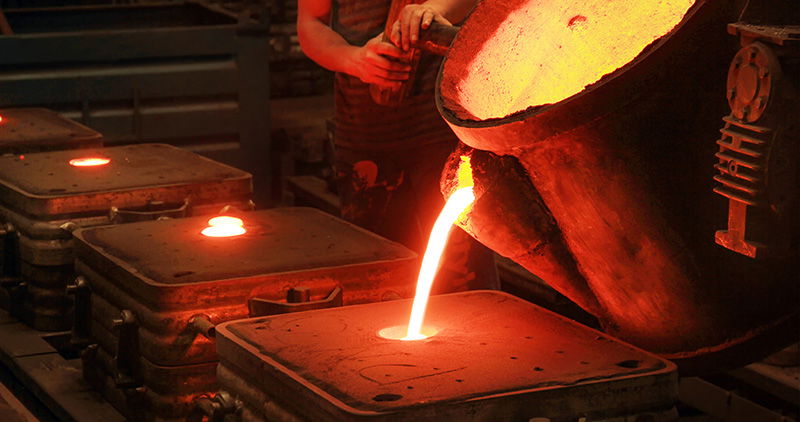
While sand isn’t directly used as an ingredient in metal manufacturing, foundries use a sand casting method, which pours molten metal into a mold made of compacted sand. The doors on your car, your bike frame, lamp stands, cookware, and metal appliances may have all been cast in sand molds.
Sand Stewards
Though scientists have no way of knowing how much sand remains available to us, some fear that if left unchecked, our growing need for sand might cause our supply to run short for projects in the future. Are there solutions? How can we be good stewards of the natural resources God has blessed us with? Some environmental groups, scientists, and government agencies have started researching potential alternatives to sand and ways to employ sand recycling.
One potential alternative is using microplastics in concrete production, which could help reduce the need for mining coastal sands for construction.11 Also, some have suggested developing more lightweight structures or using timber frames for more buildings in the future.12
Sand recycling could include reusing concrete from demolished construction sites by grinding it up and using it for beach nourishment. Glass can also be recycled and reused endlessly, with no loss in quality. (Glass sand mixed with asphalt has been dubbed “glasphalt.”) Ground up glass can also be used in coastal restoration and landscaping, to fill disaster relief sandbags, and even used as an alternative to road salt (when ground to 4 mm granules with rounded edges, glass helps car tires grip the road). And really, who doesn’t want a little more sparkle in their lives? Also, as of this year, Brooklyn, New York, is piloting new asphalt made from 50% recycled materials.
As stewards of this earth that God has given us, we must try to balance development with responsibility, especially when it comes to protecting our fellow image bearers. We must wisely develop the world without living in fear of calamity, trusting in the God who keeps count of every grain of sand. But in this world, we’ll never have perfect balance. All creation groans for the day it will be released from sin. Jesus told us that he will return one day to deliver his creation from corruption. While we wait, we are called to build our lives on the Rock of salvation—Jesus and his Word (Psalm 18:2). Sand will weather and crumble, but the firm foundation of Christ and his gift of salvation will last for eternity.
What About Desert?
Why not use the vast piles of desert sand around the world? Due to wind erosion and sand dune movement, most of the desert sand has lost its hard, flat edges. The roundedness of desert sand grains is not ideal for construction because they don’t “interlock” the same way other sands do (think of the difference between creating a structure with marbles vs. interlocking bricks). However, some researchers are looking into new processing methods which may increase the viability of desert sand in the future.13 In the meantime, rivers, lakes, sandstone quarries, and seashores continue to be the most-used sources of sand in construction and industry.
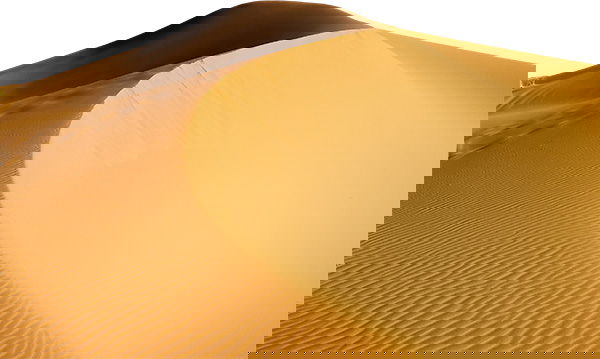
Every year, winds blow over 100 million tons of dust from the Sahara Desert. That’s the weight of about 1,000 cargo ships!
The sand dunes in the Namib Desert can reach up to 1,300 feet (396 m)—that’s taller than the Empire State Building!
earned a degree in biblical studies from the University of Northwestern and holds her MAT from Hamline University. She is a contract writer for Answers Bible Curriculum and resides with her family in Minneapolis.
Answers Magazine
January–March 2025

Wildlife is moving into big cites. How are these creatures adapting?
Browse IssueFootnotes
- Terry Mortenson and John Morris, “The Key to the Age of the Earth,” Answers Magazine, April–June 2007, last featured October 13, 2008, https://answersingenesis.org/age-of-the-earth/the-key-to-the-age-of-the-earth/.
- Emily Elhacham et al., “Global Human-Made Mass Exceeds All Living Biomass,” Nature 588, (December 9, 2020): 442–444, https://www.nature.com/articles/s41586-020-3010-5.epdf?sharing_token=KhvBuVv7OAfRykSyVEQKz9RgN0jAjWel9jnR3ZoTv0MLvUZ1C0L35yEQYHf_pwmiKx-xqIzWDg-_bH8WmUJdQnNv2FBeLpjXLE14XdyNPGeZrup1Y-L73MIm3Bzi9Kr2RVAHNANz81hNXCX0tNGvjh_Ug46I5-9USVaK0JtnLgzBgsPhKFVW1ObMdAJ51ICZQo6eirydEE9_1A2PJNuubg%3D%3D&tracking_referrer=www.bbc.com, [See table on page 13 of the pdf].
- Robert Krulwich, “Which Is Greater, the Number of Sand Grains on Earth or Stars in the Sky?,” NPR, September 17, 2012, https://www.npr.org/sections/krulwich/2012/09/17/161096233/which-is-greater-the-number-of-sand-grains-on-earth-or-stars-in-the-sky.
- Robert Krulwich, “Which Is Greater?”
- Bruno Venditti, “Mapped: Crushed Stone, Sand, and Gravel Production in the U.S.” Elements, March 14, 2023, https://elements.visualcapitalist.com/mapped-crushed-stone-sand-and-gravel-production-in-the-u-s/.
- Vince Beiser, The World in a Grain (New York: Riverhead Books, 2018), 5.
- David A. Taylor, “Inside the Crime Rings Trafficking Sand,” Scientific American, February 1, 2024, https://www.scientificamerican.com/article/sand-mafias-are-plundering-the-earth/.
- Taylor, “Inside the Crime Rings.”
- Nelson Rangel-Buitrago and William Neal, “The Unsustainable Harvest of Coastal Sands,” Science 382, no. 6675 (December 7, 2023): 1116–1118, https://www.science.org/doi/10.1126/science.adj9593.
- UNEP 2019, “Sand and Sustainability: Finding New Solutions for Environmental Governance of Global Sand Resources,” February 2019, https://unepgrid.ch/storage/app/media/legacy/89/Sand_and_sustainability_UNEP_2019.pdf.
- Rangel-Buitrago and Neal, “Unsustainable Harvest of Coastal Sands.”
- Adam Vaughan, “We Are Running Out of Sand and Global Demand Could Soar 45% by 2060,” New Scientist, March 24, 2022, https://www.newscientist.com/article/2313170-we-are-running-out-of-sand-and-global-demand-could-soar-45-by-2060/.
- Holliday, “From Beach to Building: How Sand Is Transforming Modern Architecture,” Holliday Sand and Stone, May 28, 2024, https://hollidaysand.com/insights/from-beach-to-building-how-sand-is-transforming-modern-architecture/.

Support the creation/gospel message by donating or getting involved!

Answers in Genesis is an apologetics ministry, dedicated to helping Christians defend their faith and proclaim the good news of Jesus Christ.
- Customer Service 800.778.3390
- Available Monday–Friday | 9 AM–5 PM ET
- © 2026 Answers in Genesis