
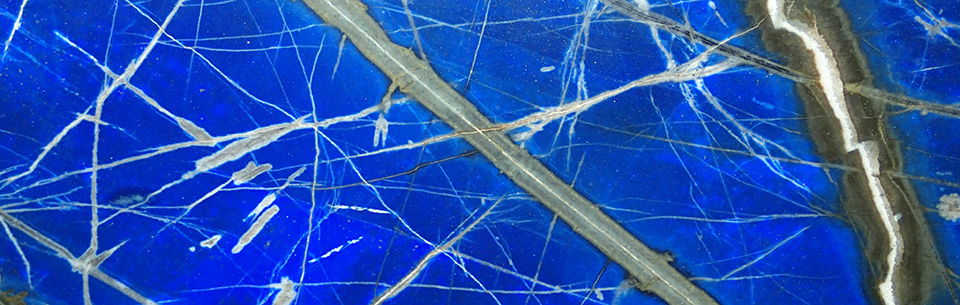
James St. John, CC BY 2.0, via Wikimedia Commons
Lapis Lazuli—The Forgotten Heavenly Gemstone
What is lapis lazuli, and how was it formed?
On the breastplate the high priest was to wear, God instructed:
You shall set in it four rows of stones. A row of sardius, topaz, and carbuncle shall be the first row; and the second row an emerald, a sapphire [Hebrew—lapis lazuli1], and a diamond; and the third row a jacinth, an agate, and an amethyst; and the fourth row a beryl, an onyx, and a jasper. They shall be set in gold filigree.” (Exodus 28:17–20)
God, our Creator, must love gemstones because He created them with their captivating, exquisite beauty. But why were these gemstones chosen for the high priest’s breastplate?
God made a prophecy about Lucifer, the “anointed guardian cherub,” before Lucifer was filled with pride that led to his downfall, all prior to his temptation of Eve:
Thus says the Lord God: . . . “You were in Eden, the garden of God; every precious stone was your covering, sardius, topaz, and diamond, beryl, onyx and jasper, sapphire [Hebrew—lapis lazuli], emerald, and carbuncle; and crafted in gold were your settings and your engravings. (Ezekiel 28:12–13)
Then in the description of the new Jerusalem we are told this:
The foundations of the city were adorned with every kind of jewel. The first was jasper, the second sapphire [Greek—lapis lazuli], the third agate, the fourth emerald, the fifth onyx, the sixth carnelian, the seventh chrysotile, the eighth beryl, the ninth topaz, the tenth chrysoprase, the eleventh jacinth, the twelfth amethyst.” (Revelation 21:19–20)
These same gemstones were present in the heavenly garden of God where Lucifer dwelled before he rebelled and was cast out of heaven. And these same gemstones are in the heavenly new Jerusalem that we can look forward to living in! Thus, these gemstones on the high priest’s breastplate were a reminder of these heavenly realities. It is simply amazing that God, who already had these gemstones adorning His heavenly home (Exodus 24:10), thus replicated them on earth when He put these gemstones in our earthly home.
What Is Lapis Lazuli?
Most of these listed gemstones we readily recognize, but what is lapis lazuli?
God, who already had these gemstones adorning His heavenly home, thus replicated them on earth when He put these gemstones in our earthly home.
Even Bible translators did not recognize this heavenly gemstone when they mistranslated both the Hebrew and Greek words as sapphire, rather than correctly as lapis lazuli. Bible translators were influenced by the fact that in late classical times and as late as the Middle Ages, lapis lazuli was often called sapphire (sapphirus in Latin, sappir in Hebrew). However, lapis lazuli has nothing to do with the gemstone known today as the sapphire, which is the blue gem variety of the mineral corundum (whose red gem variety is ruby).2
Lapis is the Latin word for “stone” and lazulī is the genitive form of the Medieval Latin lazulum. This word was taken from the Arabic lāzaward, derived from the Persian lājevard, which is the name of the stone in Persian. Lazulum is etymologically related to the color blue and used as a root for the word for blue in several languages, including Spanish and Portuguese azul. In English, azure is a shade of blue.3
So what is lapis lazuli?
Lapis lazuli is a rock, not a mineral. So many other gemstones are minerals, yet lapis lazuli is a rock composed of several minerals (Fig. 1). It is a deep-blue rock used as a semiprecious stone that has been prized since antiquity for its intense color. The primary mineral in lapis lazuli is lazurite, with most lapis lazuli also containing calcite (white) [CaCO3], sodalite (blue) [Na8(AlSiO4)6Cl2], and pyrite (metallic brassy yellow iron sulfide) [FeS2].
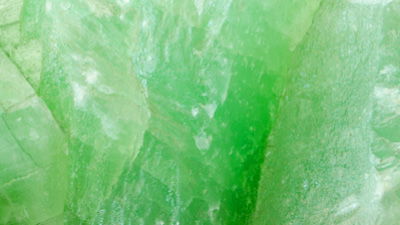
Lazurite is a complex silicate mineral with a framework crystalline structure that also contains sulfate, sulfur, and chloride. Its chemical formula is (Na,Ca)8 [(S,Cl,SO4,OH)2 (Al6Si6O24)].4 It is technically known as a feldspathoid. Lazurite crystallizes in the isometric (or cubic) system, although well-formed crystals are rare. Lazurite is a deep blue to greenish blue (Fig. 2). The color is due to the presence of the trivalent sulfur anions (S3-).
-
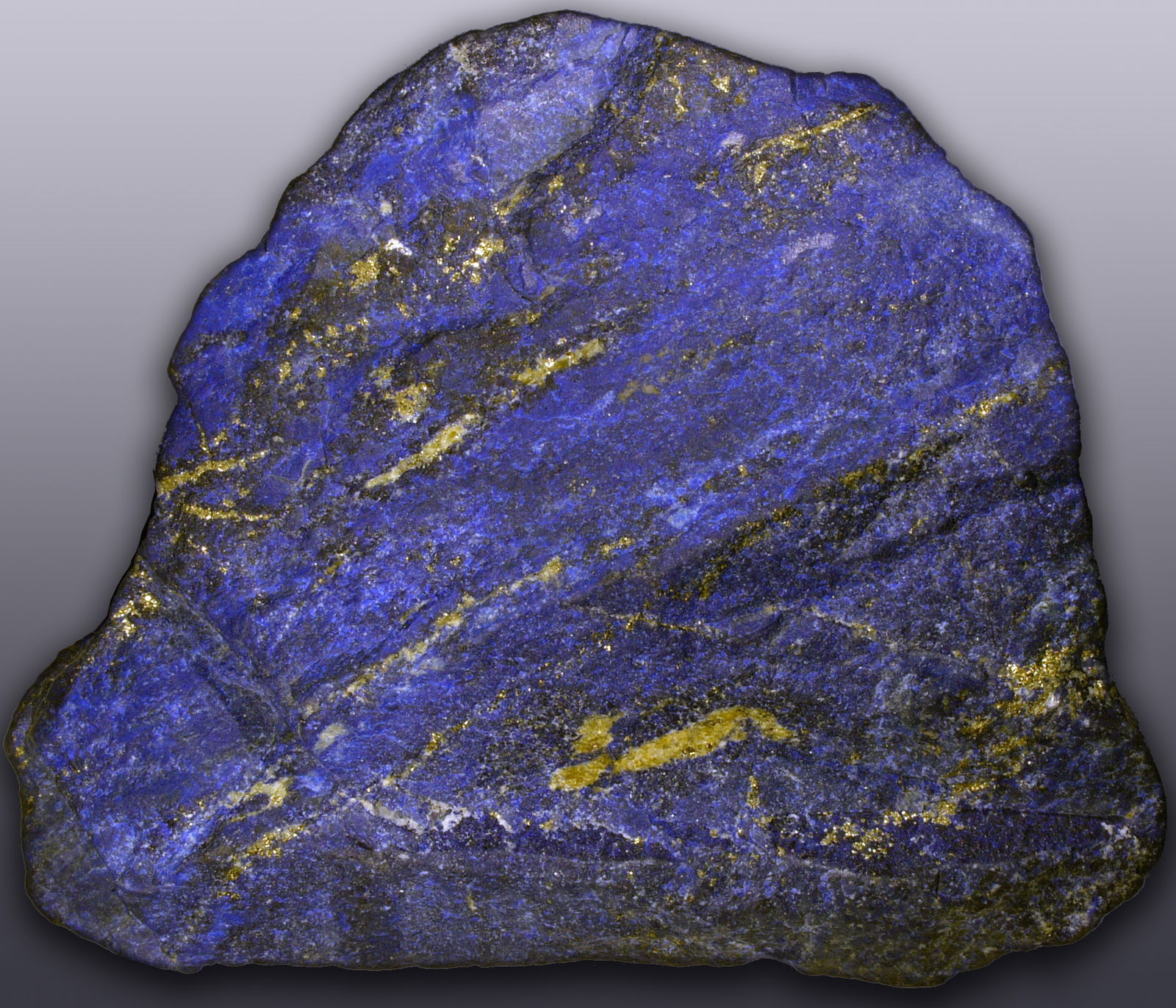
Fig. 1. Lapis lazuli consists of lazurite, calcite, sodalite and pyrite from Sar-e-Sang, Afghanistan. Hannes Grobe, CC BY-SA 2.5, via Wikimedia Commons.
-
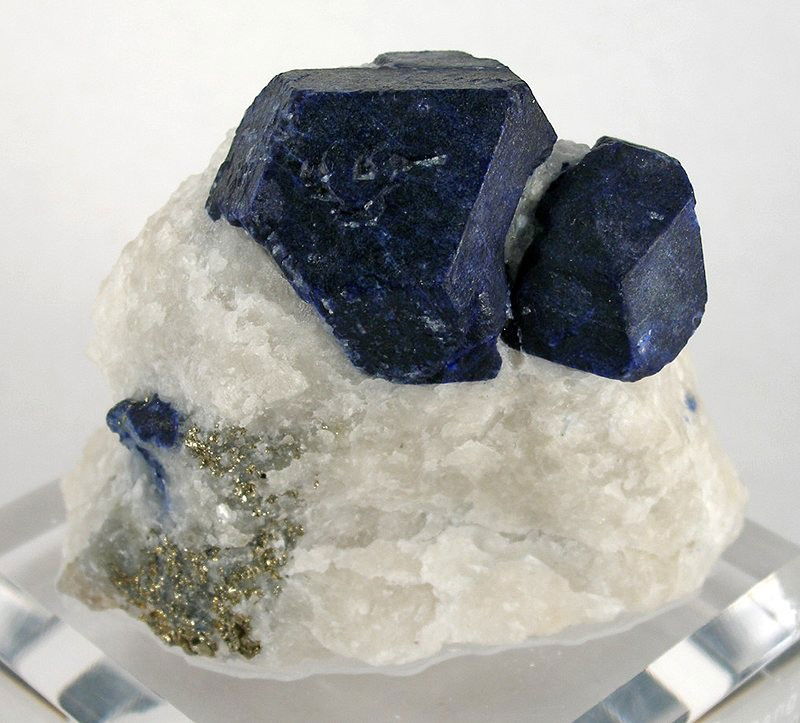
Fig. 2. Crystals of the mineral lazurite from Sar-e-Sang, Afghanistan. Rob Lavinsky, iRocks.com – CC-BY-SA-3.0, CC BY-SA 3.0, via Wikimedia Commons.
A Long History
Probably as early as about 2200 BC, not long after the dispersion from Babel, lapis lazuli was mined in the Badakhshan province in northeast Afghanistan (Fig. 3). Lapis lazuli artifacts dated to that time have been found at Bhirrana in northeast India, which is the oldest site of the Indus Valley civilization where lapis lazuli was highly valued. Lapis lazuli beads have been found in ancient human burials in Mehrgarh in the Caucasus region and as far away as in Mauritania.5
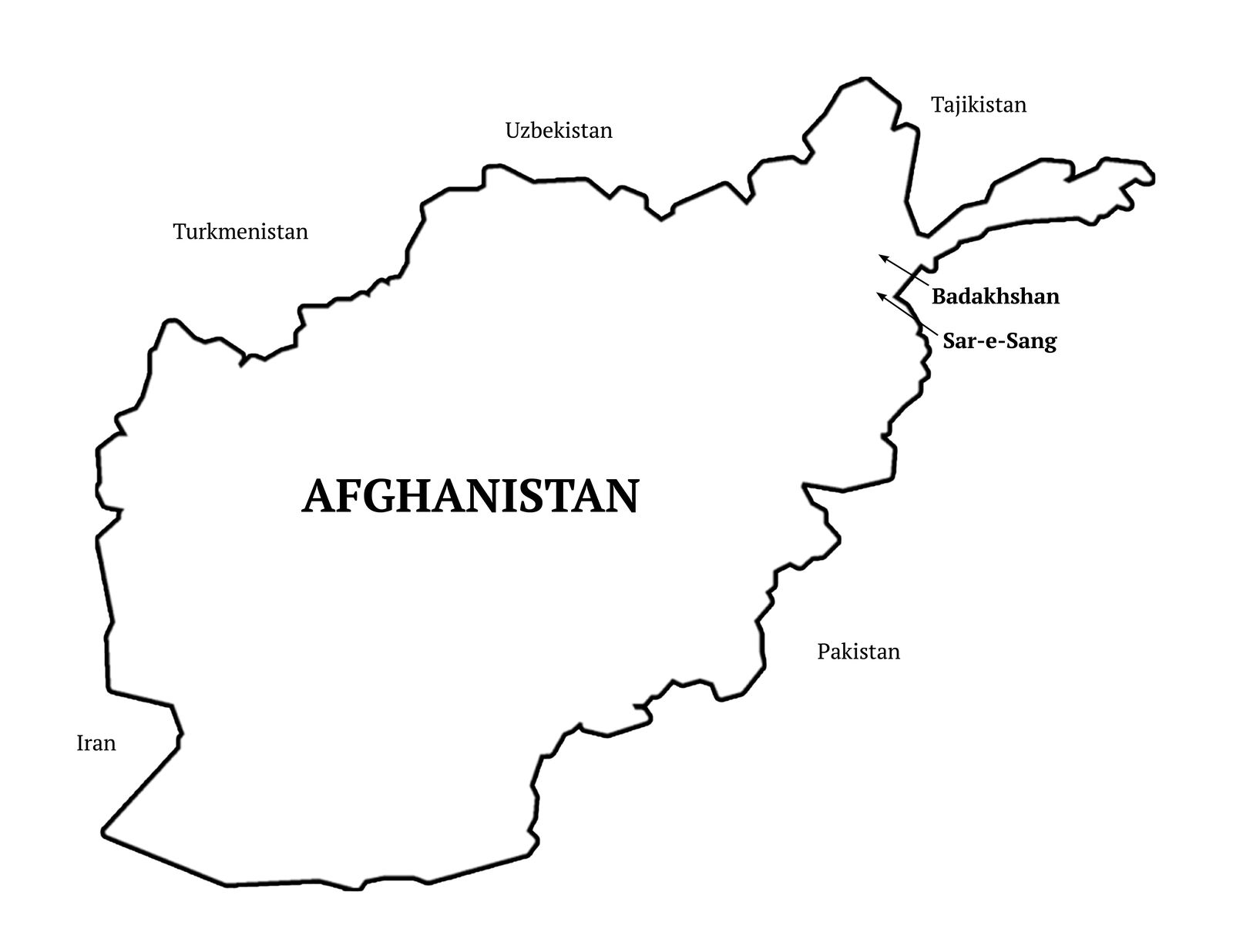
Fig. 3. Location map of Afghanistan showing the Badakhshan Province and the Sar-e-Sang mines. FootballAnimation, CC BY-SA 4.0, via Wikimedia Commons, text added.
Quantities of these beads have also been found at settlements in northern Mesopotamia and at the site of Shahr-e Sukhteh in southeast Iran (dating to the time of Abraham). A dagger with a lapis lazuli handle, a bowl inlaid with lapis lazuli, amulets, beads, and inlays representing eyebrows and beards were found in the Royal Tombs of the Sumerian city-state of Ur where Abraham was called by God. Lapis lazuli was also used in ancient Mesopotamia by the Akkadians, Assyrians, and Babylonians for seals and jewelry.6
In ancient Egypt, lapis lazuli was a favorite stone for amulets and ornaments such as scarabs. Lapis lazuli jewelry has been found at excavations of the predynastic Egyptian site Naqada. At Karnak, the relief carvings of Thutmose III show fragments and barrel-shaped pieces of lapis lazuli being delivered to him as tribute. It was used in the funeral mask of the Egyptian pharaoh Tutankhamun (the eyebrows and eyeliner consist of inlaid Sar-e-Sang lapis lazuli) (Fig. 4), and powdered lapis lazuli was used as eyeshadow by Cleopatra.7
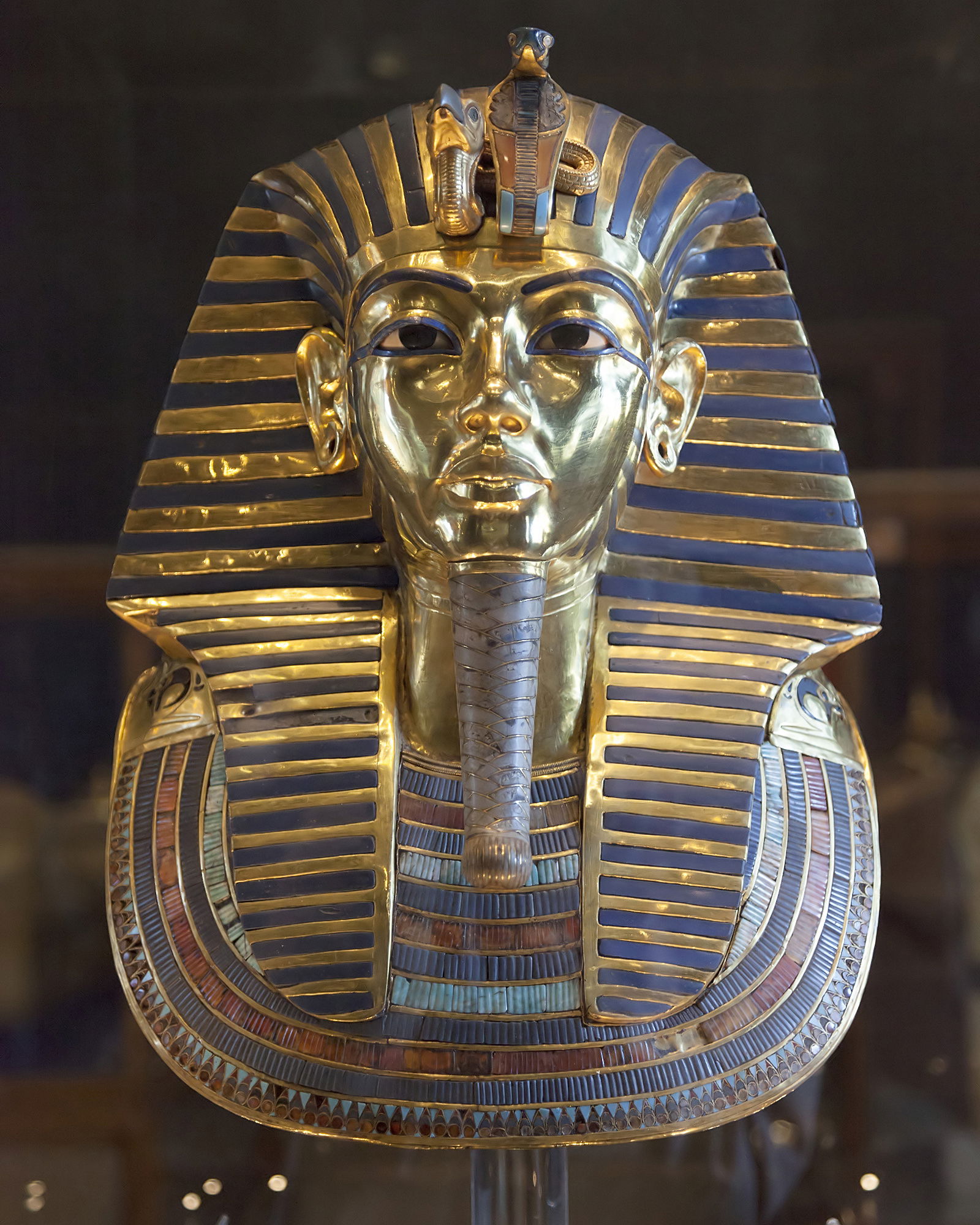
Fig. 4. The funeral mask of the Egyptian pharaoh Tutankhamun. Roland Unger, Public domain, via Wikimedia Commons.
By the end of the Middle Ages, lapis lazuli began to be exported to Europe, where it was ground into powder and made into ultramarine, the finest and most expensive of all blue pigments. Ultramarine was used by some of the most important artists of the Renaissance and Baroque eras, including Masaccio, Perugino, Titian, and Vermeer, and was often reserved for the clothing of the central figures of their paintings, especially the Virgin Mary. Ultramarine has also been found in dental tartar of medieval nuns and scribes.8
Today, the Sar-e-Sang mines in Badakhshan, the northeastern-most province of Afghanistan, continue to be the major source of lapis lazuli, as they have been for over 4,200 years (Fig. 3). In recent years, the Taliban used lapis lazuli mined there to fund its military campaign. Important amounts are also produced from mines west of Lake Baikal in Russia and in the Andes Mountains in Chile. Smaller quantities are mined in Pakistan, Italy, Mongolia, the United States, and Canada.
The Mystery of How Lapis Lazuli Forms
God created the lapis lazuli that was in the garden of God covering Lucifer before his pride-filled rebellion and also the lapis lazuli that is in the new Jerusalem. But how did the lapis lazuli on earth form?
To answer to that question, the best location to focus on is the Sar-e-Sang mines (view page with marked image) in the center of the formidable Hindu Kush Mountains of Badakhshan, Afghanistan, a 500 mile (~800 km) east-west range of rugged, snowcapped peaks9 (Figs. 3 and 5). Despite a few studies, evolutionary geologists admit the origin of lapis lazuli remains unclear, and their postulated explanations remain somewhat controversial because the regional geology is so complex.
The lapis lazuli deposits are deep in the core of the mountains within an 820–1,310 feet (~250–400 meters) thick, banded, white to gray-white marble layer (metamorphosed limestone) of the Sakhi Formation of “imprecisely known Precambrian age” (Fig. 5).10 This formation also includes interlayered salt beds. Underlying the marble and intricately interwoven with it in complex folds are high-grade metamorphic schists and gneisses of the Fayzabad Gneiss (metamorphosed shale).11 Evolutionists postulate that the supposed precursor limestone and shale were metamorphosed regionally around 2.7 billion years ago, when molten granites were also intruded into them.
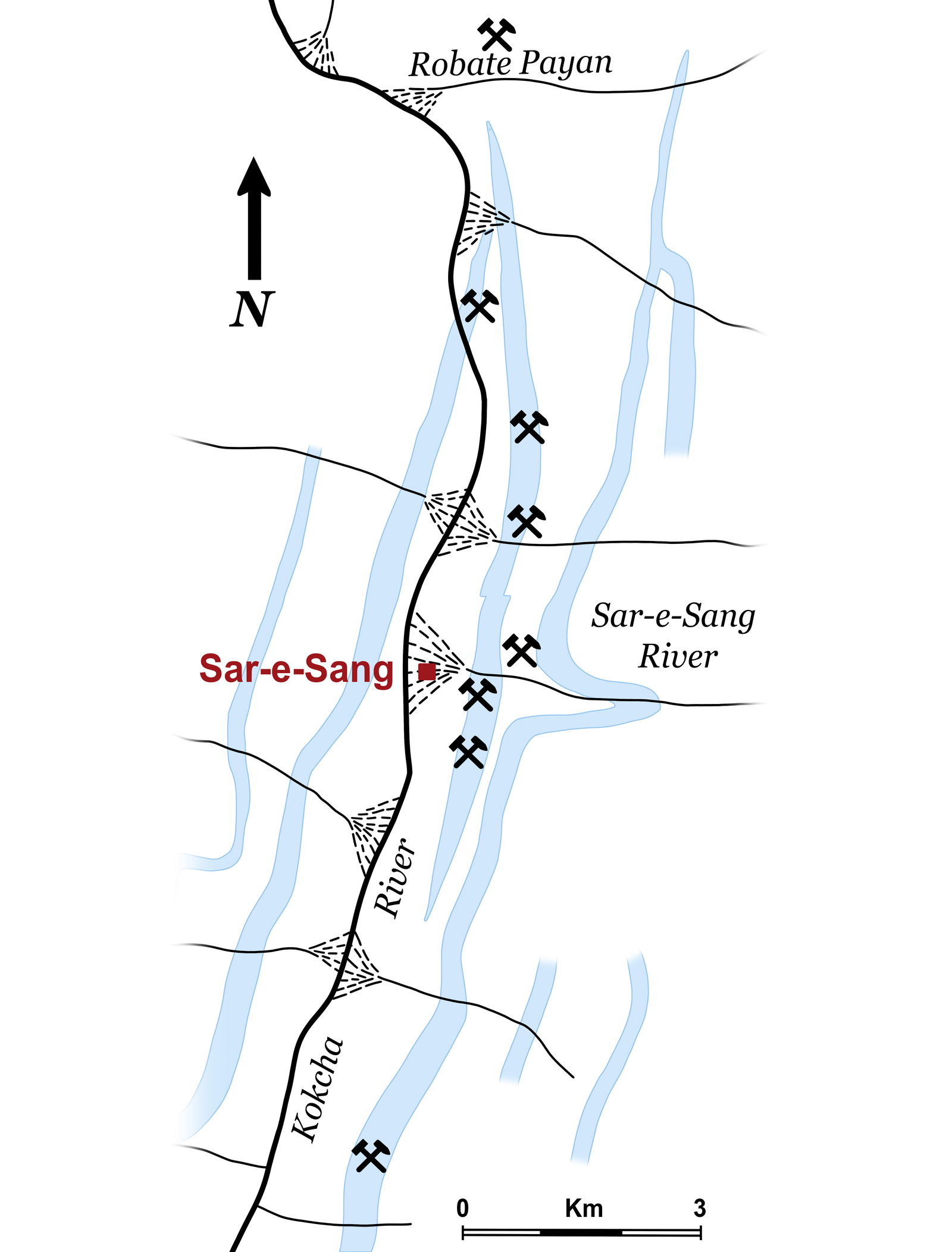
Fig. 5. Geologic map of the Sar-e-Sang area showing the locations of the mines (after Kulke, 1976: Moore and Woodside, 2014; adapted). The blue bands are the marble layers that host the lapis lazuli.
On the eroded surface of these metamorphic rocks intruded by granites, further sedimentary layers were subsequently deposited, also entombing fossils. Then (according to evolutionist dates) 200 million years ago, a mountain-building episode occurred that crumpled and metamorphosed those sedimentary layers when the supercontinent of Pangaea was formed. There was then another cycle of deposition of fossil-bearing sedimentary layers followed by the latest mountain-building episode as a result of India breaking away from Pangaea (about 130 million years ago) and eventually colliding with Eurasia (about 55 million years ago).
The lapis lazuli deposit itself occupies a sheetlike zone in the center of the Sakhi marble. While the Sakhi unit at Sar-e-Sang is about 1,310 feet (~400 meters) thick, the lapis-enriched subunit is only about 131 feet (~40 meters) thick (Fig. 6).12 Within the subunit are layers and lenses of lapis lazuli from 3–13 feet (~1–4 meters) thick and from 65–1,310 feet (~20–400 meters) long, controlled by the folding. In these most highly enriched areas, there are also elongated pods from 1–33 feet (~0.3–10 meters) long, composed of nearly pure, very fine-grained lapis lazuli.
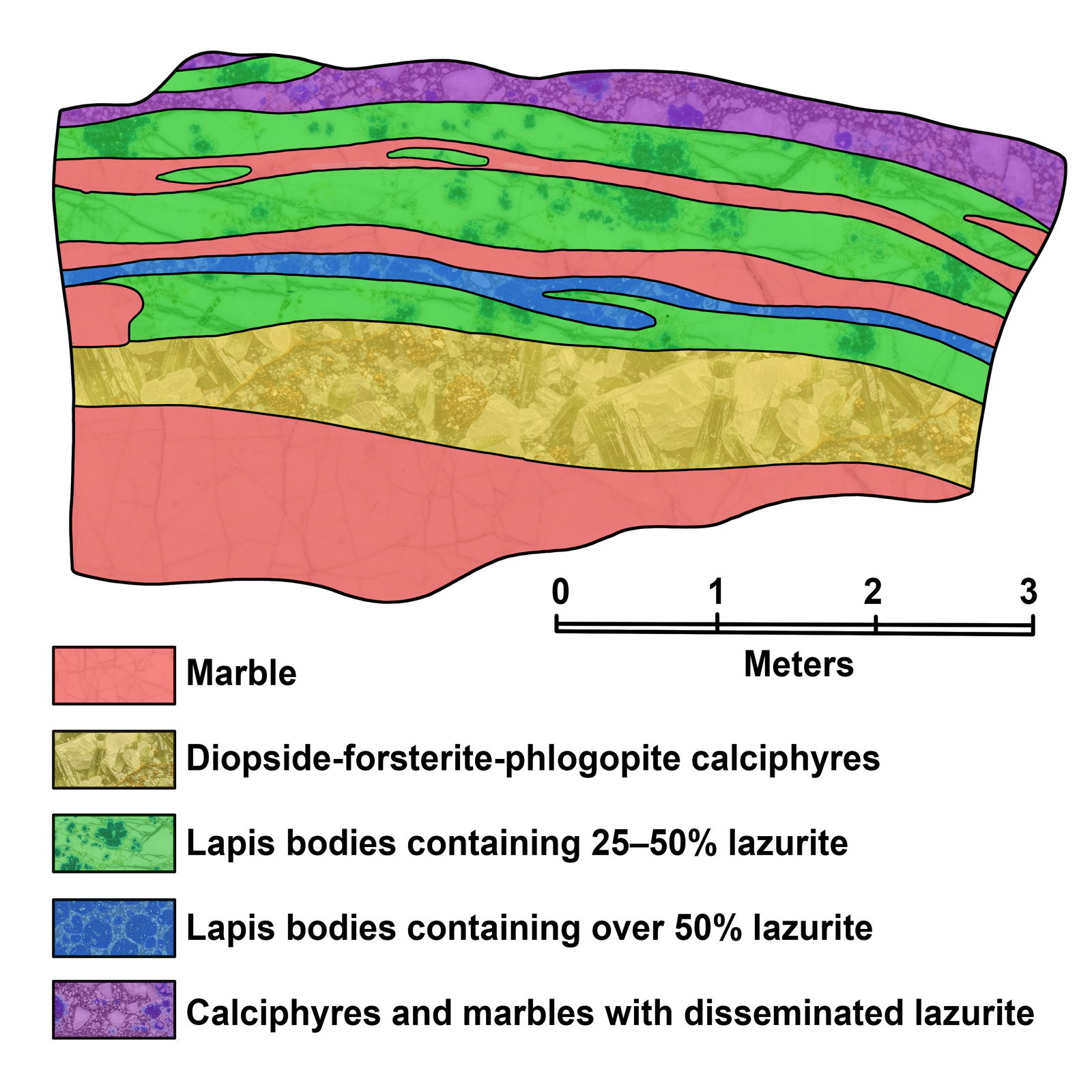
Fig. 6. Mine geology map showing the mineral assemblages in the lapis lazuli-bearing zones and bodies within the host marble unit (after Kievlenko, 2003: Moore and Woodside, 2014; adapted).
But the processes that led to forming the lapis lazuli remain somewhat controversial. One proposal is that the high temperatures and pressures during the Precambrian large-scale metamorphism freed chlorine, fluorine, and sulfur from the interlayered salt beds to form the lapis lazuli and associated minerals.13 But the more generally favored view is that this enrichment resulted both from that regional metamorphism and from contact metamorphism when, at various times and on various scales, granitic intrusions contacted the marble.
The Mystery Solved by God’s Word
This mystery is readily solved by using the true outline of earth’s history in God’s eyewitness account in His Word (especially Genesis 1 and 6–8) to guide us in developing a geological model.
The complex Hindu Kush geology in part mirrors what we observe in the Grand Canyon, coupled with our understanding of the dynamics of the global flood cataclysmic event. So we can use those insights to unravel the various stages that produced the Hindu Kush geology.
At the bottom of the Grand Canyon are the Precambrian schists and granites of the crystalline foundation rocks on which the North American continent was built. Similarly, in the Hindu Kush, the Precambrian marble, schists, and gneisses are the crystalline foundation rocks. These rocks were formed by God laying them down during the first two days of creation as the foundation for the land He would build on the third creation day (Genesis 1:9–10). These rocks are not now in their created condition, so we do not know whether they were originally limestone and shale. But whatever the created rocks were, they were affected by the upheaval when God raised the dry land on the third creation day.
It must be stressed that this does not mean that these foundation rocks were formed by natural processes. Rather, they were created supernaturally by God using whatever rapid processes He chose. Thus, the formation of the marble and perhaps also the lapis lazuli lenses and pods it contains could have been produced by God’s creative activity.
The formation of the marble and perhaps also the lapis lazuli lenses and pods it contains could have been produced by God’s creative activity.
The subsequent catastrophic upheaval caused by the breaking up of the fountains of the great deep at the onset of the global flood cataclysm (Genesis 7:11) resulted in erosion of the marble, schists, and gneisses. In the Grand Canyon, that erosion surface is called the Great Unconformity, and it can be traced around the globe. As the pre-flood supercontinent was ripped apart and the plates started to move apart at fast walking speed, layers of sediments were deposited across the continents on that erosion surface and in the process entombed animals.14
As the catastrophic plate tectonics driving the global flood cataclysm progressed, plate collisions buckled sediment layers to produce mountains on the transitory supercontinent Pangaea. It then broke apart as deposition of sediment layers burying more animals continued (later to become fossil-bearing rocks). India eventually collided with Eurasia as the global flood ended, further raising the Hindu Kush Mountains. It is possible that the granites that were intruded during these mountain-building episodes caused some modifications to the marble and could also have produced more of the lapis lazuli lenses and pods within it.
We certainly cannot be dogmatic in our geological model because we were not present to observe past geologic processes. But neither were evolutionary geologists. However, God has given us His eyewitness testimony so we can know the true history of our earth.
Either God created the lapis lazuli on the third creation day when He made the dry land, or He produced the lapis lazuli using the catastrophic global flood processes, or even both. However, we can be certain it happened according to God’s plans and power, as He desired to replicate on earth the beauty of this gemstone that already adorns our future heavenly home.
O Lord, how manifold are your works! In wisdom have you made them all. (Psalm 104:24)
Footnotes
- The Hebrew word in this verse is transliterated sappiyr, and the Greek Septuagint of these verses has sappheiron, while in Revelation 21:19 the Greek word is transliterated as sapphiros. English translations of the Scriptures usually translate these words as “sapphire.” However, most commentators recognize that in late classical times and as late as the Middle Ages lapis lazuli was often called sapphire (sapphirus in Latin, sappir in Hebrew), which wrongly influenced the Bible translators. Thus, most commentators agree that the gemstone here is lapis lazuli, not sapphire.
- Andrew A. Snelling, “Sapphires and Rubies,” Answers Magazine 5, no. 2 (April–June 2010), 66–69, https://answersingenesis.org/geology/rocks-and-minerals/rubies-sapphires/.
- Wikipedia, “Lapis Lazuli,” last updated August 26, 2025, https://en.wikipedia.org/wiki/Lapis_lazuli.
- Cornelius Klein and Cornelius S. Hurlbut, Jr., Manual of Mineralogy, 21st ed. revised (New York: Wiley, 1999), 547–548.
- Thomas P. Moore and Robert W. M. Woodside, “The Sar-e-Sang Lapis Mines, Kuran Wa Munjan District, Badakhshan Province, Afghanistan,” The Mineralogical Record 45, no. 3 (May–June 2014): 281–336.
- Moore and Woodside, “The Sar-e-Sang Lapis Mines,” 281–336.
- Moore and Woodside, “The Sar-e-Sang Lapis Mines,” 281–336.
- Moore and Woodside, “The Sar-e-Sang Lapis Mines,” 281–336.
- Moore and Woodside, “The Sar-e-Sang Lapis Mines,” 281–336.
- H. Kulke, “Die Lapislazuli Lagerstätte, Sare Sang (Badakhshan): Geologie, Entstehung, Kulturgeschichte und Bergbau,” Afghanistan Journal 3, no. 2 (1976): 43–56;
Shah Wali Faryad, “Metamorphic Conditions and Fluid Compositions of Scapolite-Bearing Rocks from the Lapis Lazuli Deposit at Sare Sang, Afghanistan,” Journal of Petrology 43, no. 4 (2002): 725–747;
Moore and Woodside, “The Sar-e-Sang Lapis Mines,” 281–336. - A. Desio, E. Martina, and G. Pasquarè, “The Geology of Badakhshan (North-East Afghanistan),” Proceedings of the Geology Society of London 120, no. 1–4 (February 1964): 127–151, https://doi.org/10.1144/gsjgs.120.1.0127.
- E. Y. Kievlenko, Geology of Gems (Littleton, CO: Ocean Pictures Ltd, 2003).
- Faryad, “Metamorphic Conditions and Fluid Compositions of Scapolite-Bearing Rocks,” 725–747.
- Steven A. Austin, John R. Baumgardner, D. Russell Humphreys, Andrew A. Snelling, Larry Vardiman, and Kurt P. Wise, “Catastrophic Plate Tectonics: A Global Flood Model of Earth History,” Proceedings of the Third International Conference on Creationism, ed. Robert E. Walsh (Pittsburgh, PA: Creation Science Fellowship, 1994), 609–621, https://cedarville.tind.io/record/20925?v=pdf;
John R. Baumgardner and Evan Navarro, “The Role of Large Tsunamis in the Formation of the Flood Sediment Record,” Proceedings of the Ninth International Conference on Creationism, ed. John H. Whitmore (Cedarville, OH: Cedarville University International Conference on Creationism, 2023), 363–386, https://doi.org/10.15385/jpicc.2023.9.1.22.

Support the creation/gospel message by donating or getting involved!

Answers in Genesis is an apologetics ministry, dedicated to helping Christians defend their faith and proclaim the good news of Jesus Christ.
- Customer Service 800.778.3390
- Available Monday–Friday | 9 AM–5 PM ET
- © 2026 Answers in Genesis