

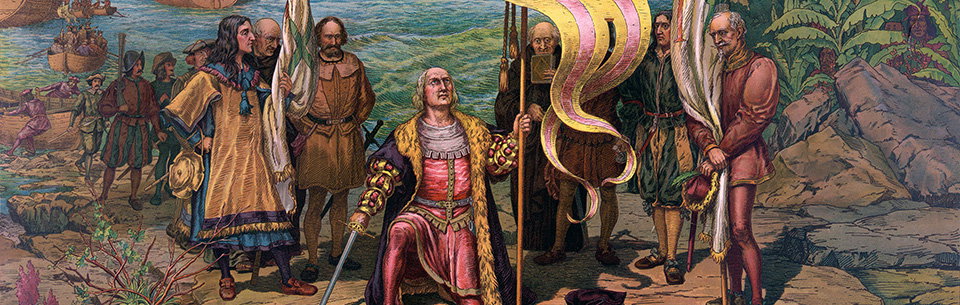
L. Prang & Co., Boston, Public domain, via Wikimedia Commons
Columbus Radically Altered the Western Hemisphere—but He Wasn’t the First
In 1492, Columbus sailed the ocean blue—and transformed the Western Hemisphere . . . right? Didn’t he permanently link the Old and New Worlds, unlike anyone else before him, including the Vikings? Eight years ago, my answers to these questions began to change. Dramatically.
In 2018, I was working on the DNA history of the globe. I knew that the arrival of Columbus had precipitated a massive population collapse in the Americas. So I hunted for the genetic smoking gun of this event.
I found it—and a whole new history of the pre-Columbian Americas.
By 2020, it was clear from the DNA data that the Americas had been invaded from the Far East about 1,000 years before Columbus.1 By 2022, I had discovered a second invasion—about five centuries before Columbus.2
The earlier event was catastrophic. It had wiped out the male lineages of the earlier indigenous Americans.3 Relatives of the Huns had wrought the destruction.4 The second migration wasn’t as disastrous. But it was consequential. The AD 900s migrants were the ancestors of the Native Americans at the first Thanksgiving.5
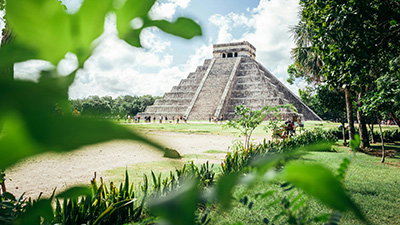
Just last year, I uncovered two more migrations. My earlier studies had focused on male-inherited DNA (the Y chromosome). These new studies analyzed female-inherited DNA (mitochondrial DNA).6 The latter preserved the record of events from the BC era. In the century or two before Christ, an East Asian group—possibly relatives of a group known as the Xiongnu or of the members of the Qin Dynasty of China—arrived in the Americas.7 Centuries earlier, around 1,000 BC, a different East Asian group—possible relatives of the Shang Dynasty of China—entered the Americas and birthed the ancient Maya.8
Both of these BC-era groups were hit hard by the later migrations. Again, the male lineages disappeared. But even the surviving female lineages showed signs in their DNA of massive population loss.9
| ~1000 BC | Shang relatives arrive in the Americas from northeast Asia and birth the Maya people. |
| 200 BC/100 BC | Qin/Xiongnu relatives arrive from northern China in the Americas. |
| AD ~400 | Hun relatives arrive from Central Asia in the Americas and wreak havoc. |
| AD 900 | Algic ancestors arrive from Central Asia/Mongolia in the Americas. |
| AD 1492 | Colombus arrives from Europe in the Americas. |
DNA seems to suggest that these worlds were linked—extensively—before Columbus.
Did Columbus permanently link Old and New Worlds? DNA seems to suggest that these worlds were linked—extensively—before Columbus. East Asia and America were repeatedly in contact with one another. A Pacific connection long predated Columbus. But not an Atlantic one. In this direction, Columbus created a massive highway—not just for peoples but for crops, political ideas, technology, and religion. Columbus might not have been the first to connect the Old World and the New. But he laid the foundation for a transformed hemisphere, in which countries like the United States would emerge and spread the gospel up and down the hemisphere and around the globe.
Footnotes
- Nathaniel T. Jeanson, “Young-Earth Y Chromosome Clocks Confirm Known Post-Columbian Amerindian Population History and Suggest Pre-Columbian Population Replacement in the Americas,” Answers Research Journal 13 (April 22, 2020): 23–33, https://answersresearchjournal.org/young-earth-y-chromosome-clocks/.
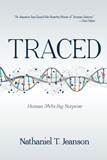
- Nathaniel T. Jeanson, Traced: Human DNA’s Big Surprise (Green Forest, AR: Master Books, 2022).
- Jeanson, Traced.
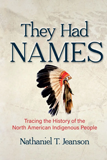
- Nathaniel T. Jeanson, They Had Names: Tracing the History of the North American Indigenous People (Green Forest, AR: Master Books, 2025).
- Jeanson, They Had Names.
- Answers in Genesis, “Breaking News: Lost American History Discovered in DNA,” July 16, 2025, https://answersingenesis.org/genetics/lost-american-history-discovered-dna/.
- Nathaniel Jeanson, “Y-Chromosome-Guided Analysis of Mitochondrial DNA Lineages in the Americas: New Evidence for a Mitochondrial DNA Root, for a Mitochondrial DNA Clock, and for at Least One Migration from Asia into the Americas in the First Millennium BC,” Answers Research Journal 18 (July 16, 2025): 347–375, https://answersresearchjournal.org/genetics/analysis-mitochondrial-dna-lineages-americas/.
- Jeanson, “Y-Chromosome-Guided Analysis of Mitochondrial DNA.”
- Jeanson, “Y-Chromosome-Guided Analysis of Mitochondrial DNA.”

Support the creation/gospel message by donating or getting involved!

Answers in Genesis is an apologetics ministry, dedicated to helping Christians defend their faith and proclaim the good news of Jesus Christ.
- Customer Service 800.778.3390
- Available Monday–Friday | 9 AM–5 PM ET
- © 2026 Answers in Genesis