

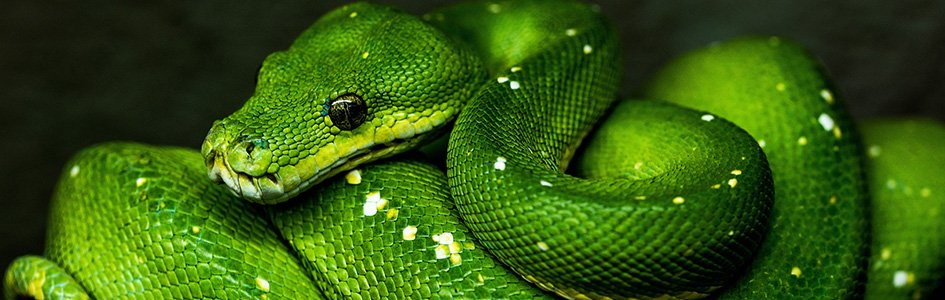
Snakes Appear to Live a Cursed Life
All snakes today are limbless, and from written historical records going back thousands of years, that is also how they are described.1 The fossil record of snakes is robust, and even baby snakes have been found in Cretaceous amber, conventionally dated at 99 MY.2 Of course, those familiar with the biblical account of the serpent in the Garden of Eden in Genesis 3 immediately are confronted with God’s curse upon the serpent and His proclamation that “on your belly you go, And you shall eat dust All the days of your life” (Genesis 3:14).3 There is some debate in creation circles on whether this curse had immediate physiological effects on all snakes, or whether God’s curse started a process of mutation and limb reduction that led to snakes gradually (but quickly and probably before or by the time of the worldwide Flood) losing their limbs entirely.4 But one thing that can be stated with certainty is that snakes were cursed, and genetic insight is beginning to reveal just how extensively.
A 2016 study was published purporting to explain how snakes lost their limbs, and it revealed some surprising findings.5 The study mentioned above not only probed the question of snake limbs but also sightless subterranean mammals. In the latter case, there was a widespread loss of genes responsible for different components of sight, but in the case of snakes, there was only one gene lost (HoxD12),6 but hundreds of limb regulatory elements were substantially altered and non/miss-expressed.
Troubled Expression?
A gene is expressed when it is transcribed into messenger RNA (mRNA), and that mRNA is translated into a protein. As the paper mentions, the researchers looked specifically at cis-regulating elements (CREs), which are regions of noncoding DNA found in close proximity to the genes they regulate.
In an interview describing the findings of the paper, lead author Juliana Gusson Roscito explained the difference between gene loss and non-expression of a gene:
A regulatory element can activate or inhibit the expression of a gene in a certain part of the organism, such as the limbs, for example, while a different regulatory element can activate or inhibit the expression of the same gene in a different part, such as the head. If the gene is lost, it ceases to be expressed in both places and can often have a negative effect on the organism’s formation.
However, if only one of the regulatory elements is lost, expression may disappear in one part while being conserved in the other.7
Darwinian Divergence or Divine Disturbance?
To determine the CRE sequence divergence that is specific to snakes, the researchers compared the genomes of a boa and python to the genomes of several fully limbed reptiles, three birds, several mammals, a frog, and a coelacanth (fish). To study the differences of CREs across species on a genome-wide scale, the researchers focused on conserved noncoding elements (CNEs), a noncoding region of the genome identified by conventional alignment of genomic sequences from two or more species.
Because this study assumes an evolutionary relationship among all animals, and the researchers assume neo-Darwinian common descent, they look for differences in genomes as evolutionary divergence. Divergence is the percent difference in nucleotide sequence between two related DNA sequences or in amino acid sequences between two proteins and is the basis for the evolutionary clock (the rate at which mutations accumulate in a given gene).8 The evolutionary divergence between two proteins is measured by the percent of positions at which the corresponding amino acids are different.9 The reason why evolutionary biologists and paleontologists try to calculate divergence is to determine how long ago two species diverged from one another in the evolutionary timeline.
The reason why evolutionary biologists and paleontologists try to calculate divergence is to determine how long ago two species diverged from one another in the evolutionary timeline.
The researchers then performed a complex genetic analysis (looking at how well or not the DNA sequences matched up), and then searched for CNEs in the two snakes as compared to all other animals and then against the lizards only. They then expected to identify CREs that controlled gene expression in the developing limbs of limbed species and that had lost or inhibited function as limb regulatory elements in snakes. They identified 5,439 CNEs that are highly and specifically diverged in snakes compared to limbed species. To test whether these CNEs function as a regulatory control on limbs, they looked to see if these diverged CNEs were associated with limb-related genes.
Absent or Damaged Regulation and Binding Sites
Their data showed that these snake-diverged CNEs are associated with genes that are involved in limb development and linked to limb malformations. They found 933 snake-diverged CNEs that overlapped many known limb regulatory elements. Furthermore, their analysis discovered a systematic pattern of divergence affecting all the major limb signaling pathways:
Notably, snake-diverged CNEs are associated with key genes controlling fore- and hindlimb initiation, anterior-posterior and dorsal-ventral patterning, and limb outgrowth, and that many of these genes cause severe limb truncations and other limb malformations when knocked out or when their spatiotemporal expression is perturbed. Furthermore, genes such as Shh, Gli3, and Hand2 were shown to be mis-expressed in the limb buds of developing snakes. Together, this suggests that snake-specific divergence in many limb regulatory elements may have contributed to the loss of limbs in the evolutionary history of snakes.10
In addition to these snake-diverged CNEs being associated with limb-forming and regulating genes, they also found that there were mutations that weaken or destroy binding sites for key limb transcription factors.11 In contrast, for limbed animals, these transcription factor (TF) binding sites were largely conserved.12 It either appears that snakes have had a dreadful run of evolutionary luck or that they are cursed. According to the authors of the journal paper, the findings tentatively led them to conclude that mutations led to the gradual reduction and loss of limbs in snakes over millions of years.
The Evolutionary Tale
The study concluded,
It remains an open question to what extent mutations in these regulatory elements directly contributed to the loss of limbs during evolution and to what extent sequence divergence happened as a consequence of neutral evolution after limb loss. Considering our findings that several snake-diverged limb regulatory elements are associated with genes that cause limb truncations and other malformations when perturbed, it is likely that mutations in some of these diverged regulatory elements, especially those associated with major limb patterning genes, contributed to gradual limb reduction in ancestral snakes that eventually led to complete loss of limbs.13
Ironically, this study and a previous one looking at CREs for limb development in snakes found that there are still several CNEs (36%) that show no divergence in snakes. The first study had found that many of these limb-enhancing CNEs are still active in the genital regions of snakes.14 In fact, many studies, including this 2015 one, continue to mention that boas and pythons retain a “highly reduced hindlimb” that includes pelvic bones and a femur.15 Creationists would, of course, recognize the design feature of an anchoring pelvis and possible stimulators for reproductive structures in the larger, thicker, and heavier constrictor snakes as evidence of necessitating an aid in reproduction and a good design.16 But chalking that up to an evolutionary holdover, the 2015 paper mentions,
In the absence of limbs, one might expect cis-regulatory elements to lose limb-specific activities while retaining activities in other tissues or evolving entirely new functions. Our analyses of HLEB [Hind Limb Enhancer B] orthologs [supposedly genes related by common descent] suggest that this element has functionally diverged along such a path with snake HLEBs losing hindlimb function but retaining activity within subdomains of the external genitalia. . . .
While both HLEA and HLEB are active during hindlimb development, only HLEB functions in the external genitalia. Since deletion of HLEB does not eliminate Tbx4 expression in the GT, we can infer that HLEB works in conjunction with other limb-GT or GT enhancers to induce Tbx4 transcription. Nonetheless, deletion of HLEB is sufficient to induce alterations in the genitalia of male and female mice.17
The Biblical Verdict: Cursed More than Every Beast of the Field
When one analyzes the raw data without the evolutionary interpretation (something we recommend being done with almost every science news report!) and from a biblical worldview, it makes perfect sense and is consistent with the biblical account of the curse on the serpent in Genesis 3:14–15, (whether the curse was instantaneous or took several generations to complete) as well as the post-Flood blessing on all land animals and their descendants (Genesis 8:17 and 9:12). While there is only one known gene that has been lost in snakes pertaining to limb development (albeit a very significant one—HoxD12, associated with severe limb abnormalities), there are several regulatory genes that have been altered or turned off, as well as transcription binding sites that are missing entirely or have been altered to be nonfunctional.18 Do not all of these factors clearly point to a curse—specifically a curse on both fore- and hindlimbs? But the genes and the regulatory networks that control genitalia (and therefore reproduction) have been conserved, meaning that boas and pythons can still be “fruitful and multiply.”
Do not all of these factors clearly point to a curse—specifically a curse on both fore- and hindlimbs?
Of course, if they could not reproduce, then boas and pythons would have gone extinct, so we know by their continued existence that their genitalia could not have been made nonfunctional as their limbs have been. But in the evolutionary paradigm, why would it not be consistent for such a mutation-riddled lineage of creatures to go extinct altogether? Consider that the evolutionary story has to account for the terrible mutational “luck” that snakes have had on their limbs, while also explaining how impossibly “lucky” that all the genes and regulatory networks for snake genitalia remained unscathed over supposedly 100 MY of evolutionary history. Once again, we see that the scriptural explanation is much more consistent with the observed data than the evolutionary paradigm.
Recent Updates
Since 2020, there have been additional studies looking into snake limb loss, and we can see that not much has changed in 2026. Scientists still have competing theories on snake limb reduction and loss mechanics. And if snake ZRS genes (which are involved in limb formation) are inserted into lab mice, the limbs in the mice become truncated (are mostly if not completely lost).
Although fragmentary snake records come from the Middle Jurassic and Early Cretaceous (Caldwell et al. 2015), most of what we know of early snake anatomy and the path to limblessness in this group come from the Late Cretaceous. This is illustrated by rear-limbed marine snakes from the Middle East, the simoliophiids Pachyrhachis, Haasiophis, and Eupodophis, for which studies disagree on whether they represent stem snakes (Caldwell & Lee 1997, Caldwell et al. 2021, Garberoglio et al. 2019, Lee 2005) or early crown snakes (Gauthier et al. 2012, Zaher & Smith 2020). This ambiguous placement has substantial impact regarding whether snakes lost their limbs only once—stem hypothesis—or whether they lost limbs multiple times independently—early crown hypothesis.19
Several snake-specific mutations in the ZRS are associated with the loss of ZRS enhancer activity in snake embryos (Kvon et al. 2016). CRISPR/Cas9 genome editing to replace the mouse ZRS with a 1.3-kb ZRS region from snakes results in severe limb truncation, identical to the phenotype that results from complete deletion of the mouse ZRS. This suggests that loss of ZRS function was an important developmental step that led to limblessness in snakes.20
Creation scientists have also had a philosophical debate about the loss of limbs on snakes. While we know that the serpent in the garden was immediately cursed, how long (or not) did it take for these characteristics to spread through the entire snake kind or kinds (possibly at the suborder level of Serpentes)?

Footnotes
- Aristotle, On the Parts of Animals, book 4, part 1, trans. William Ogle, http://classics.mit.edu/Aristotle/parts_animals.4.iv.html.
- Katie Willis, “First Fossilized Snake Embryo Ever Discovered Rewrites History of Ancient Snakes,” Phys.org, July 19, 2018, https://phys.org/news/2018-07-fossilized-snake-embryo-rewrites-history.html.
- All Scripture verses are NKJV.
- It is possible that the original snake kinds had alternative modes of locomotion. Flying is a possibility, but even so, that would require wings, which are a form of forelimb. The curse would have similarly affected those.
- Juliana G. Roscito et al., “Phenotype Loss Is Associated with Widespread Divergence of the Gene Regulatory Landscape in Evolution,” Nature Communications 9, no. 1 (November 9, 2018): 9, doi:10.1038/s41467-018-07122-z.
- Roscito et al., “Phenotype Loss.”
- José Tadeu Arantes, “Research Explains How Snakes Lost Their Limbs,” Phys.org, February 7, 2019, https://phys.org/news/2019-02-snakes-lost-limbs.html.
- Molecular Biology, “Sequence Divergence Is the Basis for the Evolutionary Clock,” modified October 14, 2012, http://molecularstudy.blogspot.com/2012/10/sequence-divergence-is-basis-for.html.
- Molecular Biology, “Sequence Divergence Is the Basis for the Evolutionary Clock.”
- Roscito et al., “Phenotype Loss,” 6.
- A transcription factor (TF) is a protein that can bind to DNA and regulate gene expression.
- TF binding sites are regions of the gene to which a TF binds.
- Roscito et al., “Phenotype Loss,” 10.
- Carlos R. Infante et al., “Shared Enhancer Activity in the Limbs and Phallus and Functional Divergence of a Limb-Genital Cis-Regulatory Element in Snakes,” Developmental Cell 35 (2015): 107–119, doi:10.1016/j.devcel.2015.09.003.
- Infante et al., “Shared Enhancer Activity,” 115.
- Eric Hovind, “Things That Negate Evolution: Snake Legs,” Creation Today, https://creationtoday.org/things-that-negate-evolution-snake-legs/.
- Infante et al., “Shared Enhancer Activity,” 115–116.
- Roscito et al., “Phenotype Loss,” 9–10.
- Tiago R. Simões, Marc Tollis, and Frank T. Burbrink, “Origin and Early Evolution of Squamates and Their Kin: From Fossils to Genomes,” Annual Review of Ecology, Evolution, and Systematics 56 (September 2, 2025): 276.
- Simões, Tollis, and Burbrink, “Origin and Early Evolution of Squamates and Their Kin,” 283.

Support the creation/gospel message by donating or getting involved!

Answers in Genesis is an apologetics ministry, dedicated to helping Christians defend their faith and proclaim the good news of Jesus Christ.
- Customer Service 800.778.3390
- Available Monday–Friday | 9 AM–5 PM ET
- © 2026 Answers in Genesis