
News to Know
-
Oct. 20, 2023 from Answers in Depth
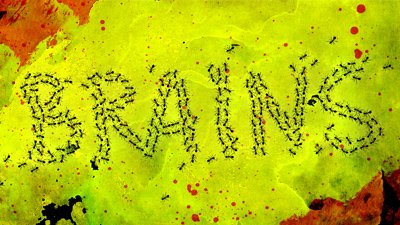
Carpenter ant colonies evade zombie apocalypse because only the climbing dead become weapons of mass dispersion.
-
Oct. 22, 2021 from Answers in Depth
“There is a book . . .” Ken Ham reminded Nye at their 2014 debate, and the Bible’s history is history we can trust.

More News to Know
-
Dawkins' CrusadeAug. 29, 2009
Although we frequently decline to comment when individuals inveigh against creationists (especially because such comments are often redundant and misinformed), we can hardly help but respond to vocal atheist (and anti-creationist) Richard Dawkins.
-
Meet ChickenosaurusAug. 29, 2009
It sounds like an April Fools’ Day joke that came months too late: a Canadian scientist declares he will “flip some levers” and develop a dinosaur out of a chicken embryo.
-
Darkness Falls on Dark EnergyAug. 22, 2009
Though once a high-flying idea, the notion of dark energy has received another devastating blow from two mathematicians.
-
Non-Life From Outer SpaceAug. 22, 2009
Astronomers have once again discovered a “building block” of life in outer space.
-
Prehistoric InkAug. 22, 2009
Scientists cannot only write about amazing fossil discoveries; now, they can write with one!
-
A Trio of Speciation RemindersAug. 22, 2009
The news this week presented three interesting stories that reinforce the creationist understanding of created kinds, speciation, and “evolution.”
-
USA Today: “We Believe in Evolution—and God”Aug. 15, 2009
Two Christian evolutionists send a broadside our way with a USA Today opinion piece this week. But do they bring up anything new?
-
Is Their Model Upright?Aug. 15, 2009
“This model should cause everyone to re-evaluate what they’ve said before”—the words of a Duke University professor whose research turns the origins of bipedal walking on its head.
-
Goofy Planet is BackwardsAug. 15, 2009
For the first time, astronomers have detected a planet that could be said to “swim against the flow”—orbiting in the opposite direction from the spin of its star.
-
Vestigial IdeasAug. 15, 2009
Another study reminds us that the idea of “vestigial organs” is, itself, vestigial!
-
Hot Air Over MarsAug. 15, 2009
The fuss over martian methane—which had fueled hopes for life on the Red Planet—may be misplaced, according to a new study.
-
Crow the BuilderAug. 8, 2009
They’re the incredibly intelligent, tool-wielding animals we’ve covered frequently in the past. No, not chimps; we’re talking about crows once again.
-
On the Origin of Man's Best FriendAug. 8, 2009
If the idea behind item #1 (above) is correct, perhaps the domestic dog would be the biggest “winner” of all.
-
Dr. Andrew Parker and the Strange Genesis InterpretationAug. 8, 2009
In one of the strangest news stories we’ve examined to date, an Oxford biologist declares that Genesis is incredibly accurate; then says “creationism is totally unfounded”; then admits “the first page of the Bible . . . doesn’t spell out any of the science in detail.”
-
The Secret of the Mongolian PterosaurAug. 8, 2009
What were pterosaurs really like? An uncertain topic grows all the more perplexing after a new look at an old fossil.
-
We Are the Champions (of Evolution)Aug. 8, 2009
“Mammals are special,” declares the leader of a new study on animal success rates. Just what does he mean?
-
Freshwater Evolution?Aug. 1, 2009
The first animals didn’t evolve in the ocean, claims a controversial new study. Instead, the study suggests the earliest animals called a saltwater lake home.
-
The Creation Temple?Aug. 1, 2009
Love us or hate us, the Answers in Genesis Creation Museum continues to attract media attention, popular fascination, and widespread misperception.
-
National Geographic News: “Giant Toucan Bills Help Birds Keep Their Cool”Aug. 1, 2009
The brilliantly colored bills of toucans aren’t just eye candy. Rather, they play an essential role in helping the birds control their temperature, scientists report.
-
Evolution 'Ahead of Schedule'Aug. 1, 2009
Fossil specimens discovered in Russia 15 years ago have finally landed in the news—for reasons including the fact that they were millions of years “ahead of schedule.”
-
Apes Are Smart, Not CreativeAug. 1, 2009
Chimpanzees have proven to be quite skillful at learning certain basic tasks—particularly those related to obtaining food—but even evolutionists have to admit that “technological innovation and improvement seem to be uniquely human traits.”
-
Leaps of Developmental LogicJuly 25, 2009
Small biological changes that take generations—like some birds’ beaks growing longer or shorter in certain ecological niches—can be explained and understood by creationists and evolutionists. But when it comes to explaining developmental “leaps,” evolutionists must make a leap of logic.
-
Ancient Violence in IraqJuly 25, 2009
It’s a sad case of violence in Iraq: evidence of human-on-human violence from more than 50,000 years ago (allegedly).
-
HIV Missing Link?July 25, 2009
Hot news about chimps, “missing links,” and evolution—but the story has nothing to do with human origins or anthropology. What could it be?
Support the creation/gospel message by donating or getting involved!

Answers in Genesis is an apologetics ministry, dedicated to helping Christians defend their faith and proclaim the good news of Jesus Christ.
- Customer Service 800.778.3390
- Available Monday–Friday | 9 AM–5 PM ET
- © 2026 Answers in Genesis