

Hazmat Hoppers
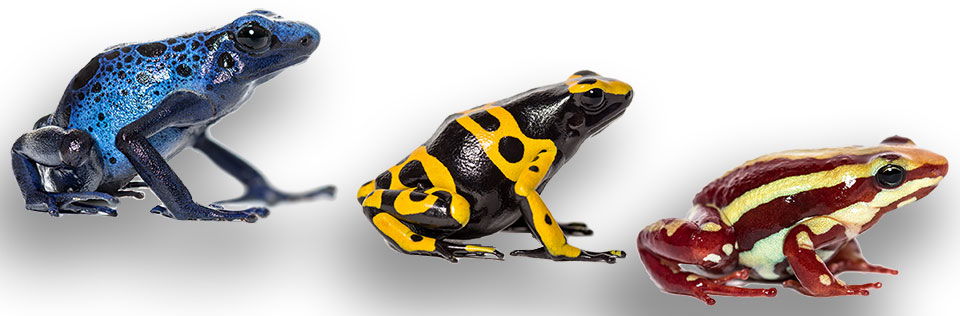
Bright colors in nature scream, “Eat me at your own risk!” That’s certainly the case for most poison dart frogs. The Dendrobatidae family of frogs produce over 500 toxins released from glands all over their bodies. The poison is potent enough to kill a predator—or even a person. So how do these little frogs survive when they are practically oozing poison?
Poison dart frogs collect toxins from the insects they eat and then transport those chemicals from their digestive system to their skin. Scientists recently discovered a protein called ABG in the frog’s body. ABG is unusual among proteins because it binds to multiple toxic chemicals. Scientists believe that this protein carries most of the chemicals away from the internal organs and to the skin. With this process, it makes sense how these little frogs survive their own poison.
Before the fall, frogs like Dendrobatidae would not have been poisonous. But even in this fallen world, we see the fingerprints of our good Creator all over his creation, even in a little frog that has a special way to keep itself from getting taken out by its own toxins!
Answers Magazine
April–June 2025

There’s a whole world of beautiful places to explore. But what does Jesus’ earthly ministry teach us about truly seeing the world?
Browse Issue
Support the creation/gospel message by donating or getting involved!

Answers in Genesis is an apologetics ministry, dedicated to helping Christians defend their faith and proclaim the good news of Jesus Christ.
- Customer Service 800.778.3390
- Available Monday–Friday | 9 AM–5 PM ET
- © 2026 Answers in Genesis