

Image by High Tea With Elephants via Unsplash
Elephant Trunks Even More Complex Than Previously Thought
The writers and editors over at Popular Science are confused. In an article highlighting new research on elephant whiskers, they write, “An elephant’s trunk is a wonder of evolution.” Then in the same paragraph, they state, “[The whiskers] have a design”—well, which is it? Did the elephant’s trunk and whiskers evolve or do they have design? Evolutionists often use the word “design” but are oblivious to what they are really stating!
When science writers describe the wonders of creation, they can’t seem to help using that word “design,” even as they attribute complexity to evolution. But evolution can’t “design” anything. It’s supposedly a mindless, purposeless, random process. It has no ability to design or create. And yet that word is used over and over because, well, creation looks designed! (Because it was!)
Take, for example, these elephant whiskers. An elephant has 1,000 of them on its trunk. Together with a network of extremely precise muscles, these whiskers allow elephants to pick up something as delicate as a tortilla chip without breaking it. But scientists weren’t exactly sure how the whiskers worked. So they scanned several elephant whiskers with micro-CT and discovered that the whiskers weren’t at all like what they expected.
Initially, the team expected that the whiskers would be more similar to the tapered whiskers of mice and rats. These rodent whiskers have a circular cross-section, are completely solid throughout, and have approximately uniform stiffness. . . .
Elephant trunk whiskers are more thick and blade-like, have a flattened cross-section, a hollow base, and several long internal channels that look more like the structure of sheep horns and horse hooves. Having a more porous build reduces the whisker’s mass and provides impact resistance—which helps them eat hundreds of pounds of food without damaging their whiskers.
These whiskers, which they note have similarities to cat whiskers, were also surprising because they have “stiff bases that transition to soft rubber-like tips.” This is an important design feature that “keeps them in tact and helps let the elephant determine what it is feeling. The team believes that elephant whiskers’ unusual stiffness gradient helps them know precisely where an object is coming into contact along each of their 1,000 trunk whiskers.”
One of the study coauthors said,
It’s pretty amazing! The stiffness gradient provides a map to allow elephants to detect where contact occurs along each whisker. . . . This property helps them know how close or how far their trunk is from an object . . . all baked into the geometry, porosity, and stiffness of the whisker. Engineers call this natural phenomenon embodied intelligence.
Something as seemingly “simple” as a whisker is actually more complex than previously thought—so much so that these engineers believe the whiskers have “embodied intelligence.” They’re also hopeful the research could help sensors on robots achieve more precision through the whiskers’ “simple yet intelligent design” . . . and yet they give the credit to random chance processes.
As much as evolutionists want to deny it, it is obvious from creation that there is a Creator.
As much as evolutionists want to deny it, it is obvious from creation that there is a Creator. As I’ve said in the past (and my dear friend Buddy Davis would sing), “It’s designed to do what it does do, what it does do it does do well, doesn’t it?” We see the handiwork of God in everything he’s made, right down to the individual parts that make up something as complicated as an elephant!
You can learn more about the complexity of elephants in this video from our YouTube channel:
Evolutionists are without excuse for rejecting the God of the Bible because he’s made his existence and power evident to all through what he’s made—even through the humble whiskers of the elephant.
For what can be known about God is plain to them, because God has shown it to them. For his invisible attributes, namely, his eternal power and divine nature, have been clearly perceived, ever since the creation of the world, in the things that have been made. So they are without excuse. For although they knew God, they did not honor him as God or give thanks to him, but they became futile in their thinking, and their foolish hearts were darkened. Claiming to be wise, they became fools, and exchanged the glory of the immortal God for images resembling mortal man and birds and animals and creeping things. (Romans 1:19–23)
Thanks for stopping by and thanks for praying,
Ken
This item was written with the assistance of AiG’s research team.
Most Recent News
-
March 30, 2026 from Ken Ham Blog
Scientists have now added another unique feature of the platypus to the already long list.
-
March 28, 2026 from Ken Ham Blog
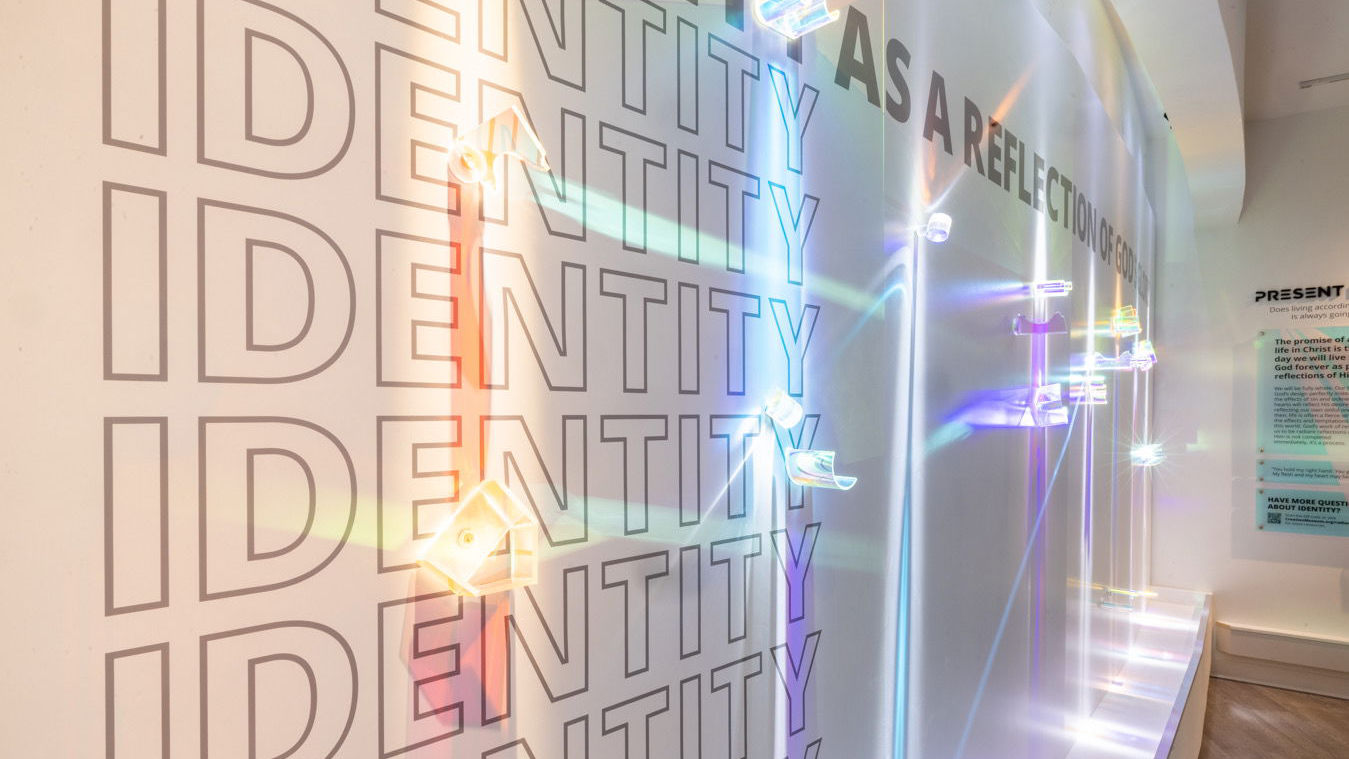
A stunning new exhibit called Radiance has opened at the Creation Museum. So what is it all about?

Support the creation/gospel message by donating or getting involved!

Answers in Genesis is an apologetics ministry, dedicated to helping Christians defend their faith and proclaim the good news of Jesus Christ.
- Customer Service 800.778.3390
- Available Monday–Friday | 9 AM–5 PM ET
- © 2026 Answers in Genesis