

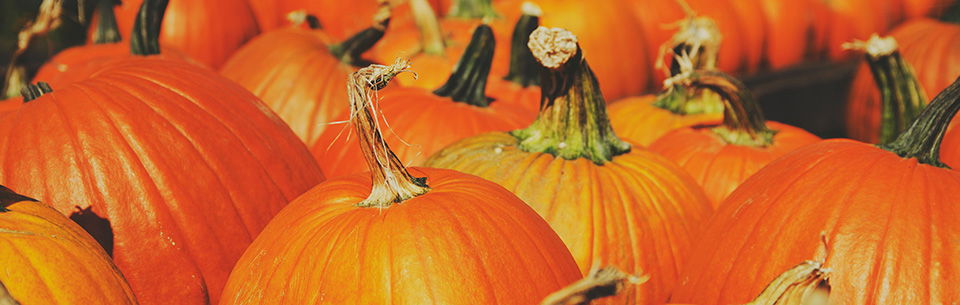
Photo by Hide Obara on Unsplash
Halloween: A Remembrance of the Global Flood?
The history of Samhain, Halloween, and a possible link to Noah’s Flood.
Halloween has become one of the most popular US holidays, with its origin stretching back thousands of years. The ancient (c. AD 200–900) Celtic festival Samhain (pronounced SOW-in) marked the end of the harvest and the beginning of winter (around November 1). On the “positive” side, retail sales boost the economy around this holiday, with 2024 amassing $11.6 billion dollars in sales of candy, costumes, and decorations.1 But there are many negatives to this holiday, like vandalism, property destruction, and increases in occult activity, including a fascination with paranormal (demonic) activity.2
Samhain (~1,300–2,000 years ago)
Samhain was/is a Gaelic festival in Celtic regions (modern-day Ireland, UK, Scotland, and Wales). Celts believed that on the night before Samhain (October 31), the boundary between the worlds of the living and the dead became passable. It was during this time that the Celts believed that the prehistoric graves from before their time opened and their gods and spirits, who dwelt inside, walked the earth.
Bonfires were lit, costumes were worn (often animal skins or woven plant matter; sometimes including masks), and offerings of food were left out to appease wandering spirits. “On Samhain, fires were supposed to be extinguished and rekindled from ceremonial fires lit by druids. To facilitate the transfer of this fire, coals were placed into lanterns made from root vegetables.”3
Although a precise description of a Druid is difficult to nail down, one writer provided a nice summation:
Druids were powerful, intellectual elites who served as the arbiters of truth and justice amongst their Celtic clans. In cases where human lives hung in the balance, druids effectively took on the roles of judge and jury (and perhaps even executioner on occasion). As philosophers and leaders of Celtic spiritual life, druids preached the immortality and transmigration of the soul, i.e., the concept that souls travel to another world—the Otherworld—after death. As scientists and astronomers, druids studied the movement of celestial bodies and developed both lunar and solar calendars. Becoming a druid required up to twenty years of study, and druidic knowledge was passed on orally.4
Samhain had many traditions associated with it that closely mirror ones practiced on Halloween. These include “bobbing for apples” (which seemed to have “originated as a courtship ritual—a game for divining the future romantic [success] of the players”5). Jack-o’-lanterns were made mainly from turnips, beets, and potatoes. The carved faces served to give air to the flame and, supposedly, “to scare away any vengeful spirits, demons, fairies, etc. that happened to cross over from the Celtic netherworld during Samhain.”6 Then there are the colors associated with Samhain being repurposed for Halloween. Black represents the dark months of winter, as well as death and mourning. Orange is likely used as a replacement for the ceremonial Samhain fires lit by Druids after sunset on October 31. So those two colors were repurposed to black cats and orange pumpkins for Halloween.7
While today’s Halloween costumes, tricks, and treats are mostly pretty tame (superheroes, cartoon characters, princesses, etc.), in the festival of Samhain, the people (not just the children) dressed “as ghosts and goblins and all manner of ghoulish, ghastly, terrifying demons. The goal wasn’t to appear cute or strong or extravagant, it was to disguise oneself from—or even blend in with—the ghosts and goblins that might potentially be crossing over”8 to our dimension on October 31.
“Gifts of fruit and nuts, and animal sacrifices were offered to the gods”9 during Samhain. “Later generations of Celtic peoples began leaving sweet treats out on their doorsteps on the evening of October 31st to appease the fairies and whatever demons and restless spirits might be in their company.”10 As the festival became “Christianized” starting from the seventh century AD, “it became less about appeasing sinister fairies and spirits and more about accommodating the homesick souls of loved ones who’d passed on.”11
But when hungry villagers and townsfolk began to notice that there was lots of free food being put out every year on doorsteps that night, they “dressed as ghosts and fairies and demons and the like [and] began accepting (re: stealing) Samhain offerings on behalf of those otherworldly beings they were impersonating.”12
Upon arriving at homes that didn’t have any treats on offer, the disguised Samhain revelers perpetrated acts of mischief in response. As a result, people eventually began giving out sweet treats on the evening of October 31st to appease not the spirits, but their costumed impersonators.13
Christian Influence: All Saints’ & All Souls’ Days (Seventh–Eleventh Centuries)
Pope Boniface IV (AD 610) designated All Saints’ Day (also called All Hallows’ Day) on November 1 to honor saints and martyrs.
Pope Boniface IV (AD 610) designated All Saints’ Day (also called All Hallows’ Day) on November 1 to honor saints and martyrs. The night before (October 31) became known as All Hallows’ Eve, which later “linguistically devolved” into Halloween. By the eleventh century, All Souls’ Day (November 2) was added to honor all the dead, reinforcing the themes of death and remembrance during this time of year.
One of the newer customs that occurred in this transition from Samhain to All Hallows’ Day (Halloween) was “souling,” which became common—poor people would go door-to-door offering prayers for the dead in exchange for food (precursor to trick-or-treating). “Today it is common in Lutheran [northern] Europe to celebrate All Saints with a special service in the evening, where the names of the recently dead are read aloud. Afterwards, the congregation walks to the graveyard and light candles on the graves. At home cakes have been baked (or bought) for children who are once again walking from door-to-door begging for alms or ‘soul-cakes’ (or candy).”14
Medieval to Early Modern Europe
Traditions like mumming (England) and guising (Scotland and Ireland) emerged as people put on plays and dressed in disguise and performed for food or coins. Mumming would often combine “music, dance, and sword fighting in episodes involving the death and revival of a character or characters.”15 Mumming was more often associated with late winter celebrations, like Christmas, whereas guising was more often performed near Halloween.
Guising was the direct ancestor of trick-or-treating.
Children dress up and go from house to house, telling jokes and stories or singing songs in exchange for sweeties and food. . . . Homeowners [would often] leave pumpkins or decorations outside their houses to indicate they were welcoming guisers. . . . Traditionally, guising requires [the children] to tell a story or a joke or sing a song, while trick or treating simply requires going up to doors and calling “trick or treat.” . . . According to [Celtic] folklore, children dressed up so they could venture out safely without wicked ghouls [and spirits] detecting them.16
Halloween Comes to America (Seventeenth–Twentieth Centuries)
Early American colonists (especially Puritans, Quakers, and Baptists) were rightly skeptical of Halloween’s pagan roots and didn’t widely celebrate it. However, as more Irish and Scottish immigrants arrived in the mid-1800s, they brought Halloween customs with them. By the late nineteenth century, Halloween had become a community-centered holiday in parts of the US, with parties, games, and seasonal foods:
Many Americans pushed to change Halloween to focus more on community fun [and togetherness] and less on ghosts, pranks and witchcraft.
Because of these efforts, Halloween lost most of its superstitious and religious overtones. By the 1920s and 1930s, Halloween had become a secular, community-centered holiday featuring town-wide parades and/or parties. With many young children in the mix during the fifties baby boom, parties became child-friendly and were moved to community centers, classrooms or homes. The centuries-old practice of trick-or-treating was also revived, since handing out candy is an inexpensive way for an entire community to share the Halloween celebration.17
Halloween 1950s–Present
Halloween exploded in popularity in the US. TV and films (like It’s the Great Pumpkin, Charlie Brown) reinforced traditions. Most children’s costumes shifted from homemade to store-bought.
Although there are still ghost, goblin, and witch costumes being worn, they have been surpassed in popularity by Spider-Man, Sonic the Hedgehog, Bluey, Minions, and Transformers (for boys) and Inside Out 2 characters, Bluey, Minions, and Disney princesses (for girls).18
However, there has been some negative press for Halloween “reverting to occultic roots” in the last 50 years because horror movies and slasher films are usually released near the end of October, like Halloween, Friday the 13th, and Nightmare on Elm Street (and their numerous sequels). These movies solidified scary and gory themes in pop culture. This may be a contributing factor to the 50% increase in violent crime reported on Halloween compared to an average night.19 Urban legends, some real but most embellished or completely fabricated (e.g., poisoned candy or candy with pins/razor blades), briefly impacted trick-or-treating, leading to more parent-supervised events.
Other Countries with Related Halloween Celebrations
The US and Ireland and the UK are not the only countries to celebrate Halloween (or another variant). Canada, Germany, France, and Italy all have cities that celebrate Halloween. The Philippines celebrate Halloween with a mix of traditional customs and “Pangangaluwa” (offering prayers for the dead). Japan and South Korea have embraced Halloween, often with an emphasis on elaborate costumes. In Latin America, Halloween sometimes overlaps or competes with Día de los Muertos (Day of the Dead). In fact, many European and Asian countries also celebrate Halloween (including Russia, India, and even parts of China).20
The Bible takes death very seriously, and in the OT economy, there were several prohibitions with what could and couldn’t be done during funerals. Numbers 19:7–10 and 11–18 details that anyone touching a dead animal would be unclean until evening but anyone touching a deceased human body would be unclean seven days. Deuteronomy 14:1–2 teaches that no cutting of one’s skin nor shaving the front of your head for the dead was to occur in the funerary rites. Deuteronomy 18:10–12 forbids Israel from practicing any form of witchcraft or necromancy. Deuteronomy 26:14 and Psalm 106:28–29 forbid offering food to the dead. All of the above were practiced by the Celts during Samhain (and some have carried over to Halloween).21
But the Bible does note that it is important to remember those who had died (especially if they had no heirs or if they are believers—either OT saints or NT saints): Ruth 4:5–10, Jeremiah 31:40, and Matthew 22:31–32. And the NT consistently teaches that because of Christ’s resurrection from the dead, Christians have a pattern and hope for our own bodily resurrection (1 Corinthians 15:20–27, 42–43, 51–55; 1 Thessalonians 4:15–17).
Did the Memory of Noah’s Flood Start a Worldwide Day to Honor or Fear the Dead?
In 1909, Colonel John Garnier wrote that the unifying element in Halloween and Day of the Dead Festivals was the global flood of Noah’s day:
The mythologies of all the ancient nations are interwoven with the events of the Deluge. . . . The force of this argument is illustrated by the fact of the observance of a great festival of the dead in commemoration of the event, not only by nations more or less in communication with each other, but by others so widely separated, both by the ocean and by centuries of time. This festival is, moreover, held by all on or about the very day on which, according to the Mosaic account, the deluge took place, the seventeenth day of the second month—the month nearly corresponding with our November.22
In 1951, Alfred Rehwinkel wrote,
All these traditions have in common a remembrance of the dead, which seems to point to a major calamity of the human race. Then there are echoes of a perishing world and the rebuilding of another. Customs and traditions found so widely scattered and with so many people must have their origin in some great experience in the past history of man. There is no common experience of the human race which would so well account for these strange customs and traditions as the Flood. And we may therefore well agree with Urquhart, who in concluding his remarks on these traditions says: “Here the traditions not only unite in bearing down to our own times that awful cry of anguish which once shook earth and sky, but also fix upon the very month and the very day which the Scriptures have recorded.”23
After the tower of Babel dispersion, people would have retained memories of the great flood with the death of all pre-flood humanity, likely told to them from Noah’s three sons, and the new post-flood beginning with the salvation of Noah and his family.
What is often overlooked, however, is that there is also the remembrance of the “Day of the Dead” followed by a New Year. This occurs on our calendar at the end of October or the beginning of November. Note that Genesis 7:1 states that it was on the 17th day of the 2nd month that the vast cataclysm of the Flood erupted on the earth. On the Old Testament . . . the first month of the year runs from mid-September to mid-October (cf. Genesis 26:12 where sowing and reaping take place in the same year, thus indicating an autumn New Year). Therefore, the commencement of the Flood would be the end of October or the beginning of November. Note as well how Genesis 7:21–23 stress the theme of universal death. . . .
Furthermore, the salvation of Noah and those in the Ark is completed by their leaving the Ark and starting anew on the 27th day of the 2nd month of the following year: that is, in November.
“Thus the old world perished in November and a year later a new era commenced in the same month. Both of these facts are indelibly enshrined in the memory of the human race. To many people around the world November brings the Day of the Dead. In a number of ancient and primitive calendars November also brings a New Year at a time which has neither solstice nor equinox nor astronomical event to justify it.”24
In the Northern Hemisphere, the Day of the Dead and its New Year are after harvest and before winter. For those in the Southern Hemisphere, the cycles are reversed and occur in the middle of spring—after planting and before harvesttime. And yet, they all have this remembrance of death and a new beginning.
These remembrances are strong circumstantial evidence for the historical reality of Noah’s flood.
These remembrances are strong circumstantial evidence for the historical reality of Noah’s flood. The idea that Halloween is just the remnant of a Druid ancestral worship and occultic celebration is misleading and incomplete. “It is, instead, a reminder both of God’s judgment on human rebellion [wickedness at the time of the flood]”25 and his providential care of Noah, his family, and the animals on the ark. The only death-to-life account we should focus on are not Celtic “occultic stories of ghosts and spirits” but on the true account of Scripture that mentions that Christ’s resurrection is our pattern and hope.
Paul, a servant of Christ Jesus, called to be an apostle, set apart for the gospel of God, which he promised beforehand through his prophets in the holy Scriptures, concerning his Son, who was descended from David according to the flesh and was declared to be the Son of God in power according to the Spirit of holiness by his resurrection from the dead, Jesus Christ our Lord, through whom we have received grace and apostleship to bring about the obedience of faith for the sake of his name among all the nations, including you who are called to belong to Jesus Christ. (Romans 1:1–6)
Blessed be the God and Father of our Lord Jesus Christ! According to his great mercy, he has caused us to be born again to a living hope through the resurrection of Jesus Christ from the dead to an inheritance that is imperishable, undefiled, and unfading, kept in heaven for you. (1 Peter 1:3–4)

Footnotes
- Nathan Reiff, “Halloween’s Effect on the Economy,” Investopedia, updated October 24, 2024, https://www.investopedia.com/ask/answers/102714/how-does-halloween-affect-economy.asp.
- Foresight, “How Halloween and Horror Films Impact Crime Rates,” October 23, 2024, https://www.foresight.expert/news/halloween.
- I. E., “6 Halloween Rituals Rooted in the Ancient Celtic Festival of Samhain,” Irish Myths, October 1, 2021, https://irishmyths.com/2021/10/01/history-of-halloween-traditions/.
- I. E., “Who Were the Druids? Demystifying the Mystics of the Ancient Celtic World,” Irish Myths, April 11, 2022, https://irishmyths.com/2022/04/11/what-are-druids/.
- I. E., “6 Halloween Rituals.”
- I. E., “6 Halloween Rituals.”
- I. E., “6 Halloween Rituals”; I. E., “Why Are Black and Orange the Colors of Halloween?,” Irish Myths, October 13, 2022, https://irishmyths.com/2022/10/13/black-and-orange-halloween-colors/.
- I. E., “6 Halloween Rituals.”
- Alison Richards, “The Secret, Steamy History of Halloween Apples,” NPR, October 31, 2013, https://www.npr.org/sections/thesalt/2013/10/30/241924745/the-secret-steamy-history-of-halloween-apples.
- I. E., “6 Halloween Rituals.”
- I. E., “Why Do We Give Out Candy on Halloween?,” Irish Myths, October 19, 2022, https://irishmyths.com/2022/10/19/halloween-candy-origins/.
- I. E., “6 Halloween Rituals.”
- I. E., “6 Halloween Rituals”; I. E., “Why Do We Go Trick-or-Treating on Halloween?,” Irish Myths, October 24, 2022, https://irishmyths.com/2022/10/24/trick-or-treating-history/.
- “Medieval Histories,” October 31, 2013, https://www.medieval.eu/soul-cakes-and-souling/.
- “What Is a Mumming?,” accessed October 2025, https://web.abo.fi/karen/special/steatern/arkiv/2005/material/mummers_play/mummings.html.
- Sophie Parsons, “Halloween Guising Scotland: Meaning and Is It Different from Trick or Treating?,” The Herald, October 18, 2021, https://www.heraldscotland.com/news/19655339.halloween-guising-scotland-meaning-different-trick-treating/.
- iE-USA, “The Cultural Evolution of Halloween,” International Experience, October 30, 2017, https://ie-usa.org/blog/hosting/the-cultural-evolution-of-halloween/.
- Wyatt Edwards, “Most Popular Halloween Costumes of 2024,” HalloweenCostumes.com, October 12, 2024, https://www.halloweencostumes.com/blog/p-1399-most-popular-halloween-costumes.aspx.
- Robert Callaway, “Does Crime Go up on Halloween? Crime on Halloween,” Callaway Security, October 24, 2025, https://callawaysecurity.com/crime-on-halloween/.
- World Population Review, “Countries That Celebrate Halloween 2025,” accessed October 2025, https://worldpopulationreview.com/country-rankings/countries-that-celebrate-halloween#title
- Cornelius Mulenga Matandiko, “A Christian Response to Zambian Death Rituals” (PhD diss., Andrews University, 1996), https://core.ac.uk/download/289244133.pdf.
- John Garnier, The Worship of the Dead (London: Chapman & Hall, 1909), 4.
- Alfred Rehwinkel, The Flood: In the Light of the Bible, Geology and Archaeology, 17th Printing (St. Louis, MO: Concordia Publishing House, 1951), 171.
- Frederick A. Filby, The Flood Reconsidered (Grand Rapids, MI: Zondervan, 1977), 106; Frank Humphrey, “The Great Flood and Halloween—A Christian Response to Halloween,” Free Republic, October 31, 2003, https://freerepublic.com/focus/f-religion/1012521/posts.
- Humphrey, “The Great Flood and Halloween.”
Support the creation/gospel message by donating or getting involved!

Answers in Genesis is an apologetics ministry, dedicated to helping Christians defend their faith and proclaim the good news of Jesus Christ.
- Customer Service 800.778.3390
- Available Monday–Friday | 9 AM–5 PM ET
- © 2026 Answers in Genesis