
Do Eight Blood Types Confirm Eight People Boarded the Ark?
Floating around social media is the claim that there are eight blood types and eight people on Noah’s ark, and therefore, that somehow proves the Bible.1 Unfortunately, the only true part of that claim is that eight people were on the ark. The rest is fiction.
It should surprise no one that a claim on social media is false, particularly with rampant AI slop. However, in this instance, it is making a mockery of undiscerning Christians.
How Many Blood Types, Really?
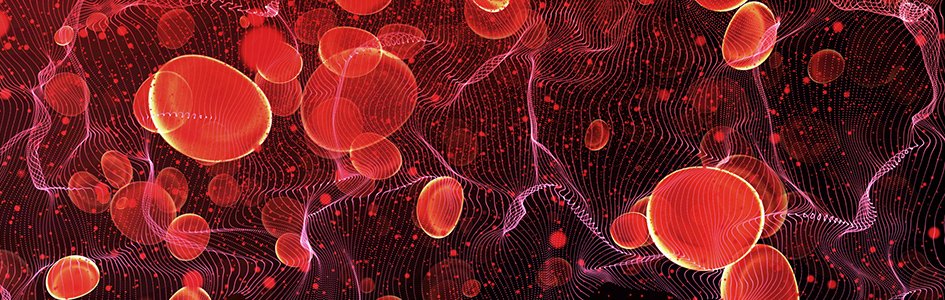
Before we go into why this claim is fiction, we need to understand the basics of blood typing. The most common thing we think of when we hear blood type is the ABO system of blood types. Each type is characterized by the presence or absence of a particular antigen. An antigen is a marker on the surface of a red blood cell. There are no antigens at all on type O blood, A antigen on type A, B antigen on B, and A and B antigens on type AB. Rh factor, another important blood-typing system, is simply positive or negative.
On the surface (pun intended), it is easy to see where the eight blood types myth comes from. Two potential Rh factors and four ABO possibilities equal eight blood types. Simple. Except technically wrong. There are many other antigens on the surface of red blood cells. We know of over 350 different antigens on the surface of red blood cells, and there are 47 different ways to “type” blood.2
There are 47 different ways to “type” blood.
A further problem is that ABO and Rh factors are independent of one another. In other words, there is no association between a specific ABO type and positive or negative Rh factor. A person with A blood type is equally likely to be Rh positive or negative. Because they are separate blood types, saying a person is A+ is not a single blood type but a combination of two blood-typing systems. So there are not eight blood types . . . unless you combine two separate blood-typing systems. These systems are very useful for determining important medical decisions, particularly in regards to blood transfusions.
The Rh Factor
As an even more complicated problem, Rh factor can cause pregnancy complications if mom is Rh- and the baby is Rh+. Usually, this only becomes a problem for child number two, onward, because mom’s blood only contacts baby’s blood during delivery. That contact, however, causes mom’s blood to form resistance antibodies to Rh+. Basically, the woman’s body identifies the developing baby’s red blood cells as a foreign intruder, due to the incompatible Rh factor. Since mom does pass her antibodies to the baby, when she has her second child with Rh+, the antibodies enter the baby’s bloodstream and attack the baby. This can be lethal to the child if untreated. In the past, if the mother had a stillbirth, she risked infection or other complications, meaning her life was also potentially at risk. What that means, in effect, is that if any of Noah’s son’s wives were Rh- and were married to a son that was Rh+, there is a strong likelihood of frequent miscarriages. Given that Noah’s sons and their wives repopulated the planet after the flood, this seems very unlikely.
An Absurd, Unnecessary Claim
Additionally, we are not told that Noah and his wife had any additional children after the flood. If they represented two of the commonly purported “eight” blood types, those types should be extinct.
You don’t need the eight major blood types on the ark to explain their existence today.
The most absurd thing about this line of reasoning is that you don’t need the eight major blood types on the ark to explain their existence today. In fact, getting all eight blood types from Noah, his wife, and their sons is trivial.
| A- | B- | |
|---|---|---|
| O+ | AO+ (A+) | BO+ (B+) |
| O- | AO- (A-) | BO- (B-) |
|
|
The most common ABO blood type is type O+.3 Type O blood is recessive, meaning that you must have two copies of the O allele for it to be present. Rh+ is dominant, meaning that you can have an allele for Rh- but still be Rh+. With that information in mind, let’s build a potential, very simplified Punnett square for one of Noah’s sons and his wife, and see how easy it is to get all the major blood types in just two generations.
If we give Japheth’s wife the most common blood type today, O+, and him AB-, their children could be A+, B+, A-, or B-. Those blood types could be swapped, and we would still have the same result. However, all the children would carry the O allele. Just within their children, we have the potential for all the blood types that exist today. Add the variability introduced by the other two couples and their blood types, and developing multiple blood types becomes incredibly simple.
All of the above assumes that Rh factor variability even existed at the flood. Rh+ is by far the most common, representing approximately 93% of the globe.4 There are only two genes for Rh factor, with one only having one variant and the other having four variants.5 It is possible that the variants in the second Rh gene developed post flood, possibly either directly before or after the Babel dispersion.
Ultimately, it does not matter if the Rh- trait existed at the flood or only developed after. Even one son of Noah and his wife are sufficient to produce all the blood types we observe in the world today.

Footnotes
- For example, Isaiah (@atonedfor_), “Glory to God!,” Instagram, January 6, 2026, https://www.instagram.com/reel/DTL4JsvEn6O/;
Victoria | Fugifilm (@filmedwithvictoria), “that one,” TikTok, January 3, 2026, https://www.tiktok.com/@filmedwithvictoria/video/7591195111002819871. - Marilyn Perkins, “How Many Blood Types Are There?,” Live Science, November 29, 2024, https://www.livescience.com/health/heart-circulation/how-many-blood-types-are-there.
- The Blood Matters Blog, “What Is the World’s Most Common Blood Type?,” July 10, 2025, Our Blood Institute, July 10, 2025, https://ourbloodinstitute.org/blood-matters/most-common-blood-type/.
- Biology Insights, “Frequency of Blood Types Across Populations,” July 27, 2025, https://biologyinsights.com/frequency-of-blood-types-across-populations/.
- Hiroshi Okuda and Eiji Kajii, “The Evolution and Formation of RH Genes,” Legal Medicine 4, no. 3 (September 2002): 139–155, https://doi.org/10.1016/S1344-6223(02)00031-7.

Support the creation/gospel message by donating or getting involved!

Answers in Genesis is an apologetics ministry, dedicated to helping Christians defend their faith and proclaim the good news of Jesus Christ.
- Customer Service 800.778.3390
- Available Monday–Friday | 9 AM–5 PM ET
- © 2026 Answers in Genesis