
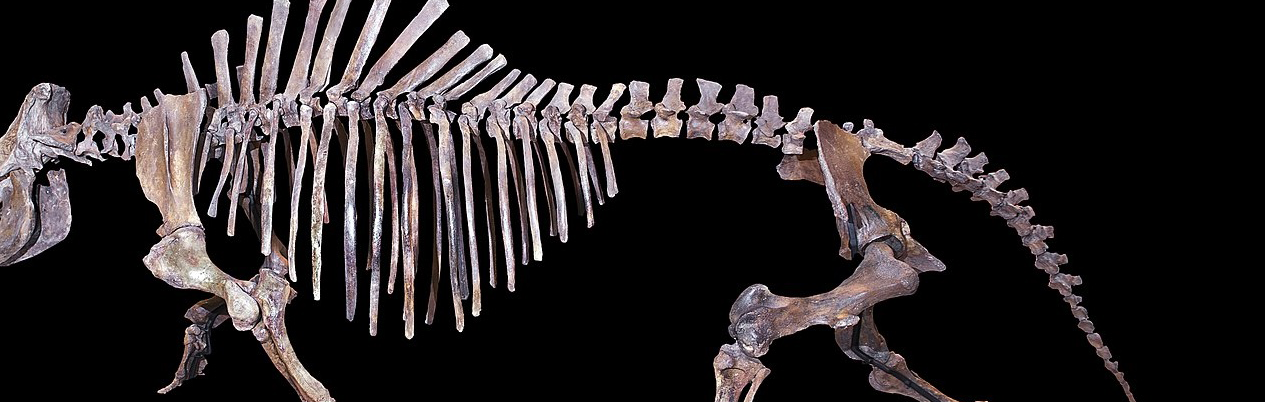
CC4.0 by Didier Descouens via Wikimedia Commons. (Image of rhino fossil, but not the Arctic rhino discussed.)
New Hornless “Arctic Rhino” Fossil Discovered
Far up north, in the frigid Canadian Arctic Circle, researchers have found a nearly complete fossil of a new rhinoceros species, Epiatheracerium itjilik, and it is in “excellent condition.” This Arctic rhino was “relatively small and slight” and did not have the characteristic horn. It’s dated at a supposed 23 million years, in evolutionary thought—but how should we understand it in a biblical worldview?
This rhino should remind us of two things:
-
God made life according to its kind.
God made life according to its kind. All 5 extant rhino species and the “more than 50 species known from the fossil record” (a number noted by one of the study authors) are all part of one kind: the rhinoceros kind (assuming they aren’t lumping “rhino relatives”—in other words, evolutionary interpretations of other unrelated creatures—into the list of 50 species).
When God originally created each kind, he put genetic diversity into their DNA so they could survive and thrive in the ever-changing, post-fall, post-flood world. This means creatures can adapt (using this inbuilt genetic diversity) to living in a variety of environments. This is not evolution—just variation within a kind.
While it might seem strange to picture rhinoceroses tromping across the Arctic when we typically see these animals baking in the heat of an African savanna, it actually shouldn’t surprise us. Consider that, today, species belonging to the bear kind thrive in the frigid Arctic, in temperate forests, and amongst bamboo in China. Species of the dog kind have a successful home in the Arctic and in the middle of scorching deserts. Same with the cat kind, rabbit kind, and so on. Historically, this was true of the elephant kind too! It’s all possible because of the genetic information God put into each kind he created.
-
The researchers claim they’ve found “evidence that the new Arctic species migrated to North America across a ‘land bridge’ that may have been a passage for terrestrial-mammal dispersal millions of years later than suggested by previous evidence.”
In other words, various species migrated from Europe and Asia into North America via a land bridge in the past. Evolutionists put this event in the very distant past. We likewise believe there was such a land bridge—but it was available just a few thousand years ago during the post-flood ice age.
After the flood of Noah’s day, oceans warmed by volcanic and tectonic activity, and continents cooled by volcanic ash and aerosols reflecting sunlight into space created the perfect conditions for an ice age. All of the evaporation necessary to pile up so much snow and ice also lowered ocean levels, exposing land bridges people and animals could use in migrations.
During this one ice age, earth was a very different place than it is today, and it was during this centuries-long period that mammoths, giant ground sloths, woolly rhinos, saber-tooth cats, dire wolves, and giant cave bears made their homes in the Arctic and similar areas. As conditions changed (and perhaps with some help from human hunting), these creatures went extinct. With their deaths, those genetic variations were eliminated from the gene pool, and we no longer see that variability today.
This new rhino species is being interpreted through an evolutionary lens of millions of years of earth’s history. But we look at the same fossils and have a very different interpretation because we have a different starting point: the perfect history given to us in God’s Word.
Thanks for stopping by and thanks for praying,
Ken
This item was written with the assistance of AiG’s research team.
Support the creation/gospel message by donating or getting involved!

Answers in Genesis is an apologetics ministry, dedicated to helping Christians defend their faith and proclaim the good news of Jesus Christ.
- Customer Service 800.778.3390
- Available Monday–Friday | 9 AM–5 PM ET
- © 2026 Answers in Genesis