

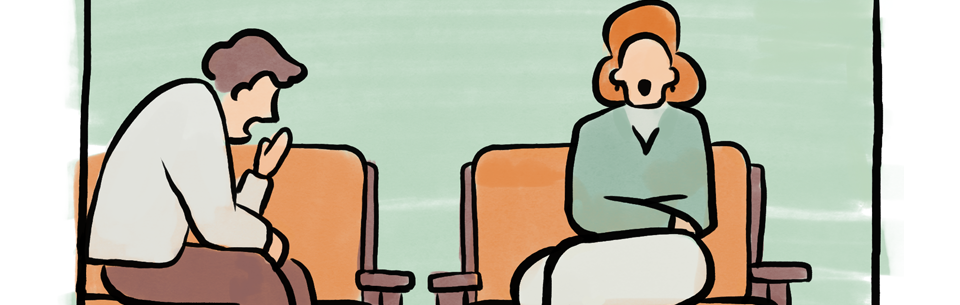
What a Yawn!
Human Biology
Pufferfish do it. Vultures do it. Donkeys do it. Pythons do it. Chimpanzees do it. Your Uncle Mike does it.
You might even find yourself doing it while you read this article.
From fish and birds to reptiles and mammals, nearly all vertebrates yawn. Even before babies take their first breath, they yawn in the womb.
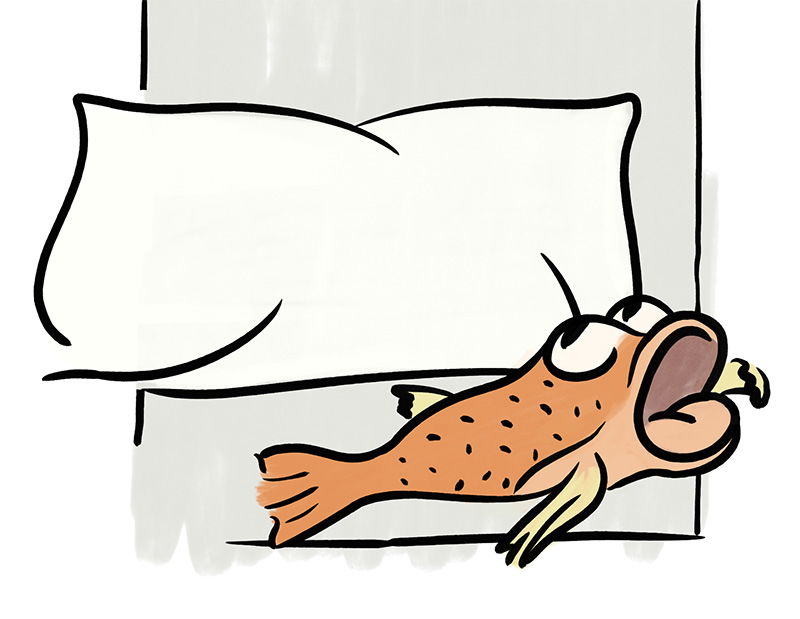
Charles Darwin noticed the ubiquity of yawns, writing in his 1838 field notes, “Seeing a dog and horse and man yawn, makes me feel how much all animals are built on one structure.”
Darwin believed yawning was the effect of animals evolving from a common ancestor over a long period of time. But what Darwin was really observing was evidence of a common Designer.
Even though we know surprisingly little else about this familiar action, we can be certain of where yawns came from: the Creator God, who made everything during the six-day creation week.
Bring It Yawn
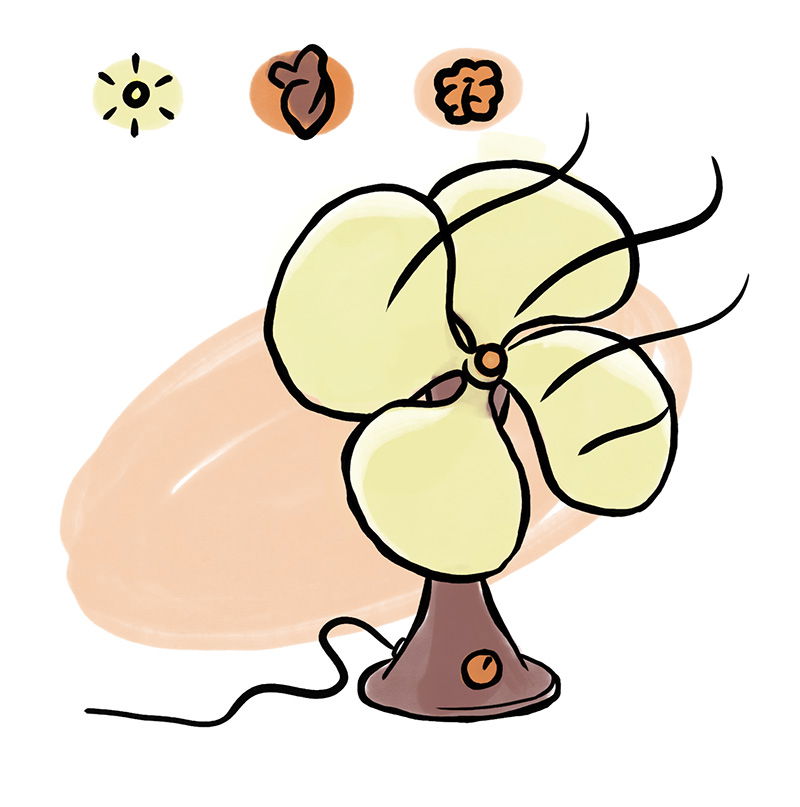
Yawning helps cool your brain by forcing warm blood out of your head and cooling down the blood near your lungs. The cool blood is then sent to your head.
You probably know that you yawn when you’re tired or bored. But yawns often occur after we wake up or right before we go to sleep. For a while, scientists believed that yawning might help rouse us by activating our brains and increasing our heart rates.
Today, however, the most widely accepted theory is that we yawn to cool our brains. A 2014 study published in Physiology and Behavior found that yawning occurred less in winter than summer.1 Another study conducted by Andrew Gallup, a psychology professor who researches yawns, found that people yawned less frequently while holding cold compresses to their foreheads.2
How does yawning cool the brain? Opening your jaw at the beginning of a yawn forces the warm blood in your brain to rush through blood vessels that move blood away from your head. At the same time, the air you’ve inhaled cools down the blood near your lungs. The cool blood is then sent up to your head.
Growing Into It
While it may feel like a reflex, research has also shown that contagious yawning probably isn’t completely automatic because it does not start in humans until age four or five.3
If yawning is about cooling, why do we do it more in the morning or late at night? In the evening, your brain and body temperatures are at their highest point throughout the day. As you fall asleep, your body temperature drops rapidly to prepare for sleep. When you wake up in the morning, your body and brain temperatures rapidly increase. Yawning is thought to help facilitate these changes.
Pass It Yawn
What about pass-it-on yawns, when seeing, hearing, or thinking about yawning increases the likelihood that you’ll do it too?
Many scientists believe we catch yawns from those we love because we share an empathic connection with them. Past studies have shown that those who score higher on empathy tests are more susceptible to contagious yawning.
But more recent studies indicate that the empathy theory might not be true. Now, scientists believe seeing a yawn activates your mirror neurons, causing you to unconsciously copy the behavior. We mirror other behaviors, too—smiling back at someone who has grinned at us, crossing our legs after watching someone else do it, feeling an itch after seeing someone scratch their arm.
It’s still true that you’re more likely to yawn after a friend yawns than a stranger, but according to Gallup, that may simply be because you’re more likely to look at the people you love. Catch a stranger’s eye, and you might also catch their yawn.
Let It Out
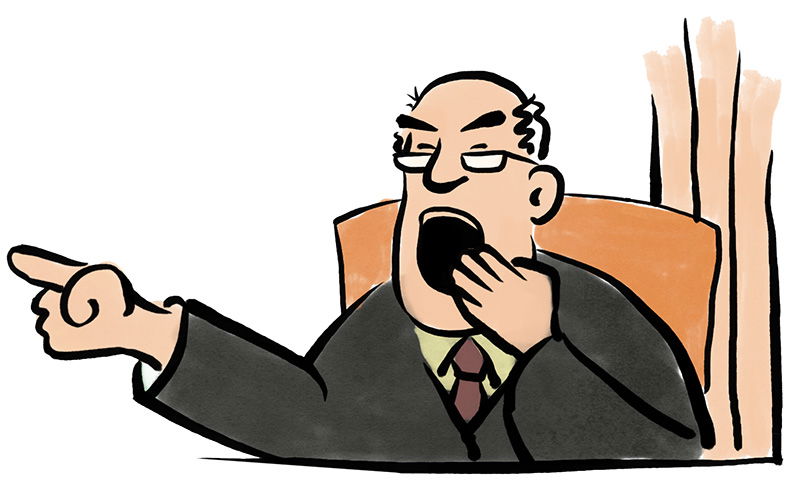
Yawns are perceived as rude because they convey sleepiness or boredom. Should you stifle your yawns during an important meeting or lecture? In 2009, one judge certainly thought so. He sentenced a spectator to six months in jail for contempt of court after the man yawned during a court session.4
Contrary to popular belief, yawning—and the subsequent cooling of your brain—might actually make you more alert and improve your attentiveness. The next time you feel yourself getting sleepy during a meeting, don’t stifle that yawn—let it out!
Like Person, Like Pup
Our canine companions are also susceptible to contagious yawns. Researchers found that while domesticated dogs will sometimes catch a yawn from a human, they don’t yawn after other dogs.5 Some scientists believe this is because dogs have been bred and domesticated to respond to their human’s social cues.
Answers Magazine
January–March 2025

Wildlife is moving into big cites. How are these creatures adapting?
Browse IssueFootnotes
- Jorg J. M. Massen, Kim Dusch, Omar Tonsi Eldakar, and Andrew C. Gallup, “A Thermal Window for Yawning in Humans: Yawning as a Brain Cooling Mechanism,” Physiology & Behavior 130, (2014): 145–148, https://pubmed.ncbi.nlm.nih.gov/24721675/.
- Andrew Gallup and Gordon Gallup, “Yawning as a Brain Cooling Mechanism: Nasal Breathing and Forehead Cooling Diminish the Incidence of Contagious Yawning,” Evolutionary Psychology 5, no. 1 (2007): https://psycnet.apa.org/record/2007-07737-009.
- Molly S. Helt, Inge-Marie Eigsti, Peter J. Snyder, Deborah A. Fein, “Contagious Yawning in Autistic and Typical Development,” Child Development 81, no. 5 ( 2010): 1620–1631, https://doi.org/10.1111/j.1467-8624.2010.01495.x.
- Matt Bartosik, “Shut Yer Mouth: Man Gets 6 Months for Yawning,” NBC Chicago, August 10, 2009, https://www.nbcchicago.com/news/local/yawn-in-court-earns-prison-time/1886012/.
- Patrick Neilands, Scott Claessens, Ivy Ren, Rebecca Hassall, Amalia P. M. Bastos, and Alex H. Taylor, “Contagious Yawning Is Not a Signal of Empathy: No Evidence of Familiarity, Gender or Prosociality Biases in Dogs,” Proceedings of the Royal Society B: Biological Sciences 287, no. 1920 (2020), https://doi.org/10.1098/rspb.2019.2236.




Support the creation/gospel message by donating or getting involved!

Answers in Genesis is an apologetics ministry, dedicated to helping Christians defend their faith and proclaim the good news of Jesus Christ.
- Customer Service 800.778.3390
- Available Monday–Friday | 9 AM–5 PM ET
- © 2026 Answers in Genesis