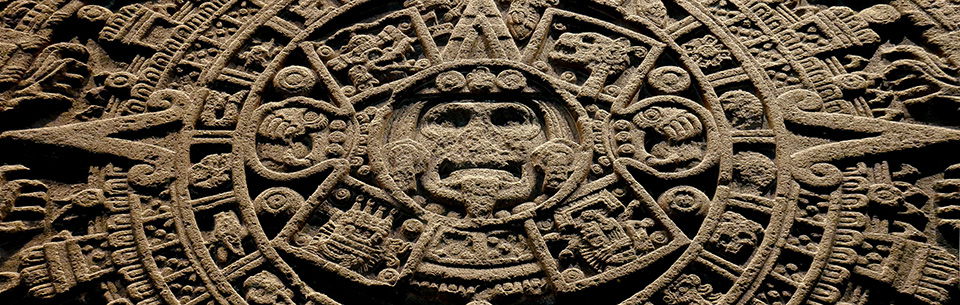
Photo by Roberto Carlos Román Don on Unsplash
The Lost History of the Aztecs
On the 700th anniversary of the capital city of Mexico’s famous ancestors, DNA is rewriting their backstory.
Two thousand twenty-five is the 700th anniversary of the founding of the Aztec city of Tenochtitlan.1 Think you know the story of the Aztecs? Why they rose to power? Who they came from? Think again. Recent breakthroughs in genetics have revolutionized our understanding of the pre-European history of the Americas. And a bonus: These discoveries also happen to testify to the scientific superiority of the young-earth creation framework.
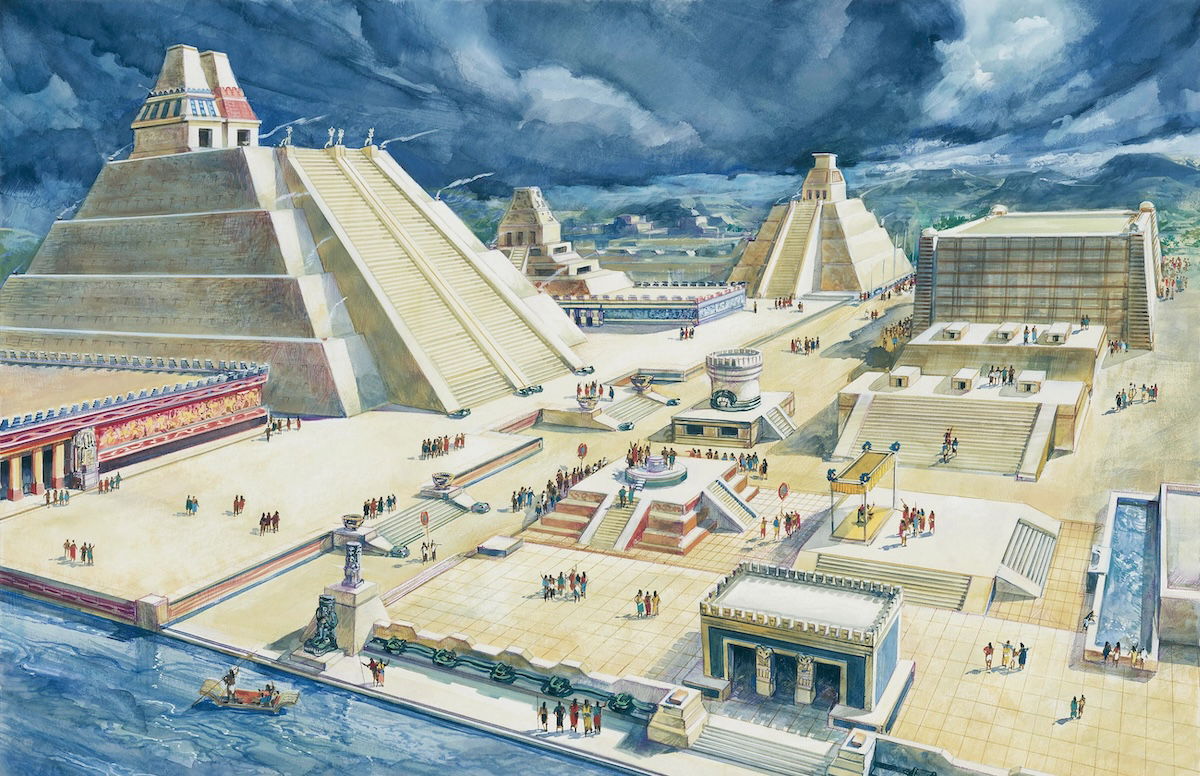
Central Precinct of Aztec capital city, Tenochtitlan. Attributed to Diego Rivera, Public domain, via Wikimedia Commons
What you’re about to read represents the results of a multiyear research project involving linguistics, indigenous history, archaeology, and genetics. For the technical justification for these conclusions, see the footnotes throughout.
Fast-Forward
The mainstream view2 of the Aztecs has held that 15,000 years ago, ancestors of the Aztecs migrated from Central Asia across the Bering Strait, rapidly dispersed throughout the Americas, and then . . . well, what? What happened?
According to mainstream science, more than 11,000 years passed with little more than hunting and gathering. No civilization. Nothing to write home about.
And then, in AD 1325, the Aztecs founded the city of Tenochtitlan.
Of course, I’ve skipped all the parts that preceded the Aztec ascent. The Olmec rise and fall, the Mayan rise and fall, the rise and fall of Teotihuacan—the greatest city in all of the pre-European Americas—another Mayan rise and fall, the Toltecs come and go, and then, finally, the Aztecs.
But what do these earlier civilizations matter? If all Native Americans descended from a single migration in the incomprehensibly distant past and if nothing happened for most of that impossibly long era, what significance do these earlier civilizations hold in explaining the rise of the Aztecs?
In short, the story I’ve just told you has been upended by recent research. And it reveals multiple links with civilizations of the Old World, links that explain why certain peoples succeeded and others failed.
A New Story
I have been working for several years on the male-inherited Y chromosome DNA.3 I have been following it backward in time, from the dramatic era of the post-Columbian population collapse to the periods of the original links with the Old World.
Just this month, I made a major breakthrough4 with another type of DNA: the female-inherited mitochondrial DNA. The histories revealed by mitochondrial DNA, along with the histories contained in Y chromosome DNA, are, well, gripping. Especially for Mesoamerica and for the period preceding the Aztecs—which casts Mesoamerica’s last pre-Columbian empire in a brand-new light.
New Drama
Who did the earliest major group of Americans descend from? Were these ancestors the same as the ancestors of the Aztecs? Archaeology puts the first cradle of civilization on the gulf coast of Mexico in the second millennium BC.5 The Olmecs, builders of the famous giant sculpted heads, birthed it. By the 400s BC, they were gone.6
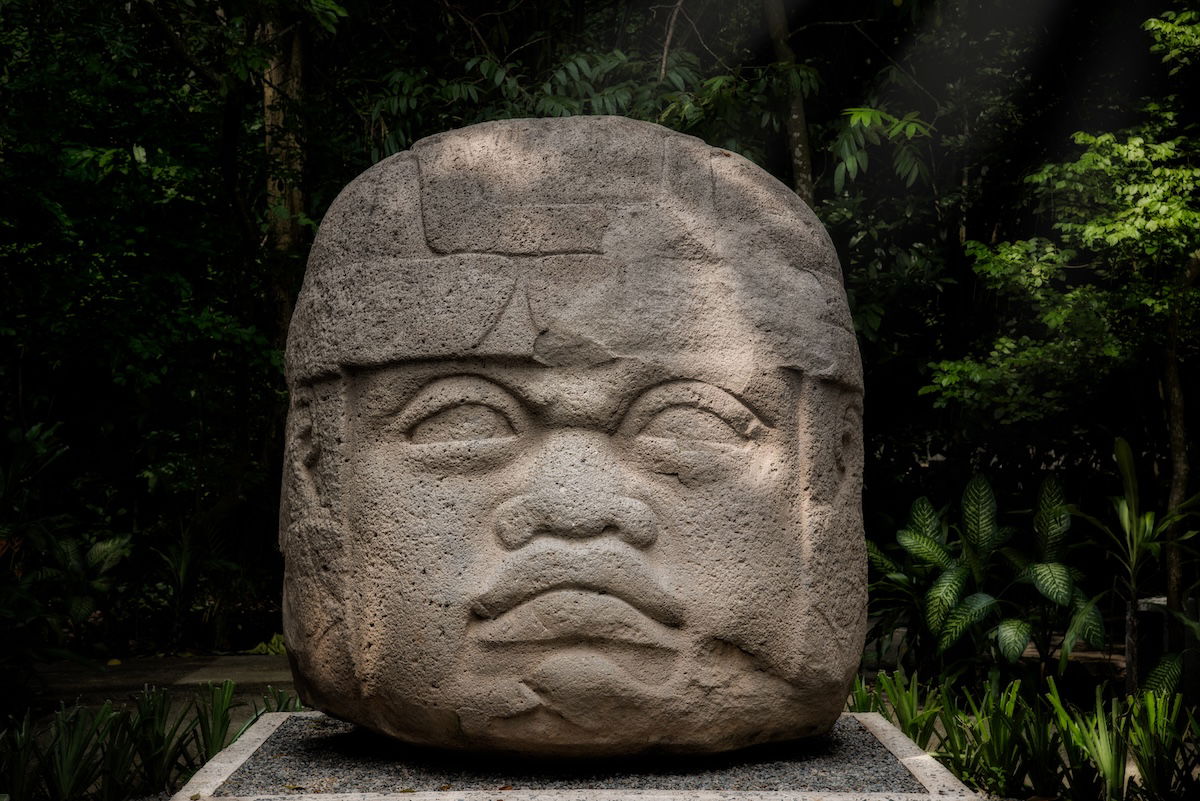
Olmec giant sculpted head
The Olmecs have no Y chromosome echo, nor do they have any mitochondrial DNA signature. Their origins are a mystery.
The Olmecs have no Y chromosome echo, nor do they have any mitochondrial DNA signature.
In the Guatemalan lowlands, Preclassic Mayan civilization7 was on the rise before the Olmecs disappeared. The Preclassic Mayan era then ended suddenly in the AD 100s. The Classic Mayan era commenced around AD 250. And then, in the AD 700s–1000s, the great lowland Mayan cities emptied, their kings stopped inscribing their histories, and the civilization collapsed, for reasons unknown—one of the great unsolved mysteries of our day.
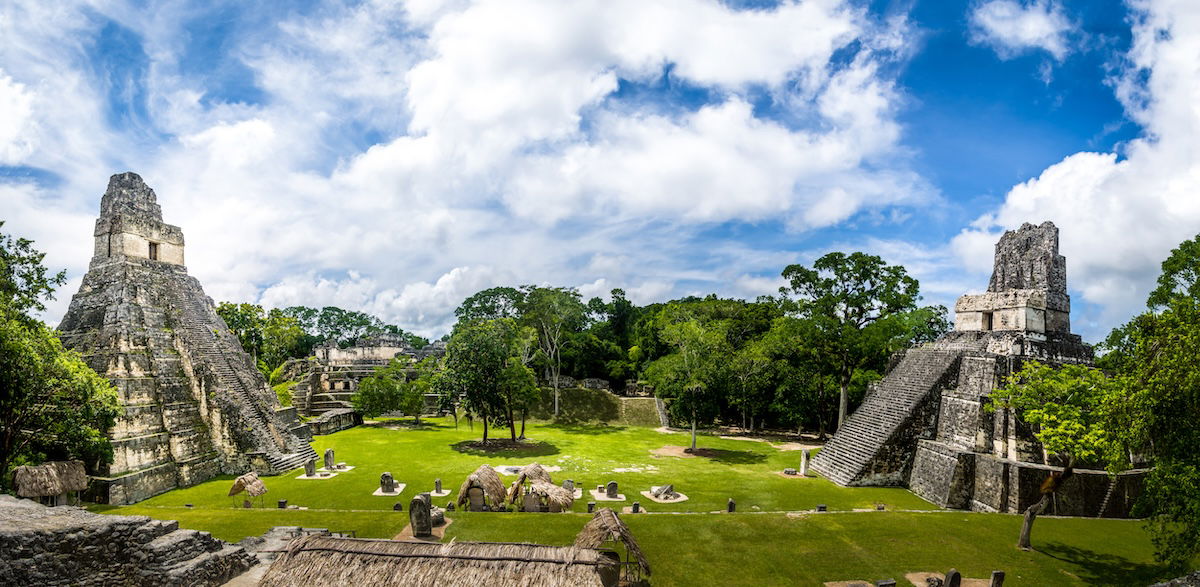
Mayan ruins
But the origins of the Maya are not. Female-inherited mitochondrial DNA traces a migration from northeast Asia into the Americas around 1000 BC—exactly when the lowland Mayan civilization began to flourish.8
Which means that the Olmecs had to contend with a group of invaders in their own backyard. It seems that the Maya ultimately got the upper hand. Again, no Olmec Y chromosome or mitochondrial DNA lineages have been detected among modern indigenous Americans.
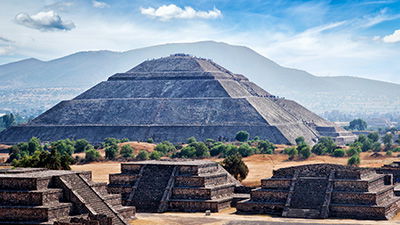
In the 100s BC, after the Preclassic Maya had already begun to flourish, the great Mexican city of Teotihuacan accelerated the pace of its growth.9 At its peak, in the centuries after Christ, Teotihuacan achieved a population size of up to 200,000 people. In the Maya lowlands, there are hints that Teotihuacan conquered and ruled parts of the Classic Mayan domains.10 Then, in the AD 600s, a couple of centuries before the Classic Maya began to collapse, Teotihuacan was violently overthrown.11
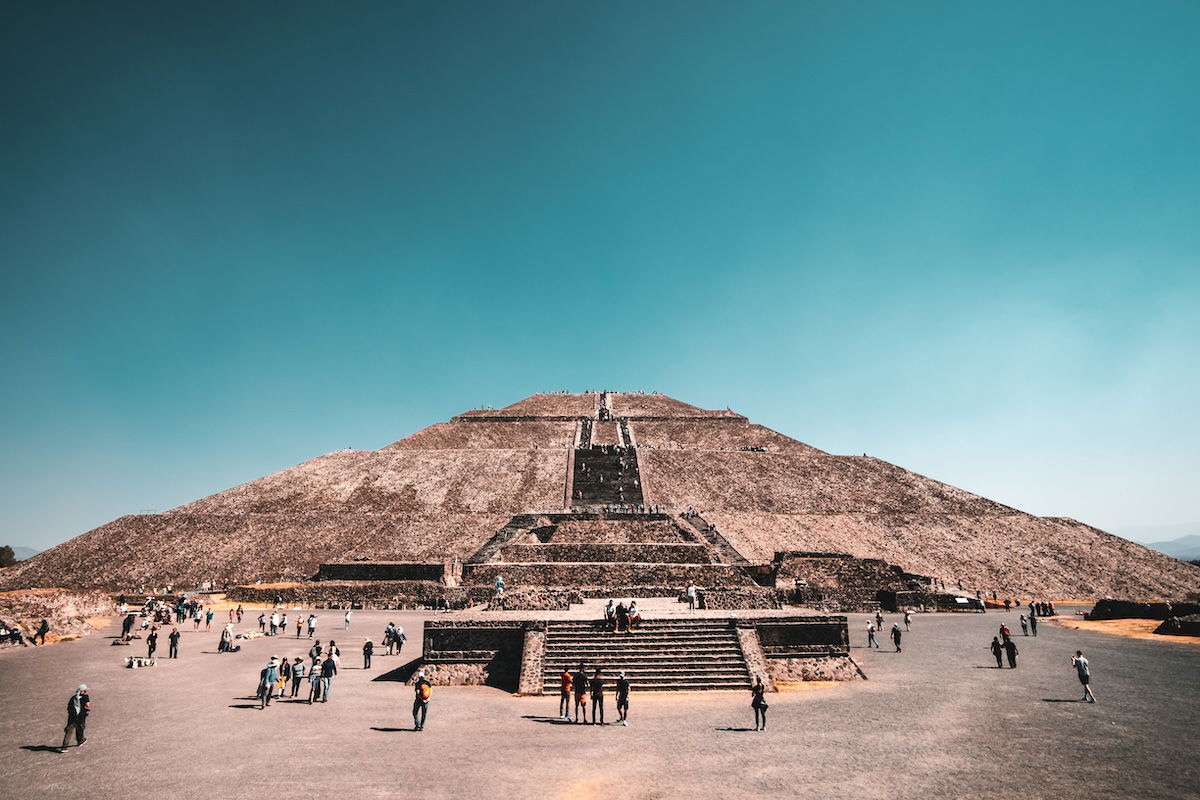
Mexican ruins at Teotihuacan
In the 100s BC, exactly when archaeology identifies a new growth phase at Teotihuacan, mitochondrial DNA traces another migration from northeast Asia into the Americas.12 Now the Maya had invaders in their backyard.
It seems that Teotihuacan got the best of the Maya. Only 15% of modern Maya belong to the original Mayan mitochondrial DNA lineage. A whopping 75% of modern Maya belong to the mitochondrial DNA lineage of Teotihuacan.13
The Olmecs weren’t the only people with missing DNA. For all three of these ancient civilizations—the Olmecs, Maya, and Teotihuacanos—their Y chromosome lineages have vanished. The oldest Y chromosome lineage in the Americas dates to just before the fall of Teotihuacan.14 The dispersal of this lineage coincides exactly with when Teotihuacan was burned. Even this city—and possibly the Mayan cities as well—succumbed to a new round of invaders from Asia.
In the aftermath of both the Classic Maya and of Teotihuacan, around the AD 900s, relatives of the Aztecs ascended to power. The Toltecs,15 whom the Aztecs recalled with great fondness, advanced on Central Mexico and may have even ruled the remnants of the Maya on the Yucatán peninsula. By AD 1200, the Toltecs were finished. Then, in AD 1325, the Aztecs founded Tenochtitlan.
-
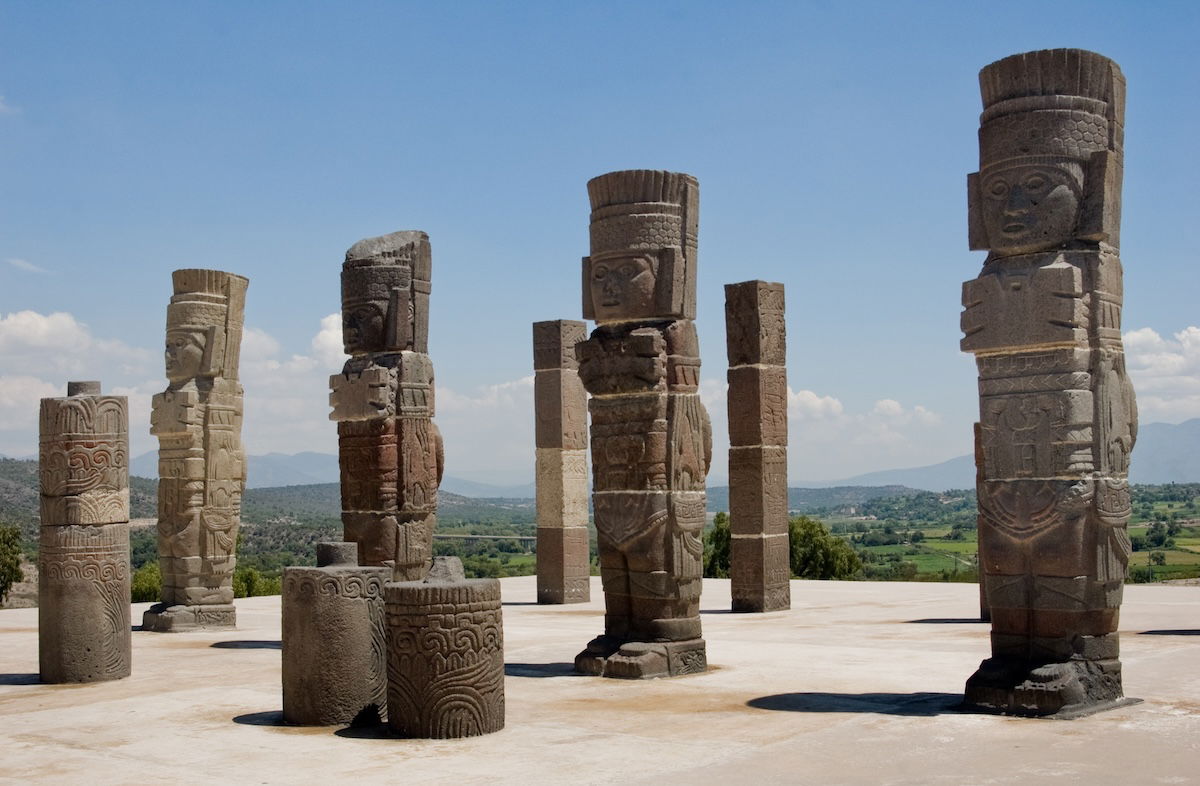
Toltec ruins, Mexico
-
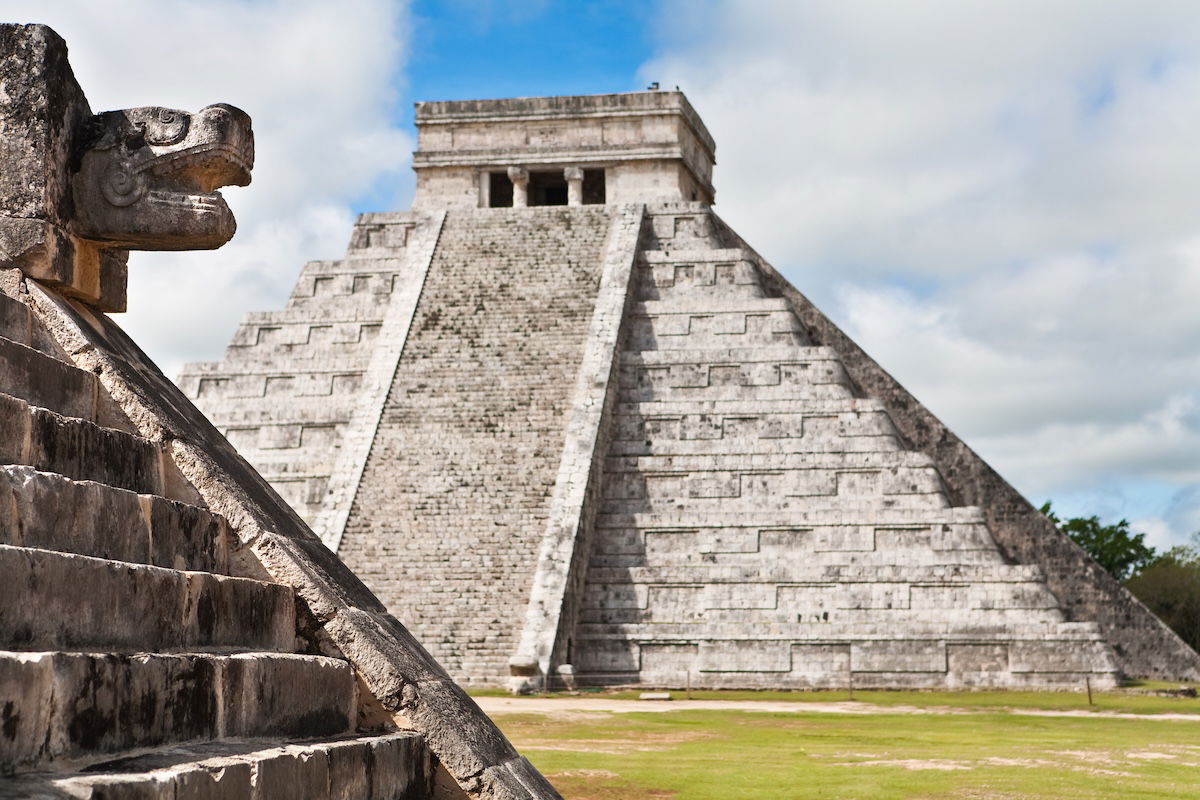
Mayan/Toltec ruins at Chichen Itza, Yucatán, Mexico
But the Aztecs’ own history, the Codex Chimalpopoca,16 puts the start of Aztec history much earlier—in AD 635. Thus, it turns out that the beginning of the Aztec story . . . dates precisely to the arrival of the last invaders of Mesoamerica. In other words, the ancestors of the Aztecs arrived at just the right time to avoid the tragic fates of the Olmec, Maya, and Teotihuacanos.
New Significance
There’s another side to the Aztecs’ story of arrival, migration, and conquest. Genetics adds an unexpected exclamation point to this late chapter in pre-Columbian Mesoamerican history.
How important was Mesoamerica with respect to the pre-Columbian Western Hemisphere? Other fields besides genetics have hinted that Mesoamerica occupied a prominent position. For example, the indigenous histories of some of the peoples north of the Rio Grande, like the Natchez, Choctaw, Chickasaw, and Creek, describe ancestral links between North American tribes and Mesoamerican ones. In the field of archaeology, nowhere else but Central America do you find such magnificent sites. There’s nothing else in the ancient pre-European Americas that matches the glory of the Olmec, Mayan, and Teotihuacano ruins.
And genetics? Recent DNA discoveries take these hints to a whole new level. Again, mitochondrial DNA from two of the pre-Aztec peoples—the Maya and Teotihuacanos—didn’t disappear. These DNA lineages persist to this day. But they didn’t remain only in Mesoamerica. They spread out. From nearly pole to pole! Today, Native Arctic peoples belong to the mitochondrial lineage of the Teotihuacanos.17 Indigenous peoples of Chile and Argentina include the Mayan mitochondrial DNA lineage.18 In other words, in the pre-Columbian world, genetics fingers Mesoamerica, not just as prominent, but as preeminent.
-
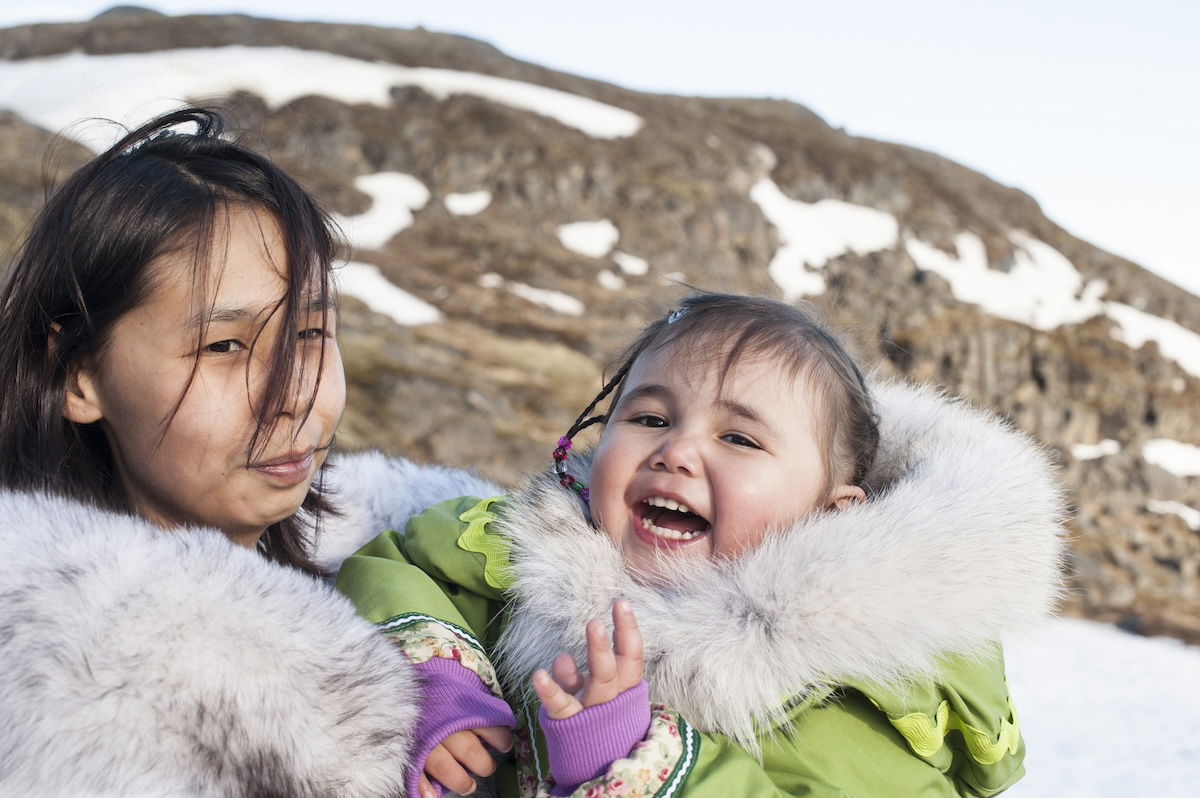
Inuit of Canadian Arctic
-
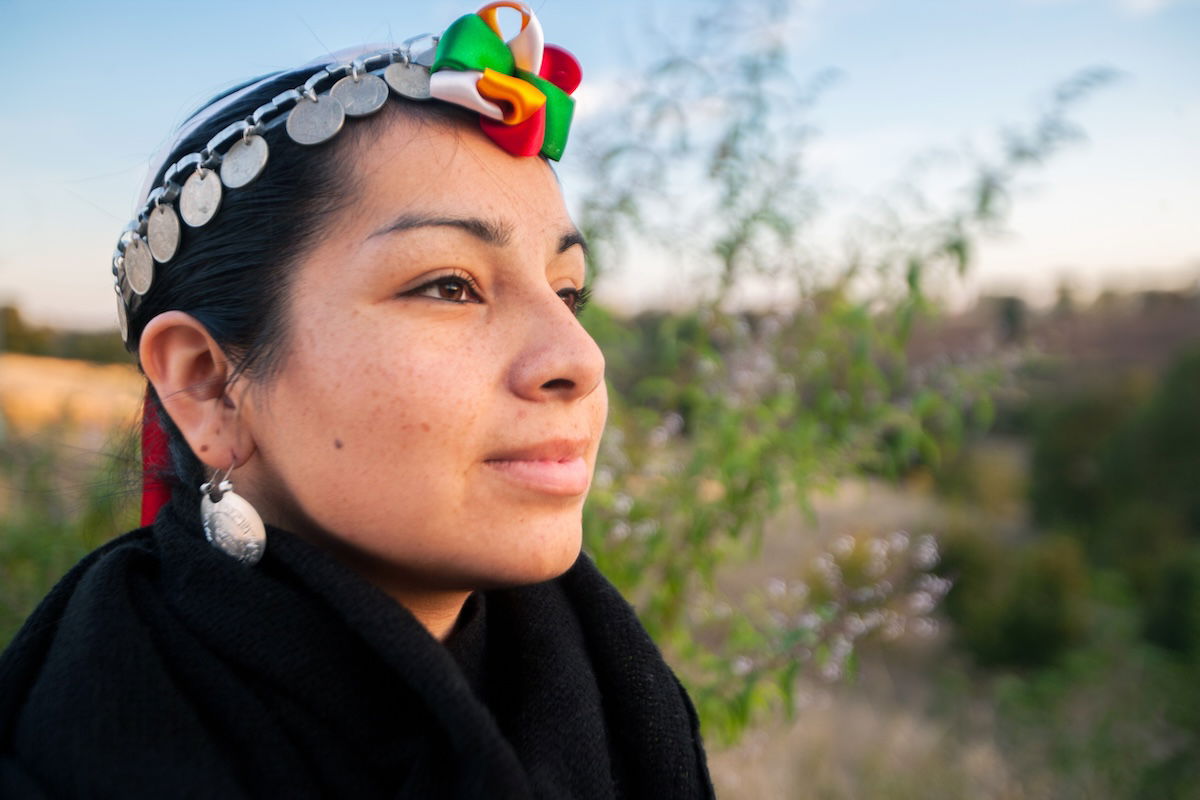
Mapuche woman, Chile
Which means that, when the Aztecs rose to the throne of Mexico at Tenochtitlan and became the most dominant power in Mesoamerica, they arose to the highest of heights in the entire Western Hemisphere.
Creationists for the Win
This new paradigm for the Aztec story is the result of something groundbreaking and revolutionary: Young-earth creationists doing science.
This new paradigm for the Aztec story is the result of something groundbreaking and revolutionary: Young-earth creationists doing science. According to federal and Supreme Court decisions from the 1980s—decisions that still keep creation science out of public school classrooms—creationists don’t do science.19 But the story you’ve just read is the result of a process of making hypotheses, of testing these hypotheses, and of following the evidence where it leads.20 These lingering—but powerful—court claims don’t hold water.
Which means that the origins debate is in a whole new era.
Footnotes
- There is a longer academic discussion about the exact date. But Mexico is treating AD 1325 as the year to celebrate; e.g., see MND Staff, “Mexico City to Transform into Living Museum for Tenochtitlán’s 700th Anniversary,” Mexico News Daily, June 30, 2025, https://mexiconewsdaily.com/culture/tenochtitlans-700th-anniversary/.
- E.g., see the following for a longer discussion of the mainstream view:
B. A. Potter et al., “Current Evidence Allows Multiple Models for the Peopling of the Americas,” Science Advances 4, no. 8 (2018): eaat5473;
J. Raff, Origin: A Genetic History of the Americas (New York: Twelve, Hatchette Book Group, 2022). - For details, see the following:
N. T. Jeanson, Replacing Darwin: The New Origin of Species (Green Forest, AR: Master Books, 2017).
N. T. Jeanson, “Testing the Predictions of the Young-Earth Y Chromosome Molecular Clock: Population Growth Curves Confirm the Recent Origin of Human Y Chromosome Differences,” Answers Research Journal 12 (2019): 405–423.
N. T. Jeanson, “Young-Earth Y Chromosome Clocks Confirm Known Post-Columbian Amerindian Population History and Suggest Pre-Columbian Population Replacement in the Americas,” Answers Research Journal 13 (2020): 23–33.
N. T. Jeanson, Traced: Human DNA’s Big Surprise (Green Forest, AR: Master Books, 2022).
N. T. Jeanson, They Had Names: Tracing the History of the North American Indigenous People (Green Forest, AR: Master Books, 2025).
N. T. Jeanson and A. D. Holland, “Evidence for a Human Y Chromosome Molecular Clock: Pedigree-Based Mutation Rates Suggest a 4,500-Year History for Human Paternal Inheritance,” Answers Research Journal 12 (2019): 393–404. - N. T. Jeanson, “Y-Chromosome-Guided Analysis of Mitochondrial DNA Lineages in the Americas: New Evidence for a Mitochondrial DNA Root, for a Mitochondrial DNA Clock, and for at Least One Migration from Asia into the Americas in the First Millennium BC,” Answers Research Journal 18 (2025): 347–375.
- Michael D. Coe and Rex Koontz, Mexico: From the Olmecs to the Aztecs (New York: Thames and Hudson, 2013); Michael D. Coe and Stephen Houston, The Maya (New York: Thames and Hudson, 2022).
- R. A. Diehl, The Olmecs: America’s First Civilization (New York: Thames and Hudson, 2005).
- Main reference for this paragraph: Coe and Houston, The Maya.
- Jeanson, “Y-Chromosome-Guided Analysis of Mitochondrial DNA Lineages in the Americas,” 347–375.
- George L. Cowgill, Ancient Teotihuacan: Early Urbanism in Central Mexico (New York: Cambridge University Press, 2015);
L. J. Gorenflo, Ian G. Robertson, and Deborah L. Nichols, “The Basin of Mexico: Revisiting Pre-Hispanic Populations,” in Ancient Mesoamerican Population History: Urbanism, Social Complexity, and Change, eds. Adrian S. Z. Chase, Arlen F. Chase, and Diane Z. Chase (Tucson, AZ: The University of Arizona Press, 2024), 269–308. - Coe and Houston, The Maya.
- M. D. Coe, J. Urcid, and R. Koontz, Mexico: From the Olmecs to the Aztecs (New York: Thames & Hudson Inc, 2019).
- Jeanson, “Y-Chromosome-Guided Analysis of Mitochondrial DNA Lineages in the Americas,” 347–375.
- For raw haplogroup assignments, see the following:
J. Söchtig et al., “Genomic Insights on the Ethno-History of the Maya and the ‘Ladinos’ from Guatemala,” BMC Genomics 16, no. 1 (2015): 131.
For dates, see here:
Jeanson, “Y-Chromosome-Guided Analysis of Mitochondrial DNA Lineages in the Americas,” 347–375. - Jeanson, Traced: Human DNA’s Big Surprise.
- For this paragraph, see the following:
Coe, Urcid, and Koontz, Mexico: From the Olmecs to the Aztecs. - J. Bierhorst, trans., History and Mythology of the Aztecs: The Codex Chimalpopoca (Tucson, AZ: The University of Arizona Press, 1992).
- For raw percentages, see the following:
J. G. Lorenz and D. G. Smith, “Distribution of Four Founding mtDNA Haplogroups Among Native North Americans,” American Journal of Physical Anthropology 101 (1996): 307–323.
For identification of mtDNA haplogroup A as Teotihuacano, see the following:
Jeanson, “Y-Chromosome-Guided Analysis of Mitochondrial DNA Lineages in the Americas,” 347–375. - For raw percentages, see the following:
M. de Saint Pierre et al., “An Alternative Model for the Early Peopling of Southern South America Revealed by Analyses of Three Mitochondrial DNA Haplogroups,” PLoS ONE 7, no. 9 (2012): e43486, doi:10.1371/journal.pone.0043486.
For identification of mtDNA haplogroup A as Mayan, see the following:
Jeanson, “Y-Chromosome-Guided Analysis of Mitochondrial DNA Lineages in the Americas,” 347–375. - McLean v Arkansas Bd. of Ed., 529 F. Supp. 1255 (E.D. Ark. 1982), https://law.justia.com/cases/federal/district-courts/FSupp/529/1255/2354824/;
Edwards v. Aguillard, 482 U.S. 578 (1987), https://supreme.justia.com/cases/federal/us/482/578/. - See history of Jeanson’s publications—predictions and fulfillments—as documented in references in earlier footnote.
Support the creation/gospel message by donating or getting involved!

Answers in Genesis is an apologetics ministry, dedicated to helping Christians defend their faith and proclaim the good news of Jesus Christ.
- Customer Service 800.778.3390
- Available Monday–Friday | 9 AM–5 PM ET
- © 2026 Answers in Genesis