Breaking News: Lost American History Discovered in DNA
The pre-European Americas were settled at least five times before Columbus.
on
July 16, 2025
New research published today pulls back the curtain on a long-standing mystery: the history of the Americas before Europeans arrived. And it’s a young-earth creation scientist that broke the news, heralding the dawn of a new era in the origins debate.
A Vexing Problem
Who was here in the Americas before Columbus arrived in the Caribbean? From whom did the indigenous Americans descend? Five years ago,1 investigation of the male-inherited Y chromosome DNA uncovered a startling fact: Ancient male lineages all over the Americas were replaced by invaders from Central Asia around the AD 300s to 600s.
A deeper study of the Y chromosome uncovered another, later invasion from Asia.2 But this time, the invaders confined themselves to North America.3
The period before these invasions—the pre-AD 300s—has been a vexing problem. No Y chromosomes older than the AD 300s have been discovered in the Americas. Yet archaeology has demonstrated the existence of a continuous series of civilizations from the second millennium BC.
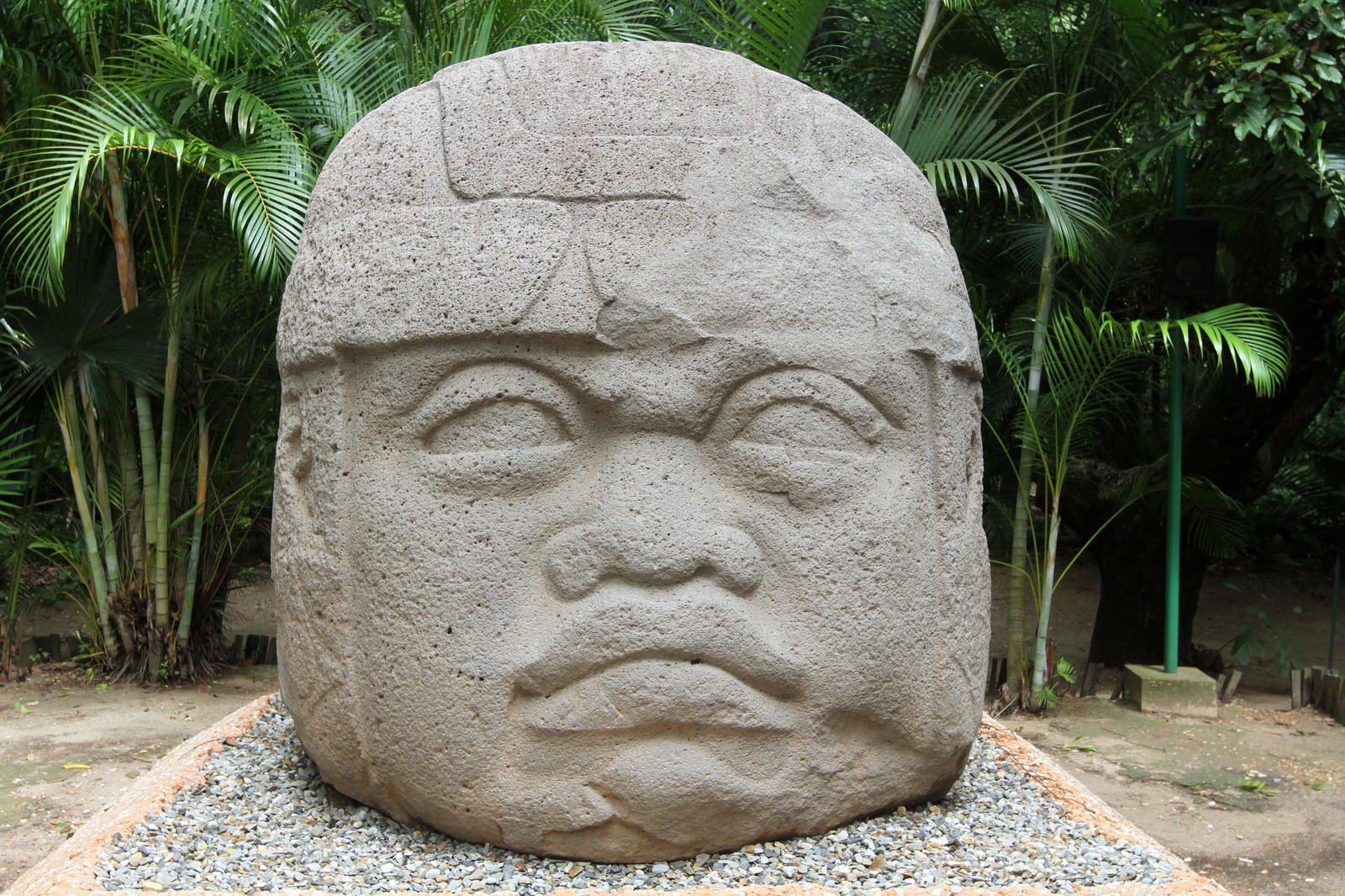
Olmec giant sculpted head.
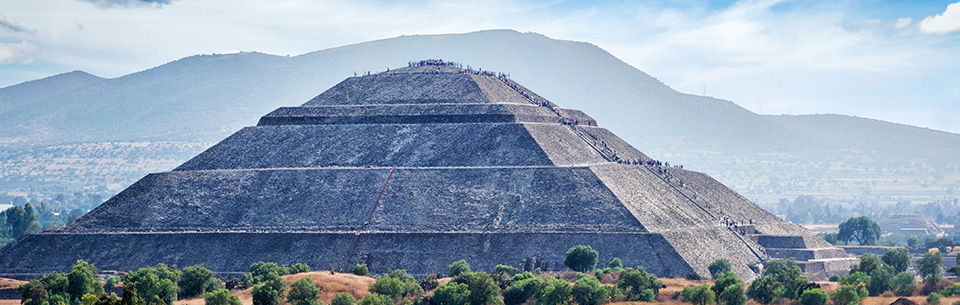
For example, the Olmecs—builders of the giant sculpted heads—birthed the cradle of civilization along the Gulf coast of Mexico in the second millennium BC.4 Around 1000 BC, the Maya—builders of temples and pyramids still being recovered from the jungle—began to inhabit the lowlands of Guatemala.5 Around 100 BC, the Mexican city of Teotihuacán began a period of accelerated growth, eventually reaching a population size of up to 200,000 people, making it the largest American city in the entire pre-Columbian period.6 Teotihuacan was also famous for its massive pyramids. No Y chromosome lineages have been found that extend back this far in pre-Columbian history.
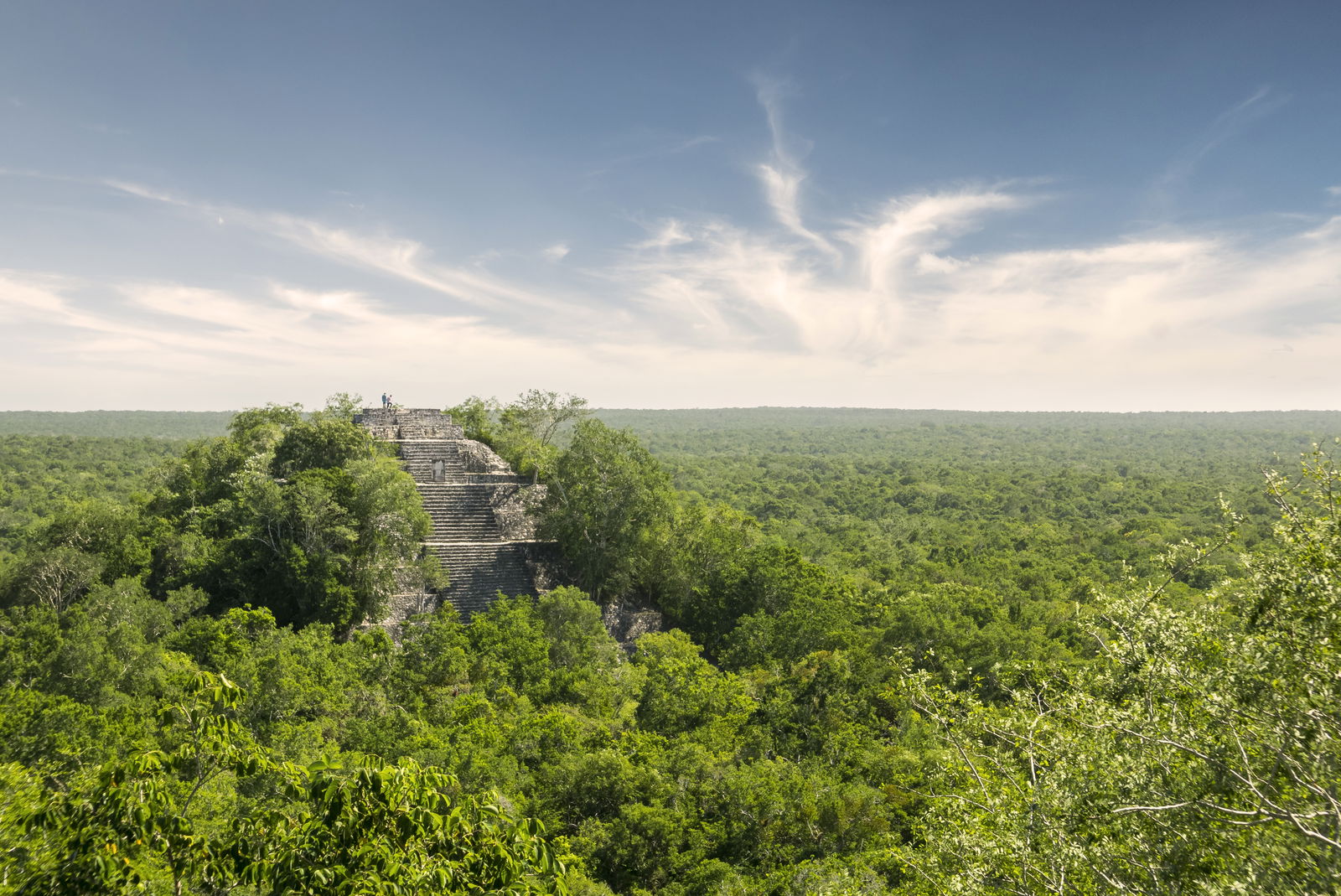
Mayan pyramid in jungles of Yucatán, Mexico.
Discovery
Through a study of the female-inherited mitochondrial DNA, creationist biologist Nathaniel Jeanson uncovered evidence for two more migrations prior to the AD 300s.
New research published today in the Answers Research Journal solves this mystery and extends our understanding of the pre-Columbian period back to the beginning of the Mayan era. Through a study of the female-inherited mitochondrial DNA, creationist biologist Nathaniel Jeanson uncovered evidence for two more migrations prior to the AD 300s. In the 100s BC, right around the time that Teotihuacan began to rise, a group of northeast Asians landed in the Americas. In the 1000s BC, right around the time that the Maya began to flourish in the Guatemalan lowlands, another group of northeast Asians arrived in the Americas.
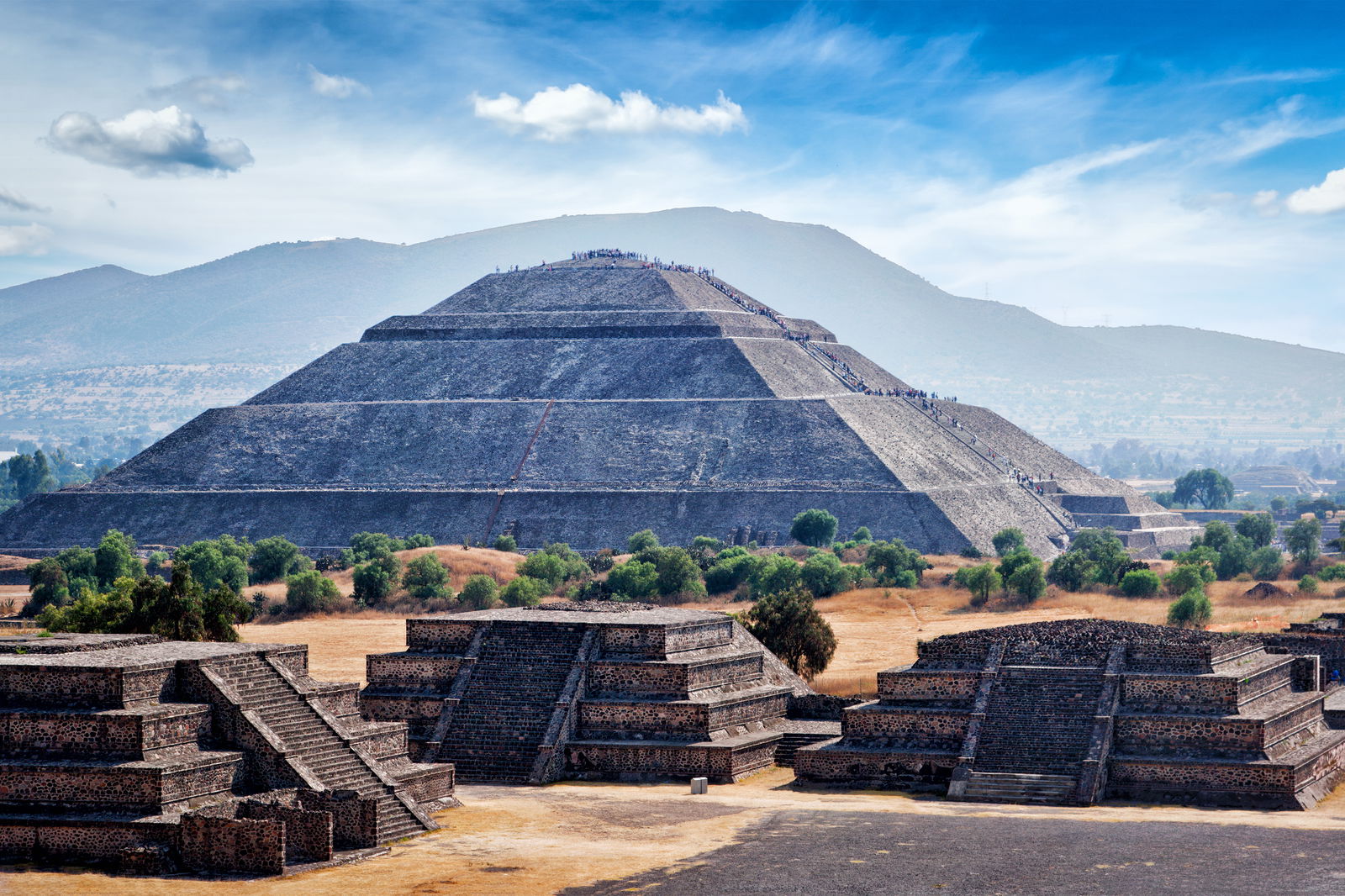
Pyramid of the Sun, Teotihuacán, Mexico.
Why haven’t the Y chromosome signatures of these migrations been detected? This same research suggested an answer, based on post-Columbian events and their genetic consequences. Today, the vast majority of Latin Americans have Y chromosome lineages originating from Europe or Africa, due to recent colonialism or to the transatlantic slave trade. But in terms of mitochondrial DNA lineages, the opposite is true. The vast majority of Latin Americans belong to indigenous American mitochondrial DNA lineages. Jeanson speculated that whatever post-European-arrival process gave rise to this genetic paradox also played a role in the precontact era.
No mitochondrial lineages older than 1000 BC have been detected. Thus, the Olmecs, who arose before 1000 BC, must have derived from an earlier, fifth migration from the Old World into the New, Jeanson concluded.
Revolution
These findings mark a monumental change in the origins debate. In the 1980s, the federal courts and the Supreme Court declared the teaching of creation science in the public schools to be invalid.7 According to the courts, creationists didn’t do science; therefore, creation science could not be taught in the science classroom. Jeanson’s new paper represents a bona fide scientific discovery, nullifying the legal basis for this 40-year-old practice.
Footnotes
- N. T. Jeanson, “Young-Earth Y Chromosome Clocks Confirm Known Post-Columbian Amerindian Population History and Suggest Pre-Columbian Population Replacement in the Americas,” Answers Research Journal 13 (2020): 23–33, https://answersresearchjournal.org/young-earth-y-chromosome-clocks/.
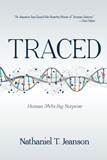
- N. T. Jeanson, Traced: Human DNA’s Big Surprise (Green Forest, AR: Master Books, 2022);
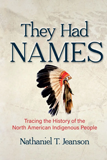
N. T. Jeanson, They Had Names: Tracing the History of the North American Indigenous People (Green Forest, AR: Master Books, 2025). - Jeanson, They Had Names.
- Michael D. Coe and Rex Koontz, Mexico: From the Olmecs to the Aztecs (New York: Thames and Hudson, 2013);
Michael D. Coe and Stephen Houston, The Maya (New York: Thames and Hudson 2022). - Coe and Houston, The Maya.
- George L. Cowgill, Ancient Teotihuacan: Early Urbanism in Central Mexico (New York: Cambridge University Press, 2015);
L. J. Gorenflo, Ian G. Robertson, and Deborah L. Nichols, “The Basin of Mexico: Revisiting Pre-Hispanic Populations,” In Ancient Mesoamerican Population History: Urbanism, Social Complexity, and Change, eds. Adrian S. Z. Chase, Arlen F. Chase, and Diane Z. Chase (Tucson, AZ: The University of Arizona Press, 2024), 269–308. - McLean v. Arkansas Bd. of Ed., 529 F. Supp. 1255 (E.D. Ark. 1982), https://law.justia.com/cases/federal/district-courts/FSupp/529/1255/2354824/;
Edwards v. Aguillard, 482 U.S. 578 (1987), https://supreme.justia.com/cases/federal/us/482/578/.
Support the creation/gospel message by donating or getting involved!

Answers in Genesis is an apologetics ministry, dedicated to helping Christians defend their faith and proclaim the good news of Jesus Christ.
- Customer Service 800.778.3390
- Available Monday–Friday | 9 AM–5 PM ET
- © 2026 Answers in Genesis