Three Biblical Truths for Sanctity of Life Sunday
Today is Sanctity of Life Sunday, and many churches will be teaching on the value of human life—something churches desperately need (to see how desperately, see my blog from earlier this month on research that revealed one in five churchgoers have somehow participated in an abortion). Well, in honor of this special day, I thought I would share three biblical truths on the sanctity of human life.
-
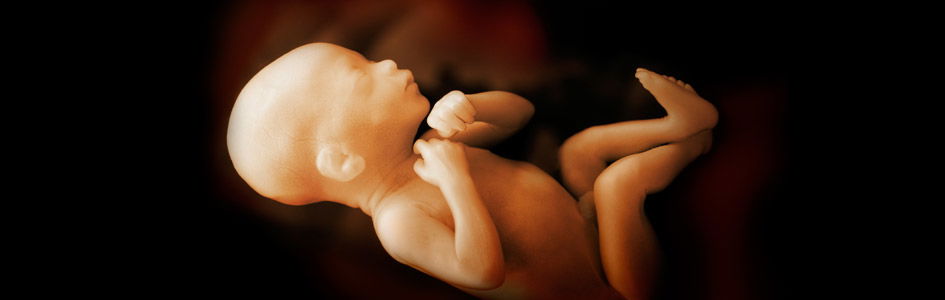
Life begins at fertilization. In the study I referenced above, only 54% of churchgoers believed that the Bible indicates when human life begins (24% said it doesn’t say, and 22% said they don’t know). But of that 54%, only 40% gave the biblical answer to when it says life begins—at fertilization! The others picked some arbitrary point on the developmental timeline, claimed they didn’t know the answer, or contradicted their previous answer by saying that Scripture doesn’t specify.
The Bible is clear on this issue. It always treats the unborn as persons having the same value as those who are already born.
But the Bible is clear on this issue. It always treats the unborn as persons having the same value as those who are already born. Consider God’s law, which prescribed the death penalty for someone who accidentally strikes a pregnant woman so that she delivers prematurely and the baby dies. Or the fact that both Jesus and John the Baptist are referred to as persons, even though they were still in the wombs of their mothers (Luke 1:39–45). Or, of course, Psalm 139, where the psalmist glorifies God because of how he knits us together in the womb.
The Bible treats a human life, no matter how developed, as a person (and scientifically, this is the only position that makes sense—a fertilized egg is a unique combination of human DNA and nothing new is added, so that life can’t be anything but a human person!).
This has massive implications for our current society: If life begins at fertilization (which it does), then taking that life, which is made in God’s image (Genesis 1:27), is murder and a violation of God’s command “You shall not murder” (Exodus 20:13).
-
Feelings don’t determine truth. The study asked participants for the “types of information that have the most influence on [their] views . . . regarding abortion and the value of human life.” They found that for 42% it was “their moral and religious beliefs,” but for a whopping 34% it was . . . “their personal feelings.” But feelings are not what determine truth!
Consider how the Bible describes our feelings, “The heart is deceitful above all things and beyond cure. Who can understand it?” (Jeremiah 17:9 NIV). And we’re explicitly told not to lean on our own understanding but on the Lord (Proverbs 3:5–6)—and the only way we can have our minds shaped by the Lord is by reading his perfect revelation to us in the Bible!
Feelings change and are often wrong. God’s Word doesn’t change, and it is never wrong. Don’t be guided by your feelings, especially on an issue of life and death. Be guided by the perfect, authoritative, infallible Word of God. You can’t trust your feelings.
-
Christians have to apply the biblical perspective to other life issues. When we think of sanctity of life issues, we usually think of abortion. But we must take the Bible’s principles about the value of human life, not murdering, and obeying the Lord rather than our feelings, and apply them to other sanctity of life issues.
God is the Author of life—not us—and we cannot just take life because we think it’s the best choice.
For example, the study found only 43% of churchgoers “affirmed that ‘euthanasia is morally wrong’”! Nearly a quarter said it wasn’t, and 35% weren’t sure what to think on the issue. But the elderly, the terminally ill, the vulnerable, those with disabilities—each person is made in the image of God, and therefore their life has value. God is the Author of life—not us—and we cannot just take life because we think it’s the best choice. Rather, we allow God to be wiser, kinder, and more compassionate than we sinful humans are!
We must also apply these principles to reproductive technologies (e.g., IVF). Babies created in a petri dish with technology are just as valuable as those formed through natural means. And yet, untold numbers of those lives are discarded because they are not considered “viable” or because genetic testing predicts that child will have a disability or a future risk of illness. A recent study found the deaths of IVF embryos now outnumber deaths by abortion in America! But each of those lives is made in God’s image too and deserves to be protected and valued.
God’s Word isn’t silent or ambiguous on this issue. It speaks with one voice and speaks clearly and loudly: Human life is of immeasurable value. This is highlighted with an exclamation point at the cross when Jesus gave his life for us. Abortion, discarding embryos, and euthanasia say, “You will die for me” or “I will choose when and how I die.” The gospel says, “The Creator of the universe and the Lord of all creation left glory to come to this earth, lived a perfect life, and died in your place that you might be saved from slavery to sin and live with God forever.”
Yes, human life is of immeasurable value!
Thanks for stopping by and thanks for praying,
Ken
This item was written with the assistance of AiG’s research team.
Support the creation/gospel message by donating or getting involved!

Answers in Genesis is an apologetics ministry, dedicated to helping Christians defend their faith and proclaim the good news of Jesus Christ.
- Customer Service 800.778.3390
- Available Monday–Friday | 9 AM–5 PM ET
- © 2026 Answers in Genesis