

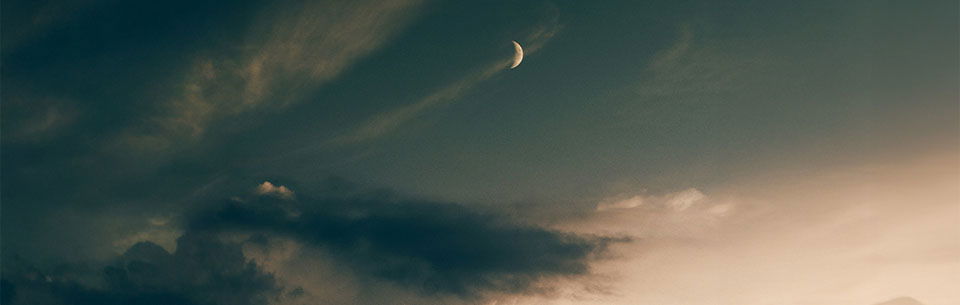
To the Moons and Back
From anywhere on earth, you can look into the night sky and spot the cratered face of the moon. We write songs about the man in the moon. We shoot for the moon in our endeavors and fly over the moon in love. The tide rises and falls to its orbit. Seasons remain constant thanks to its gravity stabilizing earth’s 23.4º tilt. Creatures, like sea turtles and migrating birds, navigate by the moon’s position. Without this constant celestial wonder, life on earth would look very different.
Unlike earth, other planets in our solar system swirl with multiple natural satellites (moons), all created by God on day four of creation week. Some of these moons make even our majestic orb look dim by comparison. And some pose problems for the naturalistic model of a billions-of-years-old solar system.
Each moon’s spectacular features point to the workmanship of God, testifying that it is “the work of your fingers, the moon and the stars, which you have set in place” (Psalm 8:3–4).
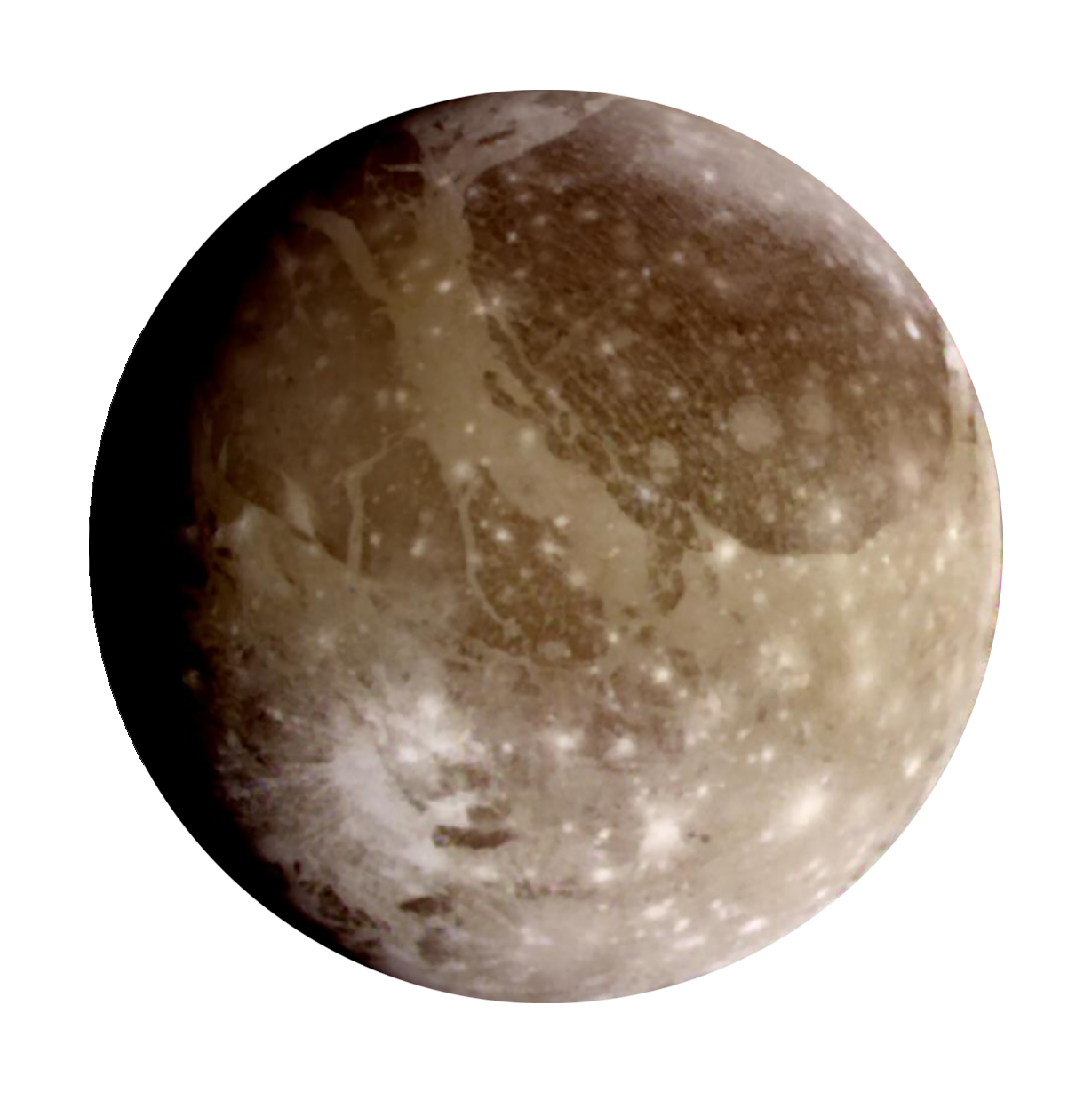
Ganymede
As the solar system’s largest moon, Jupiter’s Ganymede could hold 3.5 of earth’s moon by volume. But Ganymede has a very surprising trait: a magnetic field. Though planets, such as earth and Jupiter, exhibit magnetic fields, moons rarely do.
A magnetic field in a small body as Ganymede poses a problem for a billions-of-years-old model of the solar system. Over time, magnetic fields decay, growing progressively weaker. And the smaller an object, the shorter its magnetic field can last. Naturalistic models have a hard time explaining how magnetic fields—especially a magnetic field on a body as small as Ganymede—can last for billions of years. However, from a biblical perspective, Ganymede’s magnetic field has lasted only the few thousand years since creation.
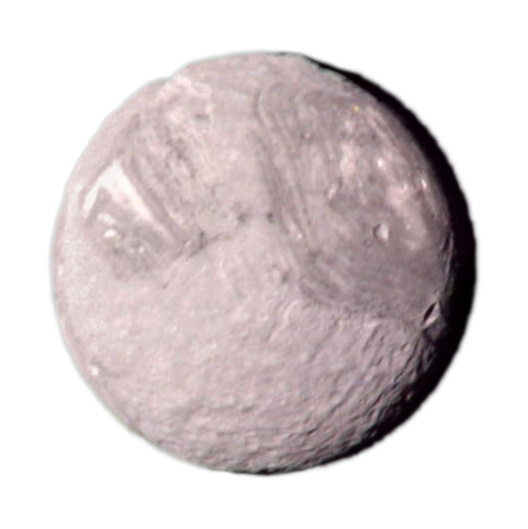
Miranda
Despite being much smaller than the earth’s moon, Uranus’ moon Miranda features high cliffs, heavily cratered plains, spans of grooves and faults, and canyons etched up to 12 times deeper than the Grand Canyon. This satellite’s mismatched features appear to have originated from an odd collection of leftover parts haphazardly joined together.
Naturalistic scientists have hypothesized that other celestial bodies collided with Miranda to form its surface. Some models suggest that the demolished Miranda somehow reassembled. While impacts could certainly explain some aspects of the unusual terrain, they fail to fully explain the strange mix of Miranda’s geological features. In the biblical perspective, Miranda is simply an example of God’s creativity and design in the universe.
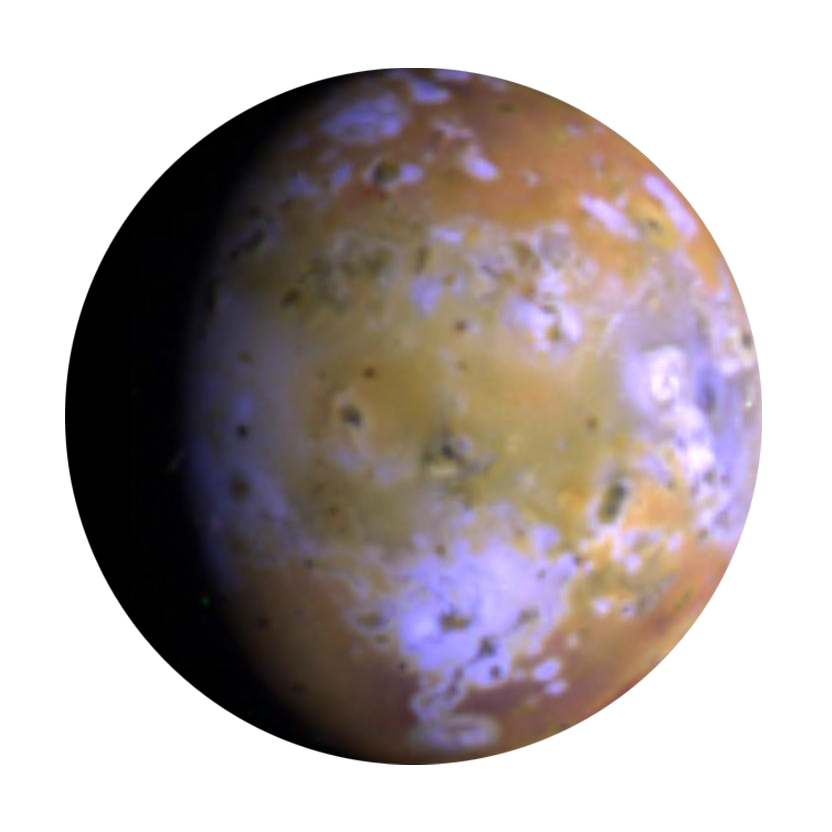
Io
Jupiter’s moon Io (eye-oh) is the most volcanically active location in the solar system. But Io’s volcanoes spew sulfur, not molten rock like earth’s volcanoes. Because of its prodigious volcanic activity, Io would have erupted all of its materials several times over if the universe were billions of years old.
Titan
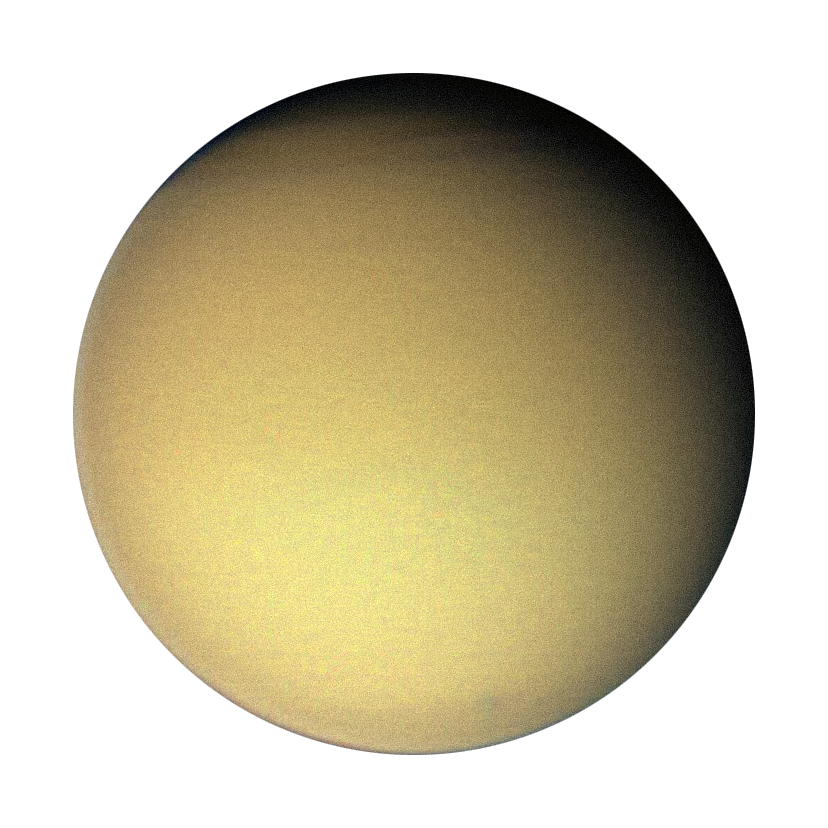
Farther out in the solar system, Titan orbits the famous ringed planet, Saturn. Titan’s thick atmosphere is composed primarily of nitrogen and some methane. Without methane, the atmosphere would collapse. But where does the methane come from?
Scientists have found evidence that Titan’s surface contains lakes full of mostly liquid methane and ethane, the likely source for the atmosphere. However, these lakes are not nearly large enough to supply methane to the atmosphere for billions of years.
To account for their problem, secular scientists predict that Titan harbors an underground global ocean and potentially features cryovolcanoes (volcanoes which erupt with gas or icy particles) to refresh the atmosphere’s supply of methane from underground. However, scientists have never detected this underground ocean of methane nor the volcanoes.1
Janus & Epimetheus
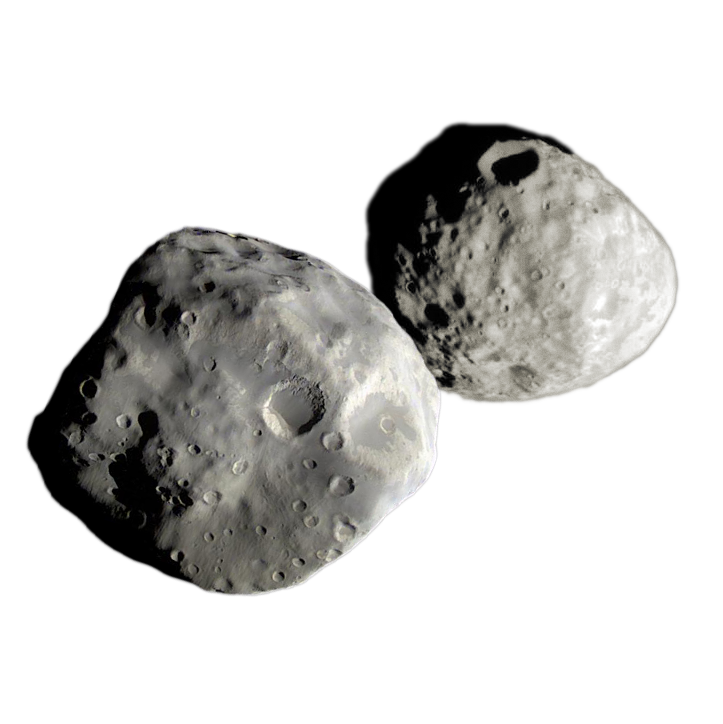
Janus and Epimetheus orbit Saturn extremely close to each other. In fact, these two are often described as dancing. The distances the moons orbit from Saturn differ by just 31 miles, a much smaller distance than the size of either moon. So what keeps Janus and Epimetheus from colliding?
The moon with the orbit slightly closer to Saturn travels faster. After four years, the closer moon completes one more lap around the planet than the farther moon. As the first moon finishes its extra lap, its gravity pulls the second satellite toward Saturn and into the first moon’s orbit.
At the same time, the second satellite’s gravity also pulls on the first satellite, drawing it away from Saturn. In the process, the two moons switch orbits, the first entering the larger orbit and the second entering the smaller. The first moon, which is still behind the second, settles into the outer orbit at a slower pace while the second speeds away, circumventing a collision.
Naturalists propose Janus and Epimetheus formed from a common debris field and gradually fell into their intricate dance. But this delicate orbital balance could have only been orchestrated by a masterful Creator.
Can a Moon Have a Moon?
A 2018 study published in Monthly Notices of the Royal Astronomical Society says yes. But these “moonmoons” or “submoons” can only exist at just the right distance to be drawn in by the moon’s gravitational pull, rather than the planet’s.
While no moonmoons have yet been discovered, scientists theorize that Jupiter’s Callisto, Saturn’s Titan and Iapetus, and earth’s moon could all be capable of hosting one.
Over the Moon
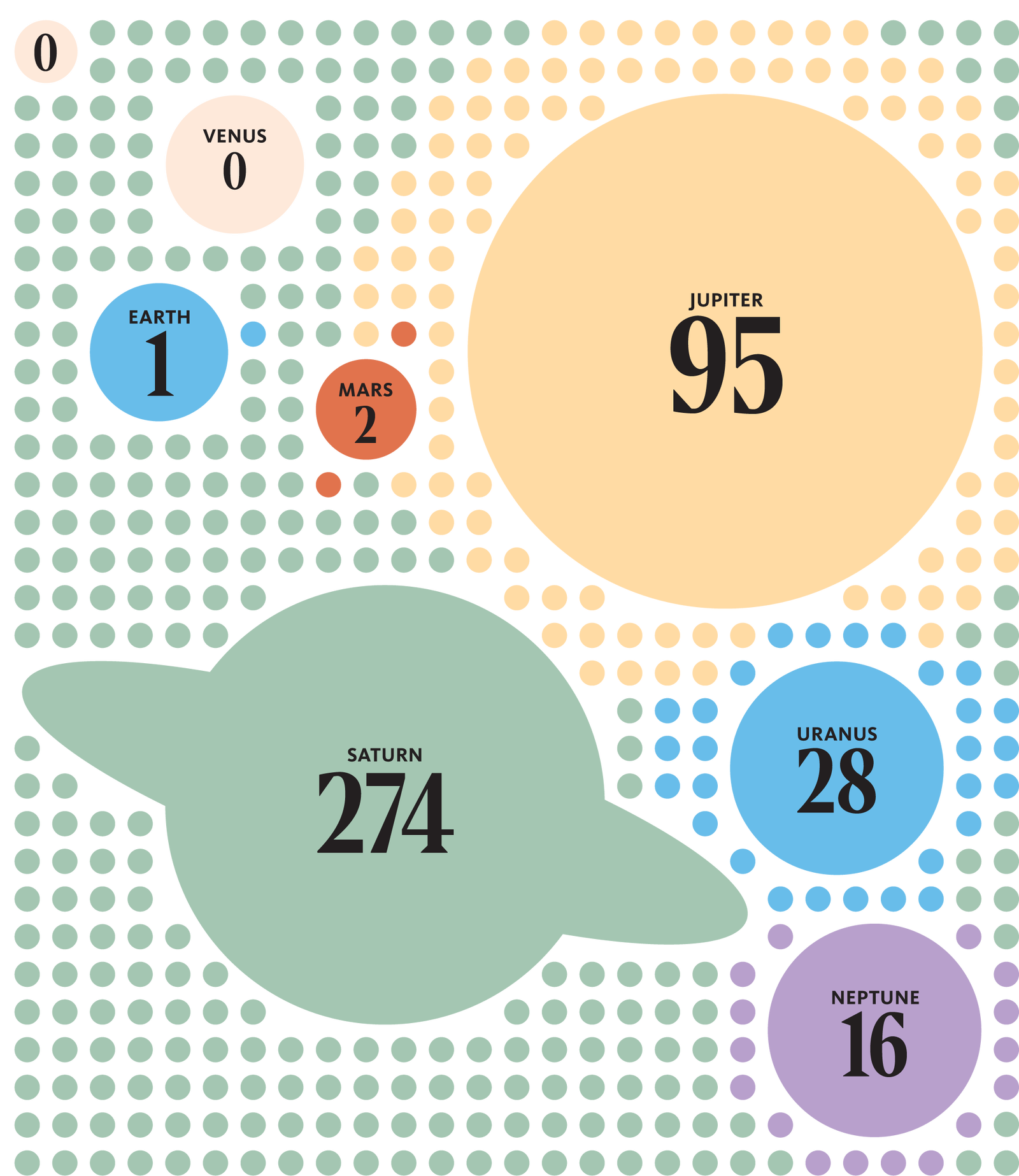
Earth’s moon is the brightest and most recognizable feature in our night sky. But most of the other planets in our solar system outshine us in their number of moons.
Mercury | 0
Mercury’s proximity to the sun makes having a moon impossible. The sun’s gravitational pull would remove a moon from Mercury’s orbit.
Venus | 0
Venus has one quasi-satellite—an object (like an asteroid) that orbits the sun similarly to the planet but doesn’t orbit the planet itself—called Zoozve.
Earth | 1
The moon doesn’t create its own light. It reflects the light of the sun.
Mars | 2
Mars’ two moons are named Phobos and Deimos. Phobos orbits Mars three times each day, so close to the planet’s surface that it cannot be seen from some locations on Mars’ surface. Deimos, the smaller of the moons, orbits Mars every 30 hours.
Jupiter | 95
One of Jupiter’s moons, Europa, is thought to be one of the only places in our solar system that could be suitable for life beyond earth, due to a saltwater ocean that is believed to be below Europa’s surface.
Saturn | 274
Saturn has more moons than all the other planets combined. One of Saturn’s moons, Phoebe, has a retrograde orbit, meaning it turns in the opposite direction of most of the other moons.
Uranus | 28
Uranus’ moons are called “literary moons” because many are named after Shakespeare’s characters.
Neptune | 16
Neptune’s largest moon, Triton, was discovered just 17 days after the planet itself was discovered.
That’s No Moon!
When he spotted the Death Star in the Star Wars movie A New Hope, Obi-Wan Kenobi famously exclaimed, “That’s no moon!”
While no Death Star roams our solar system, we do have other orbiting objects that don’t classify as moons.
Asteroids
Sometimes called minor planets, these large chunks of rock typically orbit the sun between Mars and Jupiter.
Comets
Scientists estimate that billions of these irregular lumps of frozen gases, rock, and dust orbit the sun.
Dwarf Planets
Dwarf planets cannot be classified as planets because they are too small for their gravity to clear away other objects near their orbit. Our solar system has five officially recognized dwarf planets, including Pluto.
Artificial Satellites
Some unnatural objects orbit our solar system, such as the International Space Station, the Hubble Space Telescope, and the James Webb Space Telescope.
recently interned in Answers in Genesis’ Educational Programs Department. She is currently pursuing a bachelors degree in computational mathematics with a minor in physics from Liberty University Online.
Answers Magazine
October–December 2025
When invasive species clash with native ecosystems, biologists face tangled questions about biblical dominion.
Browse IssueFootnotes
- David Coppedge, “Saving the Billions of Years’ Age of Titan,” Creation 35, no. 1 (January 2012), creation.com/saturns-titan.
Support the creation/gospel message by donating or getting involved!

Answers in Genesis is an apologetics ministry, dedicated to helping Christians defend their faith and proclaim the good news of Jesus Christ.
- Customer Service 800.778.3390
- Available Monday–Friday | 9 AM–5 PM ET
- © 2026 Answers in Genesis