
News to Know
-
Oct. 20, 2023 from Answers in Depth
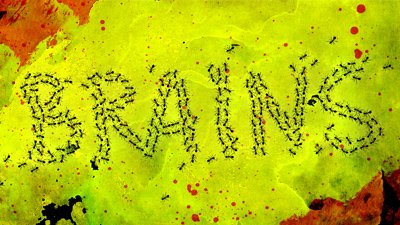
Carpenter ant colonies evade zombie apocalypse because only the climbing dead become weapons of mass dispersion.
More News to Know
-
-
Earth's First AnimalJan. 31, 2009
This just in: sea sponges are not the oldest animal around, according to a recent evolutionary analysis.
-
Darwin in the NewsJan. 31, 2009
We’re less than two weeks away from Darwin’s birthday, and the news media isn’t forgetting.
-
A Fishy RiddleJan. 31, 2009
It’s a bit of a riddle: three fish are totally unlike one another, yet they’re all the same species. How can it be?
-
-
-
Christian Won't Drive Atheist BusJan. 24, 2009
A Christian bus driver has boldly refused to drive a bus sporting atheist banners backed by Richard Dawkins, et al.
-
Texas Curriculum Fuels Evolution DebateJan. 24, 2009
The debate is still raging over how the science curriculum is being “messed with” in Texas.
-
How is Language Driven?Jan. 24, 2009
“But if universal grammar did not evolve by natural selection, how could it have arisen?” That’s one question posed by a recent study—one we can certainly answer!
-
-
'Spookfish' Looks in the MirrorJan. 17, 2009
The brownsnout spookfish isn’t exactly a household name, but scientists have just discovered its claim to fame: eyes that incorporate not only lenses, but also mirrors to see into murky Pacific Ocean depths.
-
Mars Methane: Life?Jan. 17, 2009
Finally—life on Mars! Is it the evidence for what evolutionists already believe?
-
Life Almost Created in a LabJan. 17, 2009
The media went wild this week over the “almost” creation of life in the lab.
-
-
When Hunters Fuel 'Evolution'Jan. 10, 2009
Losing or gaining anatomical features, changing colors, growing bigger or smaller—it doesn’t matter how a biological population is changing, it’s evolution!
-
Religion Evolved for Self-ControlJan. 10, 2009
How is one psychologist answering the loaded question “why did religion evolve?”
-
The Cost of Skepticism?Jan. 10, 2009
“Questioning theories is usually a healthy pursuit”—except when life and death are concerned, or when the “theory” in question is evolution.
-
Tiny Diamonds, Big ExplosionJan. 10, 2009
Scientists are taking the gold standard for proof of extinction to the next level—with diamonds.
-
Pink Iguana Throws Off ScientistsJan. 10, 2009
A quarter-century ago, they might have been considered just as fantastic as pink elephants—but now pink iguanas are in the scientific spotlight.
-
Who Thinks Creationism Should Be Taught and Why?Jan. 3, 2009
From the United Kingdom come the surprising results of a teachers’ poll about creation in the classroom.
-
Two Colors, One RaceJan. 3, 2009
Twins of different skin color are now the older siblings of another set of twins of different skin color!
-
Southeast Asia Tsunami AnniversaryJan. 3, 2009
Last week marked the fourth anniversary of a deadly natural disaster.
-
The Web of Spider EvolutionJan. 3, 2009
What was once “the world’s oldest spider” is now just a primitive version of the “web-spinning modern spider,” BBC News reports.
-
Whistling Orangutan Clue to Language EvolutionJan. 3, 2009
Is that the sound of a wolf whistle or an orangutan whistle we hear?
Support the creation/gospel message by donating or getting involved!

Answers in Genesis is an apologetics ministry, dedicated to helping Christians defend their faith and proclaim the good news of Jesus Christ.
- Customer Service 800.778.3390
- Available Monday–Friday | 9 AM–5 PM ET
- © 2026 Answers in Genesis