
News to Know
-
Oct. 20, 2023 from Answers in Depth
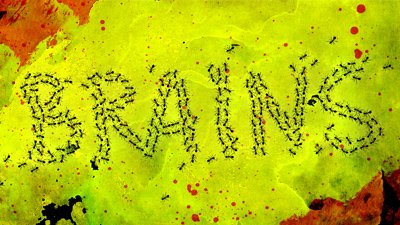
Carpenter ant colonies evade zombie apocalypse because only the climbing dead become weapons of mass dispersion.
-
Oct. 22, 2021 from Answers in Depth
“There is a book . . .” Ken Ham reminded Nye at their 2014 debate, and the Bible’s history is history we can trust.
More News to Know
-
News to Note, December 8, 2007Dec. 8, 2007
This week we offer up super smart chimps, a dinosaur “mummy,” a biblical wall, and widespread doubts about Darwin.
-
Sunday School Sans GodDec. 1, 2007
For a new generation of children, Sunday school isn’t about Bible stories but encouraging “personal expression, intellectual curiosity and collaboration.”
-
Unknown Life: Linnaeus's 300th BirthdayNov. 17, 2007
Despite centuries of scientific effort classifying life, the vast majority of living things remain unknown.
-
Toads Voluntarily HybridizeNov. 10, 2007
Research published in the journal Science details how some female toads violate an “evolutionary rule.” Perhaps no one has told them about it!
-
Neanderthals: the New Red-HeadsNov. 3, 2007
It’s a common caricature in textbooks, movies, and—more true than ever today—TV shows: a brow-ridged, (often) club-carrying Neanderthal, covered in thick, messy red hair.
-
More Different Than We ThoughtOct. 27, 2007
Scientists publishing in the journal Genetics last week have showed that “[m]any more genes separate humans from chimpanzees than scientists believed.”
-
Why We Can't Phone the AliensOct. 27, 2007
Science fiction author Ben Bova offers a few explanations for why our search for extraterrestrial life (which is growing more robust with time) has turned up nothing so far.
-
News to Note, October 13, 2007Oct. 13, 2007
What can we learn from boasts of “artificial” life, a geological rush job, a Jurassic dragon, a not-so-useless organ, and the “fear” of evolution?
-
Lessons from a BeetleOct. 6, 2007
A team at the University of Leeds in England has engineered a spray nozzle that replicates the bombardier beetle’s (in)famous defense mechanism.
-
A Vegetarian Dinosaur's Big MouthOct. 6, 2007
Researchers are confused as to what a giant, duck-billed, many-toothed dinosaur would eat.
-
Chimp Filing for Person-hoodSept. 29, 2007
His name notwithstanding, the current legal case for the personhood of Mr. Matthew Hiasl Pan (a chimp) is in jeopardy, reports the Associated Press from Vienna, Austria.
-
Review of New Fossils Found in GeorgiaSept. 22, 2007
A team reporting this week in the journal Nature announces the discovery of the remains of four individuals found at the site of a medieval castle at Dmanisi in the former Soviet republic of Georgia.
-
Troublesome Underwater VolcanoesSept. 1, 2007
Underwater volcanoes spewing oxygen-devouring gases delay the evolutionary timetable, according to a new study.
-
Water-less GeysersAug. 25, 2007
National Geographic News reports on a new model, published online in last week’s Proceedings of the National Academy of Sciences, that removes the need for liquid water in explaining the “unusual” geysers on Enceladus’s south pole.
-
Too Big for the Big Bang?Aug. 18, 2007
Astronomers looking at galaxies far, far away have found five that don’t quite fit big-bang ideas.
-
Shaking Hands with a SharkAug. 18, 2007
A University of Florida study focusing on genes that control “how and where body parts develop in animals” has resulted in evidence that the genetic “potential” to grow fingers and toes is found in sharks as well as bony fish.
-
Megaflood Makes BritainJuly 21, 2007
Recent research suggests that Great Britain was formed as the result of a megaflood.
-
Possible Water Vapor Tantalizes AstronomersJuly 14, 2007
The exoplanetary-analysis community is buzzing with news this week of the possible discovery of water on HD189733b, an exoplanet 64 light-years from earth.
-
Potential Hydrocarbons on HyperionJuly 7, 2007
NASA scientists’ recent assert that Saturn’s moon Hyperion is home to “cup-like craters filled with hydrocarbons that may indicate more widespread presence in our solar system of basic chemicals necessary for life.”
-
A Tolerantly Fair Discussion of IntoleranceJune 19, 2007
Sunday’s Cincinnati Enquirer included an insightful and forthright Creation Museum write-up by Enquirer columnist Peter Bronson.
-
More Than Meets the Eye: The Human GenomeJune 16, 2007
“A close-up view of the human genome has revealed its innermost workings to be far more complex than first thought,” reports a BBC NEWS article on a recent Encyclopaedia of DNA Elements (Encode) study.
-
Mice (Cells) to Men (Cells)June 9, 2007
Japanese and American researchers announced a “reprogramming” technique that has rendered fetal mouse cells “indistinguishable” from embryonic stem cells.
-
Treewalking OrangutansJune 2, 2007
Primatologist Robin Crompton and graduate student Susannah Thrope are rekindling a “30-year-old hypothesis that upright walking first evolved in the trees.”

Support the creation/gospel message by donating or getting involved!

Answers in Genesis is an apologetics ministry, dedicated to helping Christians defend their faith and proclaim the good news of Jesus Christ.
- Customer Service 800.778.3390
- Available Monday–Friday | 9 AM–5 PM ET
- © 2026 Answers in Genesis