
News to Know
-
Oct. 20, 2023 from Answers in Depth
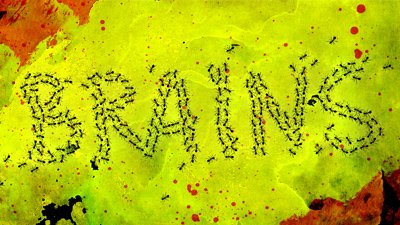
Carpenter ant colonies evade zombie apocalypse because only the climbing dead become weapons of mass dispersion.
-
Oct. 22, 2021 from Answers in Depth
“There is a book . . .” Ken Ham reminded Nye at their 2014 debate, and the Bible’s history is history we can trust.
More News to Know
-
Crocodiles and Humans Coexisting in African VillageNov. 8, 2008
It may not be dinosaurs living side-by-side with humans, but it’s close!
-
Biblical Landmark of King Solomon’s Time FoundNov. 1, 2008
Once again, a bit of biblical history has been matched up with an archaeological finding.
-
Bird Sets Nonstop Flight Record at 7,257 milesOct. 25, 2008
Boeings and Airbuses of the world, step aside: there’s a newly recognized king (or, in this case, queen) of the long-haul flight.
-
AP: Suit Against God Thrown Out Over Lack of AddressOct. 18, 2008
A cantankerous Nebraska legislator’s attempt to sue God was stymied this week by a judge who blocked the suit on account of not knowing God’s home address!
-
Bonobos Less Humane Than Once ThoughtOct. 18, 2008
They may not be outright cannibals, but even so, bonobos are decidedly less “humane” than once thought.
-
Bill Maher Confronts Religion with Film ReligulousOct. 4, 2008
Comedian and wannabe-pundit Bill Maher hits the big screen this week with Religulous, a film that—among other things—takes aim at our very own Creation Museum.
-
Remains Suggest Neanderthal Diet Included Dolphins and SealsSept. 27, 2008
Fine dining for our Neanderthal kin may have consisted of some seafood delicacies—both familiar and unfamiliar to modern tongues.
-
Biologist Quits Job Over CreationismSept. 20, 2008
If evolutionists have such confidence that Darwin’s idea is scientifically superior, why must creation be censored so completely in school classes?
-
Rapid Erosion of Grand Canyon Sandbars DiscoveredSept. 13, 2008
The place is the Grand Canyon, and the story is an indisputable case of rapid erosion caused by massive amounts of water.
-
Images of the Mysterious Okapi Finally Captured on FilmSept. 13, 2008
It may be neither a unicorn nor a dinosaur, but the African okapi, which appears to be a strange combination of giraffe and zebra, was nonetheless long rumored to be a “mythical animal.”
-
Engineers Try to Emulate Sticky Gecko FeetSept. 13, 2008
Hours of research continue to be spent investigating—and trying to emulate—the incredible “sticky” gecko foot, one of God’s most crafty creations.
-
Biologists Attempt to Create New Forms of LifeSept. 13, 2008
They may not resemble Dr. Frankenstein’s monster, but will these creations escape the lab and run wild—or just in the minds of evolutionists?
-
Natural Selection Theory Strengthened By Armored Fish StudySept. 6, 2008
It’s yet another rock-solid proof of Darwin’s theory—at least in the eyes of Darwinists.
-
Bones Don’t Add Up For Palauan HobbitsSept. 6, 2008
News broke last week of the misinterpretation of Palauan bone fragments, which had led to the misidentification of a modern human as something else. It isn’t the first time!
-
How Clownfish Find Their Way Back to Familiar WatersAug. 30, 2008
After young orange clownfish hatch, they spend nearly two weeks in the open sea, probably carried by currents far from home.
-
Controversy In the Classroom as Faith and Science ClashAug. 30, 2008
A lengthy article in the New York Times examines a microcosm of the controversy over evolution education in public school classrooms.
-
-
News to Note, August 16, 2008Aug. 16, 2008
Court rulings, stone arches, stem cells, elephant memories, and more!
-
News to Note, August 9, 2008Aug. 9, 2008
Martian life spoils quickly, the snaky logic of evolution, crazy pseudoscience, and more!
-
They Think the Earth is Flat?Aug. 9, 2008
They’re a tiny minority of untrained, pseudoscientific hacks who buy into a disproven, centuries-old myth rather than accepting well-established modern science.
-
Soil on Mars Might Not Be Suitable for LifeAug. 9, 2008
In the emotional soap opera that is the search for life on Mars, one of the main players—the habitability of Martian soil—may have just lapsed into a coma.
-
A Fly’s Nervous System Aids in FlightAug. 2, 2008
No wonder houseflies can be so difficult to target: their guidance-control systems are sophisticated enough that they may inspire improvements to control systems in autonomous air vehicles.
-
News to Note, July 26, 2008July 26, 2008
Dinos in the desert, our special solar system, famous fish orators in history, and more!
-
News to Note, July 19, 2008July 19, 2008
Multicolored twins, multicolored fossil feathers, multicolored bugs, and more colorful news!
Support the creation/gospel message by donating or getting involved!

Answers in Genesis is an apologetics ministry, dedicated to helping Christians defend their faith and proclaim the good news of Jesus Christ.
- Customer Service 800.778.3390
- Available Monday–Friday | 9 AM–5 PM ET
- © 2026 Answers in Genesis