
News to Know
-
Oct. 20, 2023 from Answers in Depth
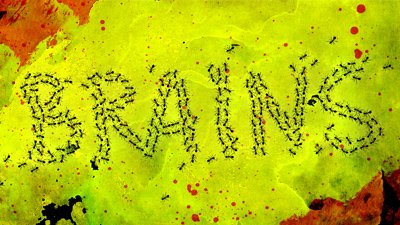
Carpenter ant colonies evade zombie apocalypse because only the climbing dead become weapons of mass dispersion.
-
Oct. 22, 2021 from Answers in Depth
“There is a book . . .” Ken Ham reminded Nye at their 2014 debate, and the Bible’s history is history we can trust.
More News to Know
-
-
-
Christian Won't Drive Atheist BusJan. 24, 2009
A Christian bus driver has boldly refused to drive a bus sporting atheist banners backed by Richard Dawkins, et al.
-
'Spookfish' Looks in the MirrorJan. 17, 2009
The brownsnout spookfish isn’t exactly a household name, but scientists have just discovered its claim to fame: eyes that incorporate not only lenses, but also mirrors to see into murky Pacific Ocean depths.
-
Life Almost Created in a LabJan. 17, 2009
The media went wild this week over the “almost” creation of life in the lab.
-
Mars Methane: Life?Jan. 17, 2009
Finally—life on Mars! Is it the evidence for what evolutionists already believe?
-
-
-
Tiny Diamonds, Big ExplosionJan. 10, 2009
Scientists are taking the gold standard for proof of extinction to the next level—with diamonds.
-
The Cost of Skepticism?Jan. 10, 2009
“Questioning theories is usually a healthy pursuit”—except when life and death are concerned, or when the “theory” in question is evolution.
-
Religion Evolved for Self-ControlJan. 10, 2009
How is one psychologist answering the loaded question “why did religion evolve?”
-
Pink Iguana Throws Off ScientistsJan. 10, 2009
A quarter-century ago, they might have been considered just as fantastic as pink elephants—but now pink iguanas are in the scientific spotlight.
-
When Hunters Fuel 'Evolution'Jan. 10, 2009
Losing or gaining anatomical features, changing colors, growing bigger or smaller—it doesn’t matter how a biological population is changing, it’s evolution!
-
The Web of Spider EvolutionJan. 3, 2009
What was once “the world’s oldest spider” is now just a primitive version of the “web-spinning modern spider,” BBC News reports.
-
Who Thinks Creationism Should Be Taught and Why?Jan. 3, 2009
From the United Kingdom come the surprising results of a teachers’ poll about creation in the classroom.
-
Southeast Asia Tsunami AnniversaryJan. 3, 2009
Last week marked the fourth anniversary of a deadly natural disaster.
-
Whistling Orangutan Clue to Language EvolutionJan. 3, 2009
Is that the sound of a wolf whistle or an orangutan whistle we hear?
-
Two Colors, One RaceJan. 3, 2009
Twins of different skin color are now the older siblings of another set of twins of different skin color!
-
News to Note, December 27, 2008Dec. 27, 2008
A look back at 2008’s news—tracking the origins controversy out among the stars, here on planet earth, and in the culture wars!
-
Determining the Center of the UniverseDec. 13, 2008
Are we or aren’t we special? The debate continues!
-
Australian School Permitted to Teach CreationismDec. 13, 2008
A Christian school in Australia will still be allowed to teach creation. Now, why is that newsworthy?
-
Living Fossil Found In Grape-Sized CellNov. 29, 2008
A grape-sized cell inching along the ocean floor may be one of the world’s “oldest” living fossils.
-
Celebrating an Unsung Hero of ScienceNov. 29, 2008
2009 marks the anniversary of the birth of one of the greatest scientists of all time.
-
Humanist Ads Focus on Just Being GoodNov. 15, 2008
Atheists are spending tens of thousands of dollars in the United States to prove to the world they fail to grasp the connection between God and goodness.
Support the creation/gospel message by donating or getting involved!

Answers in Genesis is an apologetics ministry, dedicated to helping Christians defend their faith and proclaim the good news of Jesus Christ.
- Customer Service 800.778.3390
- Available Monday–Friday | 9 AM–5 PM ET
- © 2026 Answers in Genesis