
News to Know
-
Oct. 20, 2023 from Answers in Depth
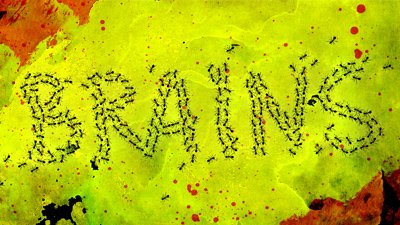
Carpenter ant colonies evade zombie apocalypse because only the climbing dead become weapons of mass dispersion.
-
Oct. 22, 2021 from Answers in Depth
“There is a book . . .” Ken Ham reminded Nye at their 2014 debate, and the Bible’s history is history we can trust.
More News to Know
-
Cod Evolution No-GoFeb. 28, 2009
Another example of “evolution in action”—need we even bother examining the reality to confirm this isn’t what Darwin predicted?
-
Those Wacky CreationistsFeb. 21, 2009
Stephen Moss of Britain’s The Guardian aims to answer the question “who exactly are” creationists? Will his answer be on target or way off base?
-
How Many Earths Again?Feb. 21, 2009
Two weeks ago we covered a study that said there could be up to 37,964 alien civilizations in the Milky Way. Now, the number of Earth-like planets in the Milky Way has been enumerated: 100,000,000,000.
-
Another Branch of the FamilyFeb. 21, 2009
Does the partially complete sequencing of the Neanderthal genome challenge creationists’ view that they were fully human?
-
Science Group Boycotts Louisiana Over LawFeb. 21, 2009
Some evolutionists are taking the culture war over origins to the next step: boycotting an entire U.S. state in protest of the state’s education laws.
-
Aliens Among UsFeb. 21, 2009
Never mind looking for “aliens” out in space; what if they’re living here among us?
-
Neanderthal SymphonyFeb. 14, 2009
In April of last year we heard a Neanderthal voice for the first time. Now it’s time to hear Neanderthal music.
-
Cockroaches Inspire RobotsFeb. 14, 2009
Robot designers are taking a cue from lizards and cockroaches!
-
Abortion and MoralityFeb. 14, 2009
The tragic account of a cold-hearted abortion clinic murder—and the ensuing legal battle—reminds us of the dark connection between abortion and morality. (Warning: revolting content.)
-
Darwin is the NewsFeb. 14, 2009
Two weeks ago, we covered Darwin in the news. This week, Darwin is the news!
-
Religion Is in Your HeadFeb. 14, 2009
Religion? It’s all in your head: New Scientist takes an unmitigated swipe at theism.
-
Earlier Start for Animal EvolutionFeb. 7, 2009
It could almost be the plot of an evolutionary Indiana Jones adventure: deep beneath the sands of Arabia, lost and hidden for millennia, lay a secret molecule that transcends what we think we know.
-
Beat it, Stein!Feb. 7, 2009
Darwinists at the University of Vermont have done a great service to Ben Stein by proving the point he made in the film Expelled: No Intelligence Allowed.
-
Human-Animal Embryo Research Hits a WallFeb. 7, 2009
Experiments to produce hybrid human–animal embryos have been unsuccessful. Will that mean anything to advocates of embryonic stem cell research?
-
Home Away from HomeFeb. 7, 2009
Astronomers have found yet another “Earth-like” planet (how many does this make, anyway?). Once again, it’s not exactly home away from home.
-
Poll Shows Public Doubts about EvolutionFeb. 7, 2009
A poll in Britain reveals widespread doubt over Darwinism—or does it?
-
It's a 'Whale'Feb. 7, 2009
Does the fossil discovery of an early “whale” offer evidence for evolution or does it merely reinforce presuppositions?
-
-
Darwin in the NewsJan. 31, 2009
We’re less than two weeks away from Darwin’s birthday, and the news media isn’t forgetting.
-
Earth's First AnimalJan. 31, 2009
This just in: sea sponges are not the oldest animal around, according to a recent evolutionary analysis.
-
A Fishy RiddleJan. 31, 2009
It’s a bit of a riddle: three fish are totally unlike one another, yet they’re all the same species. How can it be?
-
-
Christian Won't Drive Atheist BusJan. 24, 2009
A Christian bus driver has boldly refused to drive a bus sporting atheist banners backed by Richard Dawkins, et al.

Support the creation/gospel message by donating or getting involved!

Answers in Genesis is an apologetics ministry, dedicated to helping Christians defend their faith and proclaim the good news of Jesus Christ.
- Customer Service 800.778.3390
- Available Monday–Friday | 9 AM–5 PM ET
- © 2026 Answers in Genesis