
News to Know
-
Oct. 20, 2023 from Answers in Depth
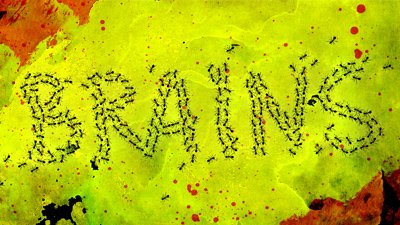
Carpenter ant colonies evade zombie apocalypse because only the climbing dead become weapons of mass dispersion.
-
Oct. 22, 2021 from Answers in Depth
“There is a book . . .” Ken Ham reminded Nye at their 2014 debate, and the Bible’s history is history we can trust.
More News to Know
-
Leaps of Developmental LogicJuly 25, 2009
Small biological changes that take generations—like some birds’ beaks growing longer or shorter in certain ecological niches—can be explained and understood by creationists and evolutionists. But when it comes to explaining developmental “leaps,” evolutionists must make a leap of logic.
-
New York Times: “The Mistakes that Argue for Evolution”July 18, 2009
The New York Times–News to Note conversation continues.
-
Mystery of Flowering Plants Solved?July 18, 2009
Evolutionists take another stab at answering what Charles Darwin called an “abominable mystery”: the abrupt appearance and ubiquity of flowering plants in the fossil record and on earth.
-
Bird Populations Become Separate SpeciesJuly 18, 2009
Due to a difference in a single gene, one bird species is splitting into two. Does this fit with the evolution model or the Genesis model of created kinds?
-
On Science and ScientistsJuly 18, 2009
What do Americans think of science? What do they think of scientists? What do scientists think of science? A Pew Research Center study suggests answers.
-
Amazing Turtle Shell DevelopmentJuly 18, 2009
The incredible way a turtle develops a shell—is it an evolutionary accident or part of God’s design?
-
‘Misleading’ Creationism Question in UK Teacher ExamJuly 11, 2009
Even testing to see if pupils know what creationists say is too much, declare evolutionists in an outcry over a GCSE exam question.
-
Monkey Hear, Monkey KnowJuly 11, 2009
If you ain’t no good speaker of English, maybe you should talk to one o’ them thar monkeys to straight’n ya out.
-
Robo-BatsJuly 11, 2009
As far as fliers go, most humans probably prefer watching birds or butterflies to bats. But in addition to sonar, bats have other interesting design features.
-
-
BBC News: “Aquatic Deer and Ancient Whales”July 11, 2009
Several species of chevrotains (mouse deer) hide from predators in the water. Does that prove evolution?
-
Dinosaur MummyJuly 4, 2009
A “mummified” dinosaur with soft tissues fossilized—evidence of watery disaster?
-
ScienceDaily: “Study of Flower Color Shows Evolution in Action”July 4, 2009
Changes in the color of columbine flowers: another example of “evolution in action” that has little to do with Darwin.
-
Three Genetic GroupingsJuly 4, 2009
A new genetic study of 53 human populations shows that each falls into one of three genetic groups—yet that the three groups aren’t as different as was thought. The legacy of Shem, Ham, and Japheth (Noah’s three sons), perhaps?
-
When Do False Dichotomies Ever Mesh?July 4, 2009
In covering a visit by paleontologists to our Creation Museum, a New York Times’ article spreads some misunderstanding (including in an associated blog by the reporter).
-
Trio of Design RemindersJune 27, 2009
Three stories this week provide salient reminders of the design apparent in creation—whether it be in structures we’re just beginning to understand, or in engineers taking cues from nature to construct their machines.
-
Kin ConfusionJune 27, 2009
For all the years of proclaiming chimpanzees as our closest living evolutionary cousins, some evolutionists think we may actually be more closely related to orangutans.
-
Water Speculation over Saturn MoonJune 27, 2009
Scientists have found [indirect evidence of liquid water, which can be spun through evolutionary interpretations as indirect evidence of] life on one of Saturn’s moons!
-
MSNBC/Discovery: “Neanderthals Made Mammoth Jerky”June 27, 2009
Neanderthals, though so often treated as subhuman, left a growing amount of evidence to remind us of their humanity.
-
-
Rip van MicrobeJune 20, 2009
After tens of thousands of years trapped in ice, an ancient species “wakes up.” Is it science news or the plot of a low-budget movie?
-
Genius FishJune 20, 2009
Chimpanzees, dolphins, crows: out o’ the way! There’s a new “genius animal” in the spotlight.
-
Leaning Tower of Planet FormationJune 20, 2009
A planet with a “steeply tilted” orbit—will it help refine theories of planetary formation or reveal their flaws?
-
Another Evolutionary FlapJune 20, 2009
Last week we reported on a solid scientific study that dismissed dinosaur-to-bird evolution. Of course, some researchers have yet to catch on.
Support the creation/gospel message by donating or getting involved!

Answers in Genesis is an apologetics ministry, dedicated to helping Christians defend their faith and proclaim the good news of Jesus Christ.
- Customer Service 800.778.3390
- Available Monday–Friday | 9 AM–5 PM ET
- © 2026 Answers in Genesis