
News to Know
-
Oct. 20, 2023 from Answers in Depth
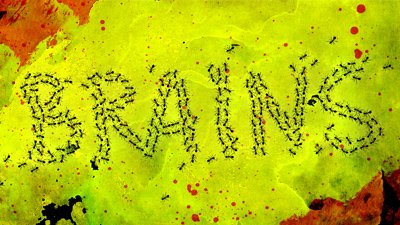
Carpenter ant colonies evade zombie apocalypse because only the climbing dead become weapons of mass dispersion.
-
Oct. 22, 2021 from Answers in Depth
“There is a book . . .” Ken Ham reminded Nye at their 2014 debate, and the Bible’s history is history we can trust.
More News to Know
-
A Monarch is Never LateOct. 3, 2009
The astonishing navigational abilities of the monarch butterfly seem all the more astonishing in the light of new research.
-
Ailing T-rexOct. 3, 2009
For all its size and strength, one mighty T. rex may have ultimately succumbed to a minuscule parasite.
-
Final “Proof” for Fuzzy DinosOct. 3, 2009
It’s the “final proof” that dinosaurs evolved into birds, say scientists.
-
-
Darwin Movie ControversialSept. 26, 2009
Is the new film Creation (the opposite of what it sounds like) too edgy for American audiences?
-
-
Exact Great Pyramid Construction DateSept. 26, 2009
How could construction on Egypt’s Great Pyramid have begun in 2470 BC if the Flood reshaped the earth over a century later?
-
The Snake Can Walk?Sept. 19, 2009
A snake with a leg—is it evidence of evolution, creation, both, or neither?
-
Tree-Climbing VelociraptorsSept. 19, 2009
Velociraptor: the fearsome carnivore and . . . tree climber?
-
Resisting a MythSept. 19, 2009
Microbial resistance to antibiotics is one of the most commonly claimed evidences for evolution. So will the new “clue” to its workings be evidence for evolution as well?
-
Tomb of Jesus’ Brother?Sept. 19, 2009
Seven years after its discovery, the James ossuary is still stirring up controversy and debate.
-
-
-
What Came From Fat?Sept. 12, 2009
As far back as 2001, creationists pointed to liposuctioned fat as a source of stem cells that didn’t require the destruction of embryonic human life. Good to see secular scientists catching on.
-
Skull Rewrites the BookSept. 12, 2009
The history of human evolution is clear: we all came from Europe.
-
What They Didn't FindSept. 12, 2009
The scene is reminiscent of a movie: intrepid explorers pierce the wilderness and stumble upon a trove of amazing species rarely—if ever—seen before.
-
Evolution Leads to Tooth DecaySept. 12, 2009
Tooth loss and molecular decay purportedly prove Charles Darwin right. Does that mean brushing twice a day keeps evolution away?
-
Dog Fur EvolutionSept. 5, 2009
The many differences in dog fur are reducible to just a few genetic factors, a team reports in Science.
-
Are You a Mutant?Sept. 5, 2009
A team of researchers has added to our knowledge of the genetic mutation rate in humans, as they report in Current Biology.
-
The Creation ZooSept. 5, 2009
A zoo near Bristol, England, has been attacked for its promotion of “creationist ideas,” even though a zoo spokesperson called life “the product of both God and evolution.”
-
Is Intelligent Design Dead?Sept. 5, 2009
We can all agree that evidence of intelligent design has been “shot down.” But is it good science or biased presuppositions that is doing the “shooting”?
-
BBC News: “Mouse Set to be ‘Evolution Icon’”Sept. 5, 2009
Peppered moths, move over! There’s a new alleged “icon of ‘evolution in action’” in town.
-
Appendix Isn’t UselessAug. 29, 2009
“Creationists will have a field day with this one,” writes one blogger on the news. Bingo.
-
The Demise of Planet WASP-18bAug. 29, 2009
A recently discovered exoplanet may have been found just in the nick of time—in time for us to witness its demise, that is.
Support the creation/gospel message by donating or getting involved!

Answers in Genesis is an apologetics ministry, dedicated to helping Christians defend their faith and proclaim the good news of Jesus Christ.
- Customer Service 800.778.3390
- Available Monday–Friday | 9 AM–5 PM ET
- © 2026 Answers in Genesis