
News to Know
-
Oct. 20, 2023 from Answers in Depth
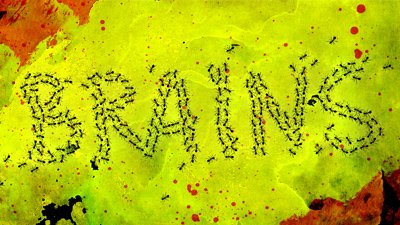
Carpenter ant colonies evade zombie apocalypse because only the climbing dead become weapons of mass dispersion.
-
Oct. 22, 2021 from Answers in Depth
“There is a book . . .” Ken Ham reminded Nye at their 2014 debate, and the Bible’s history is history we can trust.
More News to Know
-
Water in the (Martian) DesertDec. 12, 2009
Once again, the news is awash in coverage of a new “water on Mars” claim. Does this one stand up to scrutiny?
-
Horse Evolution Mix-upDec. 12, 2009
Some argue that the horse offers a “textbook example of evolution.” But does new research undo that claim?
-
Catastrophe at WorkDec. 5, 2009
It’s not only creationists who point to the role of catastrophic events in shaping earth’s geologic history. A new study sheds light on how Britain was separated from the rest of Europe by a “super-river.”
-
No News Like Old NewsDec. 5, 2009
Is there life on Mars? Some of this week’s biggest “news” is also this week’s oldest news.
-
Simple is as Simple DoesDec. 5, 2009
It could be “the most thorough study ever of a single organism,” and what is the unsurprising conclusion? “[E]ven the simplest creatures are more complex than scientists suspected,” reports Wired’s Brandon Keim.
-
Jigsaw Puzzle ChallengeDec. 5, 2009
Reassembling half-billion-year-old fossils from bone fragments: a task so complicated that only computers can handle it?
-
Vegetarian AntsDec. 5, 2009
Most ants are carnivorous, yet some are herbivorous. But how do the herbivorous species get the nutrients they need?
-
Small Brains, Big BrainsNov. 28, 2009
Small brains can do big things. Big brains can miss the obvious.
-
Us vs. Them?Nov. 28, 2009
It’s the sort of headline that both excites us and worries us: will National Geographic News’s portrayal of “evolution vs. intelligent design” be fair and balanced?
-
Dark Side of DarwinNov. 28, 2009
Are creationists the only ones pointing out the “dark side” (the perturbing implications) of Darwin’s view on life’s origins?
-
-
The Guardian: “Face to Faith”Nov. 28, 2009
A Guardian columnist turned her crosshairs toward the Creation Museum this past week. Are her criticisms anything new?
-
Slowing Down EvolutionNov. 21, 2009
Pathogenic resistance to antibiotics is a textbook example of “direct evidence for evolution”—literally. What does recent work on the topic suggest?
-
Dinosaur ApemanNov. 21, 2009
We typically think of the “missing link” as an ape–human transitional form. In this case, though, the “missing link” is “big, short-footed, barrel-chested, long-necked, small-headed dinosaur.”
-
Origin of (a) SpeciesNov. 21, 2009
Scientists have watched as a new species is “born”—or is that “evolved”?—on one of the Galapagos Islands, home of Darwin’s famous finches.
-
A Head Full of MagnetsNov. 21, 2009
Turtles, birds, and butterflies had GPS long before humans invented the device. These creatures migrate thousands of miles each year to find food, to find breeding grounds, and to escape harsher seasons. Now scientists may be one step closer to uncovering how this animal navigation system works.
-
A Blue Moon?Nov. 21, 2009
Kapow! That’s one small plume for man, one amazing new discovery for mankind.
-
Creation in TurkeyNov. 14, 2009
Turkey is a nation uncertain of its identity, and that holds true in the creation/evolution debate.
-
New Ocean in Africa?Nov. 14, 2009
Thousands of years ago, God parted the Red Sea. Is He parting Ethiopia now?
-
18-Million-Year-Old MuscleNov. 14, 2009
Fossilized soft tissue has been found in a salamander fossil said to be 18 million years old.
-
Vatican Looks for AliensNov. 14, 2009
For the Vatican, the question of whether “sentient life forms exist on other worlds” has yet to be answered
-
Generations' Changing Views on the BibleNov. 7, 2009
Results compiled from Barna Group surveys reveal an unsurprising result: younger generations are less likely to consider the Bible sacred or accurate.
-
Preserved T-rex Ancestor FossilNov. 7, 2009
What’s the cause for our sixth mention of T. rex in seven weeks? A new study of the famed dinosaur’s “most ancient fossil relative” that is “exquisitely” preserved.
-
Ape or Human?Nov. 7, 2009
This week, American public broadcasting began a three-part series on human evolution titled Becoming Human.
Support the creation/gospel message by donating or getting involved!

Answers in Genesis is an apologetics ministry, dedicated to helping Christians defend their faith and proclaim the good news of Jesus Christ.
- Customer Service 800.778.3390
- Available Monday–Friday | 9 AM–5 PM ET
- © 2026 Answers in Genesis