
News to Know
-
Oct. 20, 2023 from Answers in Depth
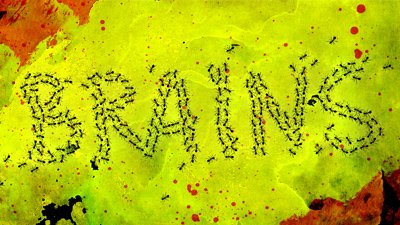
Carpenter ant colonies evade zombie apocalypse because only the climbing dead become weapons of mass dispersion.

More News to Know
-
Potential Hydrocarbons on HyperionJuly 7, 2007
NASA scientists’ recent assert that Saturn’s moon Hyperion is home to “cup-like craters filled with hydrocarbons that may indicate more widespread presence in our solar system of basic chemicals necessary for life.”
-
A Tolerantly Fair Discussion of IntoleranceJune 19, 2007
Sunday’s Cincinnati Enquirer included an insightful and forthright Creation Museum write-up by Enquirer columnist Peter Bronson.
-
More Than Meets the Eye: The Human GenomeJune 16, 2007
“A close-up view of the human genome has revealed its innermost workings to be far more complex than first thought,” reports a BBC NEWS article on a recent Encyclopaedia of DNA Elements (Encode) study.
-
Mice (Cells) to Men (Cells)June 9, 2007
Japanese and American researchers announced a “reprogramming” technique that has rendered fetal mouse cells “indistinguishable” from embryonic stem cells.
-
Treewalking OrangutansJune 2, 2007
Primatologist Robin Crompton and graduate student Susannah Thrope are rekindling a “30-year-old hypothesis that upright walking first evolved in the trees.”
-
Finally Open! Responses to the Creation MuseumJune 2, 2007
Description of the opening day events here at the Creation Museum.
-
Origin of Life Seeker DiesMay 26, 2007
Stanley Miller, partial namesake of the Miller–Urey experiment, has passed on at the age of 77.
-
-
Be Yourself: Survive!May 12, 2007
Research conducted by doctoral student Mark Fitzpatrick of the University of Toronto at Mississauga is uncovering how more unique individuals of a species enjoy a survival advantage.
-
Helpful Parasites?May 5, 2007
Researchers have discovered parasites that are helpful rather than harmful.
-
-
Worms for BrainsApril 28, 2007
Researchers at the European Molecular Biology Laboratory (EMBL) in Germany have made “overwhelming” discoveries that, according to the researchers, show that worm nervous systems and the human brain are distant cousins.
-
Neanderthals: One of UsApril 28, 2007
Anthropologist Erik Trinkaus comments that the specimens considered to be the “earliest modern humans” in Europe “have shown obvious Neandertal ancestry.”
-
All About the DifferencesApril 21, 2007
A sensational headline ran across the science media this week: “Chimps More Evolved than Humans.”
-
Wanted: One Planet, With WaterApril 14, 2007
This week’s report of the first sign of planetary water outside our solar system has some evolutionists nearly giddy-but others remain skeptical.
-
Inerrant In and About AllApril 14, 2007
A recapitulation and explanation of certain statements of Pastor Rick Warren.
-
News to Note, March 31, 2007March 31, 2007
-
Secular Scientists Jubilant over Martian CavesMarch 24, 2007
Thermal imaging experts analyzing photos of Mars have announced the possible presence of caves beneath Mars’ famous red surface.
-
Rats: Thinking About FailingMarch 10, 2007
This week, a new animal joins our showcase of “underestimated animal geniuses”: the humble lab rat.
-
Evolution: Just 4 Million Years AgoMarch 3, 2007
Recent evolutionary research direcltly contradicts prior research.
-
-
-

Support the creation/gospel message by donating or getting involved!

Answers in Genesis is an apologetics ministry, dedicated to helping Christians defend their faith and proclaim the good news of Jesus Christ.
- Customer Service 800.778.3390
- Available Monday–Friday | 9 AM–5 PM ET
- © 2026 Answers in Genesis