

What’s the Truth About the Viral Noah’s Ark Claims?
As you can imagine, since the claims that researchers have “100%” found Noah’s Ark at the Durupinar site in Turkey have gone viral, we’ve received many questions about the authenticity of these claims. After all, finding the remains of Noah’s Ark would be the archaeological find of the century—but what does the evidence at the site really show?
That Ark landed on the mountains of Ararat, as the Bible tells us, but after that, the Bible doesn’t tell us what happened to the Ark.
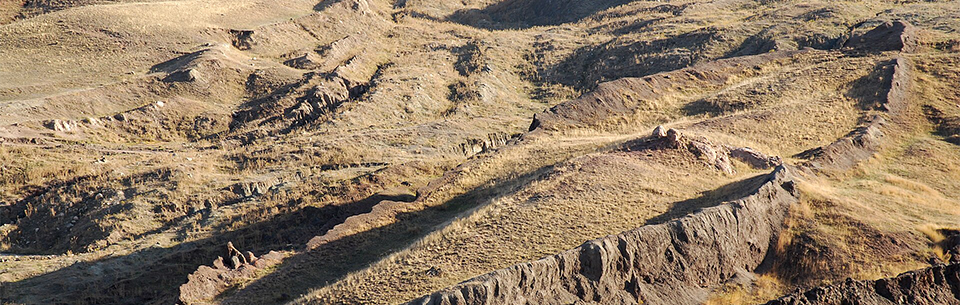
Of course, we believe Noah’s Ark was a real ship that actually existed and saved Noah, his family, and two of every kind of land-dwelling, air-breathing creature from the waters of a global Flood. That Ark landed on the mountains of Ararat, as the Bible tells us, but after that, the Bible doesn’t tell us what happened to the Ark. Ararat is a huge region, and we don’t know precisely where the Ark finally came to rest. So over the years various sites have been proposed, with the Durupinar site—with its boat-shaped formation—getting a lot of attention, especially recently. But are headlines claiming that this is for sure the Ark overstating the case?
Geologist Dr. Andrew Snelling—a creationist who believes in the account of the Ark and the Flood—has examined the available evidence (and has been involved in researching the claims of this site for many years) and shares his findings in a recent video for our YouTube channel. I encourage you to watch it and share it with others:
In short, we’re skeptical of the claims that this site is the final resting place for the Ark. While it would be absolutely amazing if it were, it appears that the boat-shaped formation is a natural geological formation and not the remains of the Ark.
And I responded to recent claims about charred wood found at the site in this short video:
While that’s disappointing to many people, it’s a good reminder that our faith in Scripture doesn’t rest on any particular archaeological find—it rests on the character of the God who authored Scripture, the God who knows all things and never lies. While archaeology can confirm God’s Word (and it does, over and over again), it is not what determines truth. God’s Word is true because of who wrote it: God Himself.
Thanks for stopping by and thanks for praying,
Ken
This item was written with the assistance of AiG’s research team.
Support the creation/gospel message by donating or getting involved!

Answers in Genesis is an apologetics ministry, dedicated to helping Christians defend their faith and proclaim the good news of Jesus Christ.
- Customer Service 800.778.3390
- Available Monday–Friday | 9 AM–5 PM ET
- © 2026 Answers in Genesis