
The Top Three Christmas Misconceptions
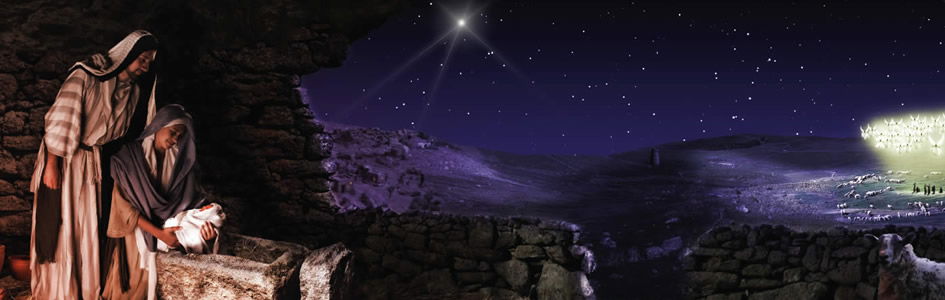
What was it like that first Christmas in Bethlehem? Christmas plays and movies, carols, and nativity scenes have painted a picture in our minds that varies in accuracy to what actually happened 2,000 years ago. So what are the top three misconceptions about that first Christmas?
- Jesus came into being at the incarnation. God became man at the incarnation when the Father sent his Son, Jesus, to earth in the womb of Mary. But that’s not when Jesus began to exist—Jesus is the eternal God, Yahweh of the Old Testament (John 8:58). He has no beginning, and he has no end. The incarnation is when the eternal God took on flesh and dwelled among us so he could be the perfect sacrifice for our sins.
-
Jesus was born in a stable (and there was an innkeeper!). We’ve all seen the portrayals of what happened when Mary and Joseph arrived in Bethlehem: Mary riding on the back of a donkey and feeling the first pangs of labor, the couple going to inn after inn but finding no one has any room for them until a kindly (or grouchy, depending on who wrote the pageant script) innkeeper offers the laboring mother his stable for the night.
But did you know that none of the Gospels mention a stable, Mary going into labor as soon as they arrived in Bethlehem, a donkey, or even an innkeeper? Here’s what we’re told in Luke 2:4–7:
And Joseph also went up from Galilee, from the town of Nazareth, to Judea, to the city of David, which is called Bethlehem, because he was of the house and lineage of David, to be registered with Mary, his betrothed, who was with child. And while they were there, the time came for her to give birth. And she gave birth to her firstborn son and wrapped him in swaddling cloths and laid him in a manger, because there was no place for them in the inn.
Because of the mention of a manger, people assume baby Jesus must have been born in a stable, and the reference to an “inn” conjures up images of an innkeeper. But did you know that many homes in the first century had mangers in their homes? Animals were often brought inside at night for safety and warmth, so mangers were built into the home. So a mention of a manger—which is still an unusual bed for a baby!—does not mean there was necessarily a stable.
But what about the inn? What is translated in many of our English versions as “inn” is the Greek kataluma, which is used later in Luke 22:11 to refer to the upper room (or “guest room”) where Jesus ate the last supper with his disciples. It likely refers to the upper portion of the house of one of Joseph’s relatives, where guests would stay. Due to the influx of family coming into town for the census, there was no room in the “guest room” for Mary and Joseph, so Jesus was delivered in the lower level of the house and laid in the feeding trough for the animals.
-
The wise men arrived the night Jesus was born. Matthew 2 records the arrival of wise men from the east who came to present their gifts and worship to the newborn King. But did they appear alongside the shepherds who, in response to the appearance of the angels, had rushed to Bethlehem to see Jesus the night of his birth? It’s often depicted that way, but the Bible doesn’t say that.
Now after Jesus was born in Bethlehem of Judea in the days of Herod the king, behold, wise men from the east came to Jerusalem. (Matthew 2:1)
We’re later told evil King Herod slaughtered all the baby boys under the age of two in Bethlehem in an attempt to kill Jesus. Based on these details, it seems the wise men arrived up to two years after Jesus’ birth.
It’s important that we always start with Scripture in every area.
If it’s not already a tradition for your family, I encourage you to take the time to read the Gospel accounts of Christ’s birth rather than just watching someone’s portrayal of the events in a drama, movie, or artwork. It’s important that we always start with Scripture in every area. And it’s important to contrast what Scripture actually states with wrong traditions.
And that’s what we do in the Christmas dramas that our wonderful Answers Academy (our K–12 Christian school) staff produce. We start with Scripture, trying to make the plays as accurate as possible to what really happened (with careful artistic license, of course). If you’re looking for a moving, gospel-centered production for your church, Christian school, or homeschool group for next Christmas, I encourage you to check out one of those plays, each of which focuses on Christmas through the eyes of a different person:
- Keeping Watch: Christmas Through the Eyes of the Shepherds
- A Pondering Heart: Christmas Through the Eyes of Mary
- Long Foretold: The Journey of the Magi
- Behold the King: Christmas Through the Eyes of Herod’s Servant
What a blessing to be able to produce resources like these to equip the church to share the gospel during this time of year when many unbelievers will come to church.
Thanks for stopping by and thanks for praying,
Ken
This item was written with the assistance of AiG’s research team.
Support the creation/gospel message by donating or getting involved!

Answers in Genesis is an apologetics ministry, dedicated to helping Christians defend their faith and proclaim the good news of Jesus Christ.
- Customer Service 800.778.3390
- Available Monday–Friday | 9 AM–5 PM ET
- © 2026 Answers in Genesis