
The Galápagos Islands Are an Icon of Evolution—But Should They Be?
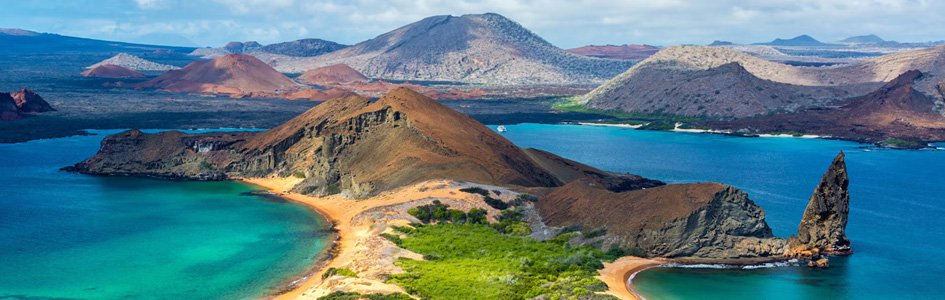
When the average person thinks of the Galápagos Islands, two things come to mind—giant tortoises and Charles Darwin (and maybe a third thing—finches). And that’s, of course, because it was on those islands off the coast of Ecuador that the H.M.S. Beagle, the ship on which Darwin was sailing as a naturalist, docked and Darwin observed finches with different-sized beaks—an evidence later used to support his ideas of evolution. But are these remote islands really a laboratory for evolution?
We as creationists agree with many of the actual observations that Darwin made!
You might be shocked to learn that creationists and evolutionists both agree that organisms change. We agree that some finch species have smaller beaks and others have larger ones and that beak size can give one species an advantage over another in a specific environment. We agree that such advantages may cause a population to shift in a certain direction. In other words, we as creationists agree with many of the actual observations that Darwin made! Where we disagree is how we explain the unobserved past and where traits (such as beaks) came from in the first place. The different beaks sizes are just variation in finches, and finches remain finches.
In this presentation, Dr. Jennifer Rivera does a great job explaining the history of the Galápagos and Darwin; what natural selection is; and how what Darwin observed actually confirms the Bible’s history, not his ideas about the past. I encourage you learn more by watching her presentation.
Thanks for stopping by and thanks for praying,
Ken
This item was written with the assistance of AiG’s research team.
Support the creation/gospel message by donating or getting involved!

Answers in Genesis is an apologetics ministry, dedicated to helping Christians defend their faith and proclaim the good news of Jesus Christ.
- Customer Service 800.778.3390
- Available Monday–Friday | 9 AM–5 PM ET
- © 2026 Answers in Genesis