
Deceptive Definitions
The “10,000-year rule” reveals evolutionary bias in so-called science
“We needn’t look into this matter any further, the facts speak for themselves!”
Anyone who enjoys a good old-timey mystery novel, TV show, or movie knows that when they hear something like that statement made by a character within the story, it’s likely to be challenged rather severely in short order.
We’ve all seen examples of some fictitious super sleuth who ignores the chief of police’s dogmatic declaration, digs deeper into the situation, and discovers the hidden truth no one else could see, often embarrassing the officials in charge of the investigation in the process.
Facts Are Always Spoken For
Although fictitious, this scenario emphasizes a great truth in the real world about someone attempting to investigate events that have happened in the past. In all cases, the facts never speak for themselves—they are always spoken for by someone else, often from someone that is completely biased.
To illustrate this point, think of a lawyer (in a murder trial let’s say) who is a spokesperson representing either their government or their client(s) and, therefore, are referred to in a derogatory fashion as a “mouthpiece.” They are called this because they speak for something or someone else.
Interpretive Bias
Now, a prosecutor in a murder trial will almost always interpret whatever facts are laid forth in the case as evidence to be used against the defendant, supposedly proving their guilt. Why? Because of their bias (i.e., prosecutors prosecute!). Yet the opposing council will interpret the exact same body of facts in a polar opposite fashion, demonstrating the innocence of their client (i.e., defense lawyers defend their clients).
And so, jurors in a case often hear two completely different historical accounts—both based on the exact same facts—and must judge between them and determine which they feel is most plausible in order to decide the fate of the accused.
This, of course, relates directly to the origins (creation/evolution) debate, a debate where everyone looks at the same body of facts (like dinosaur bones, DNA, and rock layers) and then interprets those facts as evidence toward whichever model they believe.
Fossils to the Forefront
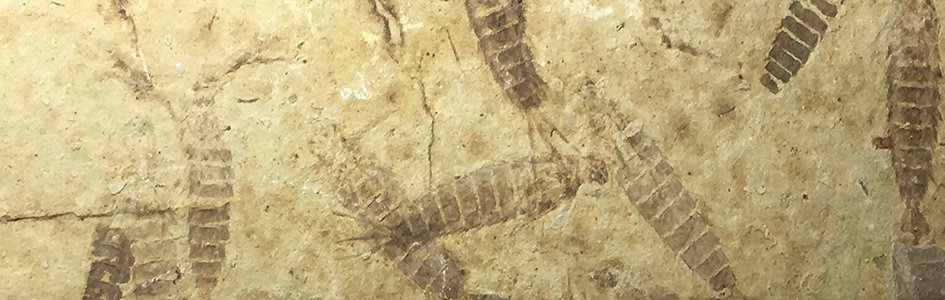
In relation to the creation vs. evolution issue, one subject that will often come up is fossils. Although there are many different definitions of a fossil, fossils are primarily thought of as the traces or remains of dead things trapped in sedimentary rock layers.
Most people would likely think that a discussion about rocks and fossils would be pretty straightforward because rocks and fossils can be dug up, measured, and chemically analyzed. So it should just be a matter of examining the facts and coming to the proper conclusions.
This is where many Christians often get fooled into believing that evolutionary-based ideas, like rocks and fossils being evidence of millions of years of earth history and/or evolution, are simply “scientific” conclusions. But as I mentioned earlier, facts involving past events are often interpreted according to the bias of the examiner of these facts, and for those of us in the know, it doesn’t take too long to see the bias regarding fossils from the evolution-believing crowd.
So let’s discuss how even definitions of a subject can sway an argument in a certain direction before we get to the facts. To do so, I’ll ask you to put on your proverbial detective hat and see if you can spot some bias among the interpretations offered as we go along here.
Deceptive Definitions
Our first example comes from an article defining fossil on the British Geological Survey (BGS) website. You’d think that would be pretty straightforward and in no way controversial, right?
Fossils are the preserved remains of plants and animals whose bodies were buried in sediments, such as sand and mud, under ancient seas, lakes and rivers. Fossils also include any preserved trace of life that is typically more than 10,000 years old.1
What should stand out to you is the curious and very specific number attached to their definition of a fossil—the remains of a dead thing that is over 10,000 years old. One has to ask, why 10,000? Why not 12? Why not 5?
Curiously, some people have offered that because human history is supposed to only extend back 10,000 years, fossils should be designated correspondingly. But that makes zero sense because, scientifically, we are talking about the transformation of the physical structure of an object. If a former living thing was permineralized or fossilized after the supposed beginning of our recorded history, how would that make it “not a fossil”?
So again, why would the BGS designate a fossil so specifically in the range of 10,000 years or more? As far as the brute facts involving fossils go, all anyone is ever observing are dead things in rock layers, not dead things in rock layers that are always automatically over 10,000 years old.
Stacking the Deck
Unless you think this is just one curious case and the BGS website’s language is ambiguous enough not to accuse them of anything suspect, you can see that it’s not just their group that has this strange bias. Here is a National Geographic article that touts the same nonsense.
Preserved remains are defined as fossils if they are older than 10,000 years old. The oldest fossils are almost 4 billion years old and are traces of ocean-dwelling bacteria. Some of the youngest fossils (10,000 years old) are, for example, the fossilized teeth of woolly mammoths.2
What’s curious here is that this is supposed to be a definitive, encyclopedic entry, and at the very beginning of the article, fossil is defined quite properly, “Fossils are the preserved remains, or traces of remains, of ancient animals and plants.”3
This definition is basically what I said earlier. So ask yourself, why the addition of this 10,000 year “rule” later on in the article?
Lest you think these are the only two examples, how about this statement coming from an article from the Smithsonian Magazine talking about how they made simulated fossils within 24 hours? The short description gives the plot away immediately: “The simulation could help researchers gain new insight into the fossilization process—without having to wait 10,000 years.”4 See? There it is again, and notice if you can spot their bias in the following quote from the same article:
Fossil finds can offer exciting insights into the creatures that roamed the earth long before modern humans came into the picture. Scientists are interested not only in the skeletal remains that fossils preserve, but also in how the fossils themselves were formed. . . . Unfortunately, since the fossilization process takes at least ten thousand years, it is not particularly easy to study.5
Observe how they allude to a non-biblical history of life that supposedly had creatures that lived long before humans even existed, but the Bible clearly states that God created everything in six literal days, so Adam was obviously created within a few days of every kind of creature God created.
The Bible clearly states that God created everything in six literal days, so Adam was obviously created within a few days of every kind of creature God created.
Also note that they are distinctly claiming it’s the fossilization process itself that requires 10,000 years to form a fossil with absolutely no mention of it being linked to our supposed human historical records. To put the cherry on top of this biased sedimentary layer cake, I’ll share this quotation from an article from the American Museum of Natural History: “A fossil is any evidence of prehistoric life (plant or animal) that is at least 10,000 years old.”6
Now, neither the BGS, National Geographic, Smithsonian Magazine, or the American Museum of Natural History articles offer any specific, logical, or scientific reason as to why this 10,000-year figure should automatically be applied to fossils. They simply claim it without warrant or justification of any kind.
I would even call out the Natural History article’s use of the word prehistoric here as being biased as well. The Bible begins with the words “In the beginning . . .” So there is no such thing as prehistory or prehistoric from a consistent biblical worldview.
Creating Conflict with Creation
Back to our question. Why do you think they would designate a fossil so specifically in the range of 10,000 years or more? Many might describe the inclusion of that detail as arbitrary, and it absolutely is. But as I mentioned earlier, I believe they included it because of their materialistic bias—it supports their anti-biblical worldview.
You see, it has been claimed by biblical creationists that according to the Genesis chrono-genealogies, the Bible’s minimum to maximum allowable timeline is anywhere from 6,000 to (you guessed it) 10,000 years old. We would say that the genealogies when properly understood teach the earth is around 6,000 years old. Regardless, by defining fossils as “typically more than 10,000 years old,” the BGS, National Geographic, etc. are designating the very existence of fossils as proof that the Bible’s history is false!
This is likely why if you are a Bible skeptic who’d like to decorate their car with their worldview, you can go to the Amazon website and order yourself a bumper sticker7 which says, “We have the fossils. We win!” for a mere $17 CAD. If (somehow) we “know” every fossil we see is over 10,000 years old and nothing in the Bible can be older than 10,000 years, then—voila—they win. It’s kind of like the old coin-flip adage—heads, I win; tails, you lose.
Conflicting Evolutionary Accounts?
Of course, their claim flies in the face of what several of their fellow evolutionists have said regarding fossils. Case in point, here in Canada, the evolution-believing dinosaur fossil expert Dr. Phil Currie stated the following in his book 101 Questions About Dinosaurs:
Fossilization is a process that can take anything from a few hours to millions of years. . . . The amount of time that it takes for a bone to become completely permineralized is highly variable. If the groundwater is heavily laden with minerals in solution, the process can happen rapidly.8
Now, I have used Currie’s quotation before and pointed out the following. As a distinguished scientist, if Dr. Currie can make the claim (in writing) that fossilization can occur within hours, it’s likely because he has proof of its occurrence through experimental observation. And yet, no one has observed fossilization occurring over millions of years. So why would you ever believe that was ever the case?
If fossilization can occur within hours, does it then have to wait an extra 10,000 years to achieve its official status? Can anyone explain why that would be, other than some anti-biblical bias?
Not “Just the Facts”
Again, many people (even Christians) don’t fully understand that they’re often not simply being presented with facts when discussing subjects like fossils. What they are being presented with, for the most part, is not only an interpretation of facts that comport with evolutionary beliefs but often an interpretation that is deliberately against what the Bible clearly teaches. Here’s another example from the BGS website under the heading “Why Do We Study Fossils?”
Fossils give us a useful insight into the history of life on Earth. They can teach us where life and humans came from. . . . provide important evidence for evolution and the adaptation of plants and animals to their environments. Fossil evidence provides a record of how creatures evolved and how this process can be represented by a “tree of life,” showing that all species are related to each other.9
Can you see how the story of evolution has been slathered all over the facts (that fossils exist) in this statement? But wait a second, I could rewrite that paragraph from a biblical creationist point of view as well, which would in no way contradict any fact we can observe in the fossil record or world either. For example:
Fossils give us a useful insight into the history of life on Earth. They can teach us where the majority of the geologic record came from and provide important evidence for the rapid burial of plants and animals during the Genesis flood. Fossil evidence provides a record of how the various kinds of creatures perished and their remains were preserved in water-borne sediments and how the wide varieties of each created kind we see today are represented by the creation-based “orchard of life,” showing that all species are related to their representative created kind and not to other kinds.
Now, any objection from an evolutionist leveled toward that statement would only be against the interpretation of the facts I’m discussing (the billions of dead things buried in sedimentary rock and the variety of living things we can observe worldwide). Because again, none of us are disagreeing with the facts we observe—what we disagree with is the interpretation of the facts. Unfortunately, we are often given an interpretation of facts as if they were facts themselves.
Unfortunately, we are often given an interpretation of facts as if they were facts themselves.
The Only True Interpretive Device
That is why you will hear statements like “evolution is a fact” or “the earth being millions of years old is a fact,” but once the facts used as evidence to make those claims are analyzed and reinterpreted according to a biblical worldview, they don’t support such conclusions whatsoever.
This is why the Bible warns us to sort through every bit of information we receive and compare it to the Word of God. If the information does not comport with what God’s Word says, we should reject it. This is why 2 Corinthians 10:5 says to “take every thought captive to obey Christ” in order to “destroy arguments and every lofty opinion raised against the knowledge of God.”
Whether information put out by the world about rocks, fossils, geology, or gender, Christians should beware of absorbing any information uncritically because anti-biblical information and sentiment is often built into seemingly innocent commentary on a wide variety of topics. And always remember what God’s Word says regarding the spiritual battle we are in:
Be sober-minded; be watchful. Your adversary the devil prowls around like a roaring lion, seeking someone to devour. 1 Peter 5:8
Footnotes
- British Geological Survey, “Fossils: Discovering Geology—Fossils and Geological Time,” accessed February 28, 2025, https://www.bgs.ac.uk/discovering-geology/fossils-and-geological-time/fossils/#:~:text=Fossils%20are%20the%20preserved%20remains,than%2010%20000%20years%20old.
- National Geographic, “Fossil,” Encyclopedic Entry, last updated October 15, 2024, https://education.nationalgeographic.org/resource/fossil/.
- National Geographic, “Fossil.”
- Brigit Katz, “Scientists Baked a ‘Fossil’ in 24 Hours,” Smithsonian Magazine, July 27, 2018, https://www.smithsonianmag.com/smart-news/scientists-baked-fossil-24-hours-180969770/#:~:text=Unfortunately%2C%20since%20the%20fossilization%20process,not%20particularly%20easy%20to%20study.
- Katz, “Scientists Baked a ‘Fossil.’”
- American Museum of Natural History, “Dinosaur Bones,” accessed February 28, 2025, https://www.amnh.org/dinosaurs/dinosaur-bones.
- EvolveFISH, EvolveFISH We Have the Fossils Bumper Sticker 11" x 3", available as of February 28, 2025, https://a.co/d/dSKARgY.
- Philip J. Currie & Eva B. Koppelhus, 101 Questions About Dinosaurs (Mineola, NY: Dover Publications, 1996), 11.
- British Geological Survey, “Fossils: Discovering Geology.”
Support the creation/gospel message by donating or getting involved!

Answers in Genesis is an apologetics ministry, dedicated to helping Christians defend their faith and proclaim the good news of Jesus Christ.
- Customer Service 800.778.3390
- Available Monday–Friday | 9 AM–5 PM ET
- © 2026 Answers in Genesis