
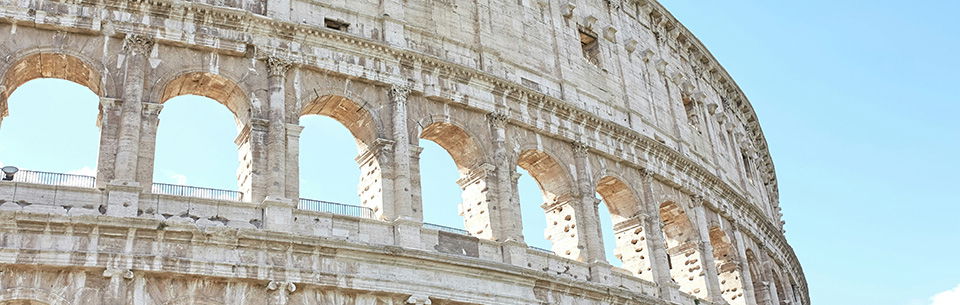
Photo by Mathew Schwartz on Unsplash
Six Ways to Add Archaeology to Your Homeschool Curriculum
At some point or another, we’ve all wanted to be like Indiana Jones. With bullwhip, pistol, and stylish fedora, Indy travels the world, fighting bad guys and recovering lost treasures. And when not traveling, he’s passionately sharing his love of archaeology. Not a bad life! But while homeschooling may not be quite as globe-trotting as Indy’s adventures, one thing we can learn from him is that the study of archaeology is important.
Importance of Archaeology
Though it may seem easy to dismiss archaeology as a fun-but-unnecessary addition to your child’s homeschooling, archaeology is actually really important and is not emphasized enough! In particular, archaeology can help kids have both a hands-on experience of history and an opportunity to think critically. Despite the fact that “hands-on learning” and “critical thinking” can be buzzwords in modern education, both techniques have their place in the homeschool curriculum.
By providing a physical, tangible connection to the past, you can use archaeology to help transform how your kids see history.
It’s not surprising that archaeology can also prevent kids from finding history boring. While I’ve always loved history, not everyone I knew growing up shared my enthusiasm. I’m sure dull textbooks and lackluster teaching smothered some of their excitement, preventing them from learning the valuable lessons that history offers. By providing a physical, tangible connection to the past, you can use archaeology to help transform how your kids see history. You don’t need to buy a scale model of ancient Egypt or fly your kids to Rome. Instead, you can bring a tiring history textbook to life by focusing on small, tangible ways of bringing archaeology into the classroom, as detailed in the next section.
Maybe your kids already love history. That’s great! But archaeology still offers you the ability to help them think more deeply about what they are reading. Most mainstream history books, including school textbooks, are filled with secular ideas and philosophies that contradict our Christian worldview, as outlined in a previous article. But more to our point here, how do you know if those thousands of facts in each book are even accurate? While firsthand and written accounts are often used to verify facts, these are not always consistent. Just as the information from today’s news outlets and social media isn’t always reliable, ancient texts can be similarly flawed, sometimes including embellishments, propaganda, and other falsehoods. This is where alternate sources of evidence, such as archaeological remains, are used to verify facts and fill in the gaps where written accounts are inaccurate or nonexistent.
To give an easy example, Christopher Columbus is often heralded as the European discoverer of the New World. However, archaeological evidence clearly indicates that Vikings discovered North America first.1 Archaeology also helped settle conflicting eyewitness accounts of Titanic’s sinking. While some survivors testified that the ship broke in half, others claimed it remained intact.2 These contradicting reports were settled when Robert Ballard led a marine archaeological expedition that discovered the wreck over 70 years later. Ballard’s discovery that “Titanic’s stern was, in fact, severed from the bow at a point on the hull about midway between the third and fourth funnels” put the controversy to rest.3 Other examples of archaeology supporting written accounts include the discoveries of the biblical Hittites,4 Troy from Homer’s Iliad,5 and the notorious pirate Joseph Bannister’s Golden Fleece.6 And of course, archaeology routinely confirms biblical accounts.
Archaeology can be used to teach kids how this type of research helps historians determine reliable sources of facts and discern historical truth. By showing your kids how to distinguish between truth and misconceptions, you can help them learn to think critically about the history they are being taught both now and in the future.
Fun and Creative Ways to Mix In Archaeology
While there are archaeology homeschool programs out there, you don’t have to teach an entire class to help your kids become familiar with the principles of archaeology. For example, the National Oceanic and Atmospheric Administration has individual lesson plans to teach students about the importance of shipwrecks.
Here are some other fun ways to add some archaeology to your history class:
1. Read Books About Archaeology
There are tons of fantastic books about archaeology out there! However, as we talked about, many of these books have secular, evolutionary ideologies woven into them. In contrast, AiG offers books rooted in biblical principles, including Archaeology and the Bible and The Archaeology Book.
2. Watch Archaeology Documentaries
Just as with textbooks, you need to be aware both of differing opinions in video documentaries and of their credibility. (Not everything you watch on YouTube is true or verifiable!) Some great Christian documentaries and discussions about archaeology include Patterns of Evidence and Archaeological Evidence for the Bible.
3. Check Out Virtual Dig Sites
The internet abounds with blogs and websites where you can see the latest updates on archaeological digs around the world. The Archaeological Institute of America has great general resource guides, and CyArk’s Open Heritage 3D provides detailed 3D models of archaeological sites from around the world. (Keep in mind that the secular resources recommended in this blog may not adhere to a biblical worldview timeline.)
4. Visit a Museum or National Historic Site
Numerous museums across the country have archaeological displays and sites you can visit. Websites such as WhichMuseum can help you find one close to you. You can also use the National Park Service website to identify archaeological sites in your region or state that you can visit with your kids. And of course, come visit the Creation Museum to learn about archaeology, creation, and more from a biblical worldview!
5. Go on a Dig!
This does not necessarily mean traveling to Egypt or South America. Depending on where you live, there may be local sites where you can take part in uncovering your local town’s history. I did this once or twice in New York growing up. A good place to check with is your local historical committee. More broadly, the Archaeology Institute of America can keep you up-to-date on current digs.
6. Set Up Your Own Dig Site
Setting up your own dig site can be as simple as buying old Roman coins for your kids to clean off. However, for more creative recommendations, you can check out the University of Denver’s list of resources specifically for learning about archaeology at home.
Final Thoughts
Archaeology is a fun and important subject to include in your homeschool curriculum because it sparks interest and helps your kids think more deeply about the history they’ve been learning. As with every subject, archaeology must be seen through the lens of God’s Word. By showing your kids how archaeology is a tool that validates the Bible, you have the opportunity to help your kids deepen their faith. Have fun finding ways to mix it into your history class!
Footnotes
- Margot Kuitems et al., “Evidence for European Presence in the Americas in AD 1021,” Nature 601 (2022): 388–391, https://www.nature.com/articles/s41586-021-03972-8.
- Walter Lord, The Night Lives On (William Morrow and Company, 1986), 149–152.
- Robert Ballard, Explorations (Hyperion, 1995), 278–279.
- Christopher Eams and George Haddad, “Finding the Hittites: How a Lost Empire Confirms Biblical History,” Let the Stones Speak, September–October 2023, https://armstronginstitute.org/954-finding-the-hittites.
- Joshua Hammer, “In Search of Troy,” Smithsonian Magazine, March 2022, https://www.smithsonianmag.com/history/in-search-of-troy-180979553/?itm_source=related-content&itm_medium=parsely-api.
- Robert Kurson, Pirate Hunters: Treasure, Obsession, and the Search for a Legendary Pirate Ship (Random House, 2015).
Support the creation/gospel message by donating or getting involved!

Answers in Genesis is an apologetics ministry, dedicated to helping Christians defend their faith and proclaim the good news of Jesus Christ.
- Customer Service 800.778.3390
- Available Monday–Friday | 9 AM–5 PM ET
- © 2026 Answers in Genesis