

This and That
What Were Behemoth & Leviathan?
3 Reasons to Believe Dinosaurs Were on Noah’s Ark
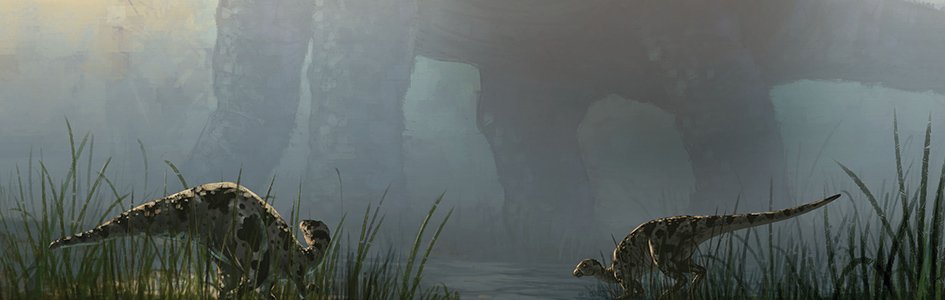
Were Behemoth and Leviathan dinosaurs? In Job 40:15–24, God describes Behemoth as a powerful, grass-eating creature with strong loins and a tail “stiff like a cedar” (Job 40:17). Behemoth was a large land animal, but its description does not match any modern creatures—elephants and hippos do not have stiff tails, and other large animals like whales are not land-dwelling. Some scholars speculate that Behemoth was a sauropod dinosaur.
God describes Leviathan in Job 41 as a fearsome sea creature that breathes fire (Job 41:19–21) and has a back “made of rows of shields” (Job 41:15) that cannot be pierced by sword or spear (Job 41:26). This depiction of Leviathan does not describe any living sea creature today. Scholars theorize that Leviathan was a plesiosaur.
Whatever these creatures were, God’s vivid descriptions to Job assure us they were certainly real.
Uninvited Guests or Unsung Heroes?
Just a few minutes north of the Answers in Genesis headquarters, a large population of non-native Lazarus lizards scurry around Cincinnati. As the story goes, about 10 of these little lizards were smuggled into the Ohio city in the 1950s by a young boy after a visit to Italy, where the reptiles are native. Scientists now estimate that those original 10 lizards may have multiplied into millions.
Despite the number of lizards that now call Cincinnati home, scientists have not yet classified the species as invasive since the lizards haven’t harmed the local ecosystem. In fact, the Lazarus lizard might even be helpful in some ways. Researchers have discovered that the lizard’s blood can kill the bacteria that causes Lyme disease. Could these suitcase stowaways become health heroes?
What’s in a Name?
Many planets boast moons with names like Io, Callisto, Titan, Amalthea, and Adrastea. So what fantastic moniker does earth’s moon claim?
Curb your enthusiasm. Our moon’s government name is . . . moon. The Latin word for “moon” is luna, the Greek word is selene. Two lovely names, yet we settle for moon.
But for what it lacks in luster, the name makes up in meaning. The words translated as “moon” in Greek and Latin are related to the word month—fitting, since our moon orbits the earth about once every month. Even in a seemingly boring name, we find truth about our God of order and light, who created the moon to mark the seasons and months (Psalm 104:19).
Insect Icons
The mantis family wins an award for best dressed of the insect world. There are more than 2,000 species of mantises, each more unique than the last—and all dressed to kill. Check out these cleverly cloaked mantis species.
Hometown Strangers
The Answers staff reflect on their experiences with invasive species.
Alex Meloche, magazine designer
My husband and I live near a nature preserve that hosts multiple bird species. Over the summer, musk thistle took over, some growing as high as corn stalks. It invaded the grasslands of the red-wing black birds, broke through landscaping stone, and blocked access to benches. We were alarmed at how quickly an invasive species can destroy a little ecosystem. We hope to see landscapers cut it down so we and the animals can continue to enjoy our little oasis.
Chris Neville, art director
“What lovely ground cover!” I thought when I first noticed the swath of cute white flowers that lined the edge of the woods the first spring in my new home. But after a few months, the flowers left, and the swath grew. By summer, I learned I had inherited garlic mustard, the edible, medicinal, and fairly innocent European traveler on the top 20 list of plants “at higher risk to harm our regional ecology,” according to the Northwest Michigan Invasive Species Network. Its immense seed-spreading capability and its ability to outcompete most native species means that six years later, I still battle this little invader each spring at the edge of the woods.
Laura Allnutt, managing editor
Honeysuckle lined the parking lot of my childhood church. After the service, we kids would rush outside to pluck the center from the blossoms and dab the nectar on our tongues.
Today, I relish the smell of honeysuckle sweetening the spring air, and I love the white-petaled bushes lining my backyard. I resist the truth that this nostalgic, perfumy plant is invasive. As a careful steward of creation, I’d like to find ways to keep them in check while keeping them around.
Sarah Eshleman, editor in chief
Several years ago, my dad raised a gray squirrel kit, named Earl. Earl seemed happy to live a pampered life until one day, he leaped from my dad’s pocket to answer the call of the wild.
Birdfeeder acrobats, unartful dodgers of traffic, nibblers of garden produce—we’re used to these tree rats. But in the UK, the eastern gray squirrel (Sciurus carolinensis) is an invasive nuisance. By carrying squirrel pox virus, they decimate red squirrel populations. Grays can also eat seeds and nuts not ripe enough for red squirrels to digest, meaning they get to the grub faster.
Though the UK is desperate to eradicate the bushytailed invaders, they’re here to stay in the States. And with apologies to the UK, I wouldn’t want them to scurry away anytime soon.
Schuyler Vander Wilt, assistant editor
My husband and I live in a cabin in the woods. Each season, our home is invaded by a different pest—spiders in winter, sugar ants in spring, fruit flies in summer, and stink bugs in fall.
Recently, I learned our fall house guests aren’t just trespassers—they’re an invasive species. Native to Asia, the brown marmorated stink bug was likely introduced to the US in the mid-1990s. Today, they have been found in 38 US states—including Kentucky, where I live.
Though I bemoan their intrusion, these invaders are harmless to humans—aside from their pungent odor, which I have often fallen victim to.
Answers Magazine
October–December 2025
When invasive species clash with native ecosystems, biologists face tangled questions about biblical dominion.
Browse Issue
Support the creation/gospel message by donating or getting involved!

Answers in Genesis is an apologetics ministry, dedicated to helping Christians defend their faith and proclaim the good news of Jesus Christ.
- Customer Service 800.778.3390
- Available Monday–Friday | 9 AM–5 PM ET
- © 2026 Answers in Genesis