

This and That
What the Bean Leaves Behind
What’s in a Cup, p. 36
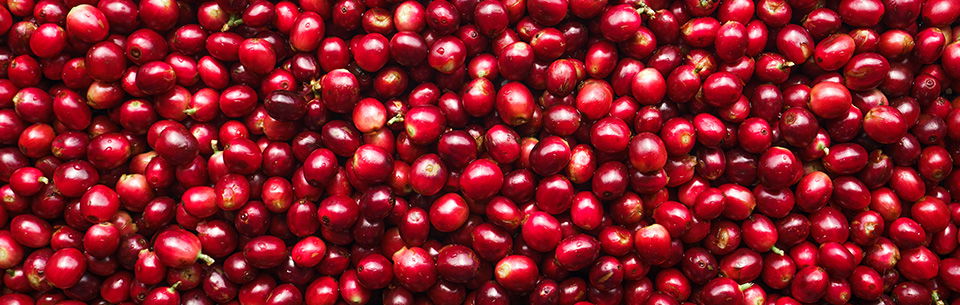
A coffee bean is the pit of the coffee cherry, called cascara. But not a single part of the plant goes to waste. Though often composted for fertilizer on coffee farms, cascara can also be dried into raisins and brewed to make a cup of nutritional, fruity tea. Unlike coffee’s high caffeine content, cascara is more comparable with green tea. Mix it with lemonade for a tangy, fruity twist.
Outfoxing Taxonomy
Out of Line, p. 52
The man-made taxonomical classification system is a mess. But some creatures are more puzzling than others. Take foxes, for example.
Foxes are currently considered part of the canine kind, which also includes wolves, coyotes, jackals, and domestic dogs. There are several genera of fox. The Vulpes genus, considered “true foxes,” includes 12 existing species, such as red foxes, arctic foxes, and fennec foxes. The other genera of foxes include Urocyon (the gray and island foxes), Otocyon (bat-eared fox), Cerdocyon (crab-eating fox), and Lycaloplex (six species of South American foxes).
Hybridization is the best way to determine whether species belong to the same kind. While there are records of hybridization within Vulpes, like red and kit fox hybrids and red and arctic fox hybrids, there is little verifiable evidence of Vulpes foxes hybridizing outside their genus. In fact, some creation scientists question whether Vulpes are part of the canine kind at all.
Scientists recently discovered a hybrid of a domestic dog and a Pampas fox (a species within the Lycaloplex genus). However, Lycaloplex foxes are more closely related to jackals and wolves than true foxes, so it makes sense that this genus could hybridize with canines. But there is minimal evidence of hybridization for the other four genera.
Lack of hybridization doesn’t necessarily mean foxes are a unique kind. Tigers and house cats are both part of the cat kind, though they don’t hybridize due to size differences and lack of proximity.
However, Vulpes foxes have only 34 chromosomes, whereas dogs (Canis) have 78—a difference which lends to the idea that foxes may be a separate kind.
So are Vulpes foxes in the canine kind or in their own unique kind? Not all creation scientists agree, but for now baraminologists (scientists who study biblical kinds) place foxes in the canine kind.
Regardless of a fox’s taxonomical classification, we can be sure of God’s design: Kinds only reproduce within their kinds.
Map of Golden Spikes
Life in the Anthropocene, p. 12
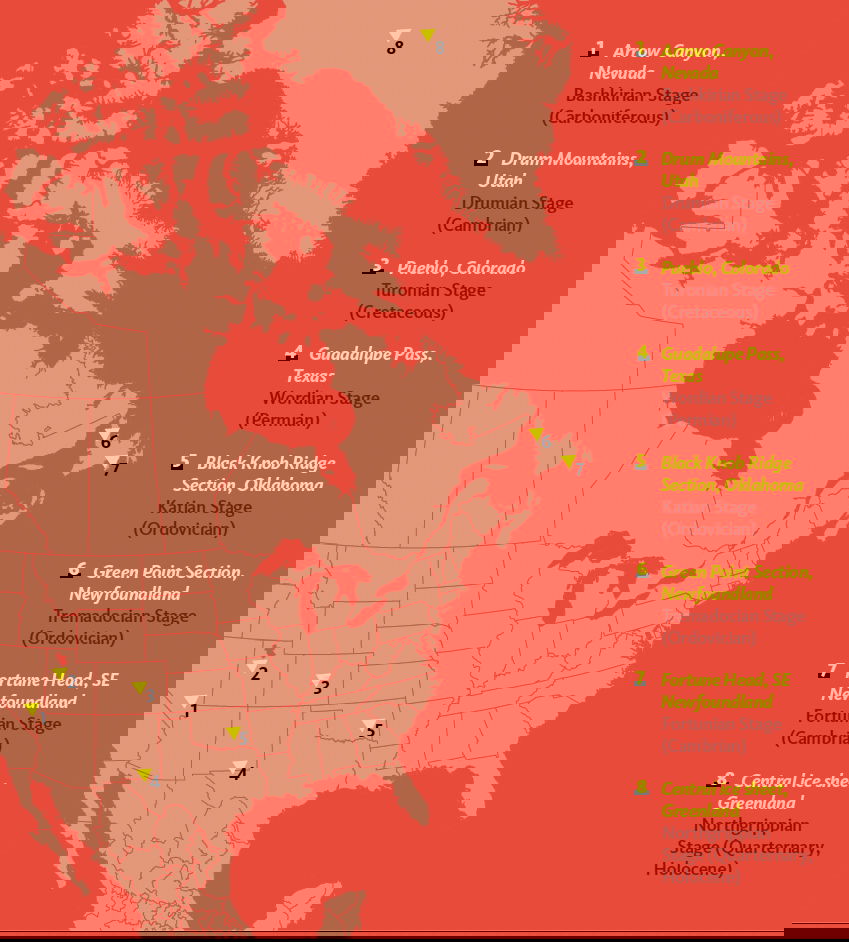
Around the world, golden spikes mark geologic boundaries between rock layers, dating them on the geologic timescale. Of course, secular geologists believe that these boundaries represent geologic “instants” in between millions of years. But from a biblical perspective, these layers are just stages within the global flood and its aftermath.
This map shows the golden spike locations that mark boundaries in North America and nearby Greenland. Do you live near any of them?
Fruit Salad
Out of Line, p. 52
The sweetest way to experience hybrids? Hybrid fruit! Hybrid plants occur when the pollen of one plant pollinates another plant’s flowers. This can happen naturally or purposefully by the grower to achieve certain characteristics. Grab a bowl and spoon for a scrumptious bowl of hybrid fruit salad!
- Pineberry: a pineapple hiding in a strawberry suit.
- Peacharine: a sweet mix between a peach and nectarine.
- Plumcot: smells like an apricot, savory like a plum.
- Rangpur: the acidic child of a mandarin orange and a lemon.
- Tayberry: not a blackberry, not a raspberry but with features of each.
- Limequat: the tang of a key lime and the tasty skin of a kumquat.
- Peacotum: peach/apricot/plum—three delicious fruits in one.
Read Into It
Bird’s-Eye View, p. 20
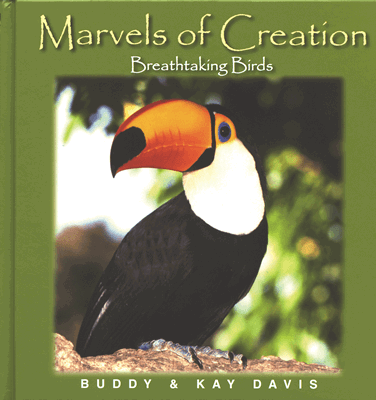
Discover more about the colorful creatures that fill our skies in Marvels of Creation: Breathtaking Birds by Buddy and Kay Davis.
Crystals & Christians, p. 32
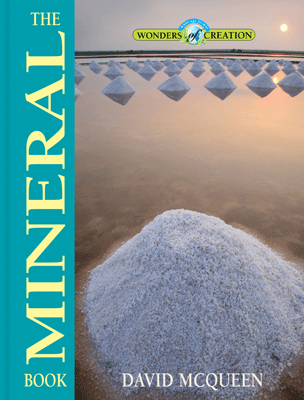
Curious to learn more about crystals and other minerals? Check out The Mineral Book by David McQueen.
Find these titles and more at AnswersBookstore.com.
Looking for more?
Like what you see in Answers magazine? Go even deeper in Answers in Genesis’ online periodicals.
Answers Research Journal (ARJ) is a peer-reviewed technical journal that publishes relevant, cutting-edge creation research from a young-earth and global flood perspective.
Answers in Depth (AiD) dives into modern scientific research, history, current events, theology, and more, all from a biblical worldview.
Answers Magazine
October–December 2024
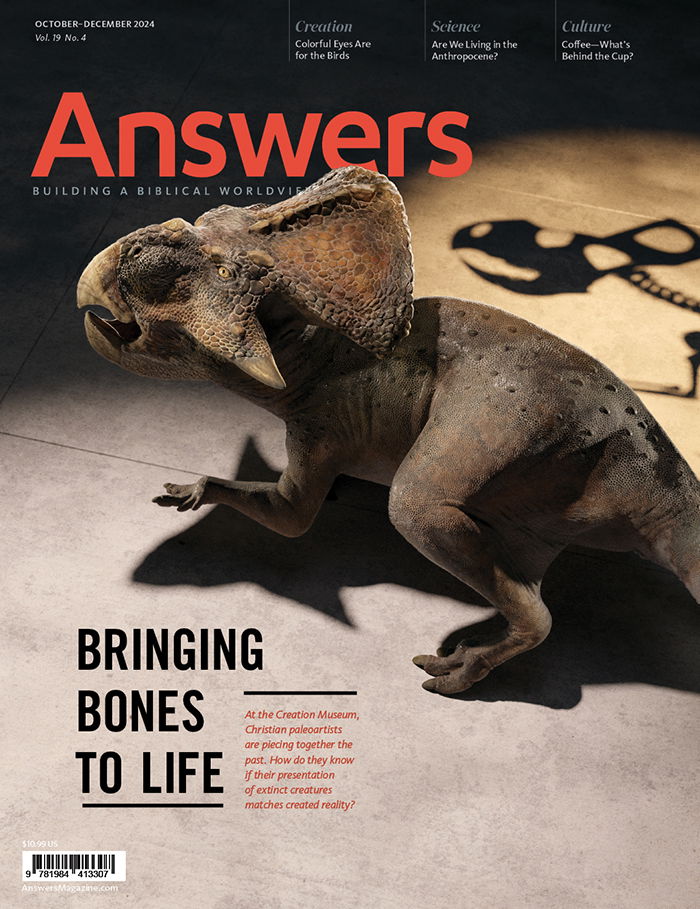
At the Creation Museum, Christian paleoartists are piecing together the past. How do they know if their presentation of extinct creatures matches created reality?
Browse Issue
Support the creation/gospel message by donating or getting involved!

Answers in Genesis is an apologetics ministry, dedicated to helping Christians defend their faith and proclaim the good news of Jesus Christ.
- Customer Service 800.778.3390
- Available Monday–Friday | 9 AM–5 PM ET
- © 2026 Answers in Genesis