

Chapter 4
The Human Kind
How Darwinian evolution is inherently racist, as demonstrated by crimes against Australian Aborigines and others, while the Bible summarizes a more hopeful and truthful picture of human equality
Do not look at his appearance . . . for man looks at the outward appearance, but the Lord looks at the heart.—1 Samuel 16:7
It’s been many, many years since my wife and I heeded God’s call to come to the Americas to expand the creation apologetics ministry of Answers in Genesis. It started as a whim of faith, working out of the trunk of our car and the patio of our small home. Now it has grown beyond our wildest dreams. But as my thick Aussie accent betrays (yes, we still have strong Aussie accents we’re told even after living in the USA for many years), I am still an Australian at heart. You can take a man out of his homeland, but it’s difficult to take the homeland out of the man. Australia is a land of brutal beauty and extraordinary biological diversity, but it’s also a land that is stained with the blood of thousands and thousands of innocents.
In 1924, the New York Tribune ran a headline that declared “Kindred of Stone Age Men Discovered on Australian Island—Missing Links with Mankind in Early Dawn of History.” They were talking about some of our Aborigines, a people group living on the island of Tasmania. The Aboriginal people had been misunderstood, abused, and slaughtered from the early days that Europeans landed in our country. When it (falsely) appeared that these people might have some scientific value from an evolutionary perspective, biologists from England and Germany began to hunt them as research specimens. Many were driven into swamps and then shot. Hunters were given instructions on how to skin them and prepare their skulls as specimens for museums around the world—all in the name of evolution. Some were taken alive, some were killed, and many of their graves were robbed. An estimated 5,000–10,000 graves were desecrated as scientists sought their remains for study.
Until relatively recent times, the Australian government had the shocking policy that if an Aboriginal married a non-Aboriginal, then the child of that union was considered more advanced than the Aboriginal parent. The children were therefore forcibly taken away and put in foster homes. It was a very sad part of Australia’s history, and it is still battling over those issues today, trying to mend the wounds of racism of the past as my country moves into the future.
In the 1800s, before Darwinian evolution was popularized, most people used the word “races” to refer to such groups as the “English race,” “Irish race,” and so on. However, this all changed in 1859 when Charles Darwin published his book On the Origin of Species. Most people don’t know that the subtitle of that book is The Preservation of Favored Races and the Struggle for Life.
In Origin of Species, Darwin didn’t particularly address humans, but hypothesized about animal evolution in general. At that stage in history, so many people believed the Bible that he probably thought it was radical enough to propose the idea of evolution in animals. So, he let that sit for a few years and then he wrote The Descent of Man in 1871, in which he applied evolutionary philosophy to mankind. (Because of his bitterness toward God and renouncing his earlier faith, it’s likely that this is what he wanted to do all along anyway.) But Darwin had always intended applying the same evolutionary ideas he proposed for animals to humans. For instance, at the end of the Origin of Species, he stated: “In the distant future . . . Light will be thrown on the origin of man and his history.”1
In The Descent of Man, Darwin popularized the idea of different races of people—lower races, higher races, primitive races, advanced races, and so on. What did that do? As the late Stephen J. Gould from Harvard University said, “Biological arguments for racism may have been common before 1859 but they increased by orders of magnitude following the acceptance of evolutionary theory.”2
Now, don’t get the idea that evolution is the cause of racism. Sin is the cause of racism. But Darwinian evolution fueled a particular form of racism by giving individuals and the masses a scientific excuse to pursue this godless philosophy by using evolution as supposed justification for discrimination, abuse, and even mass genocide.
Darwinian evolution was (and still is) inherently a racist philosophy.
Darwinian evolution was (and still is) inherently a racist philosophy. It teaches that different groups or “races” of people evolved at different times and rates. Most people have never read The Descent of Man, but they need to so they can see for themselves how racist Darwin’s ideas are. According to his idea, some groups are more like (and closer to) their ape-like ancestors than others. As a natural extension of this belief, the Aboriginal people of my homeland were considered by some as missing links between the ape-like ancestor and the rest of mankind—obviously having a great bearing on the terrible prejudice and injustice mentioned earlier.
As we have already noted, racist attitudes fueled by evolutionary thinking were largely responsible for the inhumane abuse suffered Ota Benga when he was sold as a slave, brought to this country, and caged for display as a half-man/half-ape along with an orangutan in the Bronx zoo. His grave in Lynchburg, Virginia, is a reminder of his suicide, but few learned anything by his death. The roots of Darwin’s garden were rapidly spreading and establishing themselves not only in the philosophies of a few scientists but also in textbooks and in schools, where the younger members of society were indoctrinated with Darwinist philosophies. What do you think that did to people’s thinking in America? In 1925, the year of the Scopes trial, racism was already being taught in the public schools in America in a very obvious way through the biology textbooks. In Dayton, Tennessee, where the Scopes trial took place, the biology textbook that was being used across America was A Civic Biology Presented in Problems by George William Hunter who blatantly stated:
The Races of Man. At the present time there exist upon the earth five races . . . the highest type of all, the Caucasians, represented by the civilized white inhabitants of Europe and America.3
By 1925, multitudes of students in America were being taught that the Caucasians were the highest race. What do you think that did to generations of young people as they grew up to become leaders in the community and the Church? Can you see how the seeds of this kind of thought would have taken root in the minds of those who would eventually join the Ku Klux Klan, various other White Supremacist groups, or the Christian Identity Movement? As a result of Darwinian evolution, many people started thinking in terms of the different people groups around the world representing different “races,” but the term meant something different within the context of evolutionary philosophy. This has resulted in many people today, consciously or unconsciously, having ingrained prejudices against certain other groups of people. It’s one of the fruits of Darwin’s garden and no one should be surprised by it.
Evolution is a lie. Just as Satan tempted Eve in the Garden of Eden with a lie resulting in sin and death, the lie of evolution is resulting in a continuation of the same things.
Exposing the Lie/Reclaiming the Truth
When you correctly understand the formation of different species and the changes that you see in animal kinds, you’ll start to recognize the truth of where we came from. Through a simple understanding of genetics, natural selection, and the belief of evolution, Darwinism is exposed for what it is: an outdated idea based on inaccurate and incomplete scientific information; a false belief that many have accepted as fact; a racist philosophy that leads to discrimination and disunity within the human race.
We’ve already considered what the Bible says about the formation of different “kinds” of animals and looked at some of the genetic evidence that supports what the Bible says is true. Now let’s look more specifically at the “human kind,” applying the basic genetic principles learned in the last chapter. What do science and the Bible have to say about the so-called “races”?
Science Speaks
All creationists (and virtually all evolutionists) would agree that the various so-called “races” did not have a separate origin. Even those who believe that humans evolved do not believe that the different races evolved from different groups of animals. But most people believe that there are such vast differences (but really they are not major differences and reflect minor genetic variability) between groups that there had to be many years for these differences to somehow develop.
We live in very exciting times. Not only do we have the truth of God’s Word to enable us to build a correct worldview, but we have also a rapidly expanding body of information through the field of science that is confirming what God’s Word has been telling us all along. But old ideas die hard. New ideas require new thinking and often require a conscious choice to change our beliefs and our actions. This is certainly the truth when it comes to issues of racism.
Nothing is ever as simple as it appears on the surface, but as human beings, we tend to try to categorize and judge things on the basis of what we can see. Nowhere is this more obvious than when it comes to the color of someone’s skin. While there are numerous features that human beings use to distinguish themselves from others, the color of skin seems to be one of the most important (probably second only to gender). Skin color is the first feature we most often turn to when it comes to making so-called “racist” distinctions between people. We sing, “Jesus loves the little children, all the children of the world. Red and yellow, black and white, they are precious in his sight. . . .” That’s a cute song, but actually, it’s really scientifically inaccurate! To be accurate, it should say, “Jesus loves the little children, all the children of the world. Shades of brown from dark to light, all are precious in his sight....” Yes, Jesus loves us all, but believe it or not, all human beings are basically the same color (shades of brown). There are no truly black or white people.
Every human being has the same basic pigment in the skin . . . it’s called melanin, and it’s basically a brown color
Every human being has the same basic pigment in the skin (there are other pigments that are inconsequential in regard to one’s skin color); it’s called melanin, and it’s basically a brown color (there are a couple of forms of this pigment). Melanin protects the skin against damage by ultraviolet light from the sun. If you have too little melanin and you live in a very sunny environment, you will more easily suffer from sunburn and skin cancer. If you have a great deal of melanin and you live in a country where there is little sunshine, it is much harder for your body to get adequate amounts of vitamin D. Your body needs sunshine for its production of vitamin D and melanin filters it out. If you don’t get enough vitamin D you could suffer a bone disorder such as rickets.
There are some humans that suffer from a hereditary mutation that makes them unable to produce melanin. People with this mutation are called “albinos.” Without any natural protection from ultraviolet rays, these people are extremely vulnerable to sunburn and excessive radiation. The point is, everyone is (needs to be) a colored person, but there are different shades of that color from light to dark.
We are not born with a genetically fixed amount of melanin but rather with a genetically fixed potential to produce a certain amount. In each of us this amount increases in response to sunlight, and some of us are more responsive to the sunlight than others. That’s why some people seem to tan more than others even though they’re exposed to the same amount of light.
In the epidermis (outer layer) of our skin, cells called melanocytes (they look like upside-down umbrellas) have organelles called melanosomes that produce the pigment melanin. Our genes determine how much melanin we will produce. The melanin migrates to the surface to give the shade we are. A “black” person is actually a dark-shaded person. A “white” person is really a light-shaded person.
You can also have a couple of different forms of melanin. If you’re a redhead, you’ve got a form of melanin missing—and if you’ve got one of those pigments missing, you are more susceptible to skin cancer (less protection for the nucleus of your skin cells), which is why you have to be very, very careful about getting sunburned. Other factors can reflect on your skin shade.
If your blood vessels are close to your skin, you get a reddish tinge. As you can see, numerous factors all combine to determine our unique shade of skin. Many different genes are part of the equation. The most influential variable, however, is the amount of (brown) melanin, so let’s focus our discussion there.
How do we explain the formation of many different shades of skin, and could those shades have arisen in the relatively short period of time that the Bible’s history would require they should have?
How do we explain the formation of many different shades of skin, and could those shades have arisen in the relatively short period of time that the Bible’s history would require they should have? The answer to those questions will be discovered as we investigate the genetics behind skin tone. You’ll have to forgive me if we seem to get a little bit technical here, but we are just applying the basic principles we covered earlier. (And remember, deep questions rarely have superficial answers!) Not only will this quick tour of genetics answer this question in detail, but it’s also a wonderful display of God’s creative power. Even if some of the details are difficult for you to grasp, stand back and look at the big picture for a moment and see the wonderful and phenomenally intricate system of information that God created through our DNA. Marvel at how it works every moment of every living day to make us who we are on a physical level.
We know that skin shade is governed by more than one gene. There are probably close to 20. For the sake of simplicity, assume for a moment that there are only 2 to understand the basic principles involved. Genes come in pairs. When animals reproduce through sexual reproduction, half of the genes from each parent are passed on to the offspring. For this discussion, let’s assign the letters “A” and “B” to the genes that code for large amounts of melanin. We will also use the letters “a” and “b” to designate the genes for small amounts of melanin.
In very dark-skinned people groups, individuals would carry AABB genes and would only produce dark-skinned offspring. Children born to these types of parents have no genes for lightness at all. In very lightskinned people groups, individuals carry aabb genes and would only produce light-skinned offspring. They have lost the genes that give them the ability to be dark, and therefore they can no longer produce large amounts of melanin.
In a sense, light-skinned people have had the dark genes bred out of them. Darker-skinned people have had the light genes bred out of them. The only way to reintroduce diversity into their gene pool is to mix with others with different genetic varieties. When this happens, diversity is reintroduced into the gene pool, and the offspring might be light, dark, or some combination in between.
If a male and female from each group mate and produce a child, the combination of their AABB and aabb genes would give birth to what geneticists call a middle-brown-shaded person. This child would carry the AaBb genes for melanin and would be “middle-brown” in skin shade. Now, if two people carrying the AaBb genes got married and reproduced, what would be the possible combinations of genes for melanin in their offspring?
An entire range of skin tone, from very light and very dark, can result in only one generation!
Amazingly, we find that an entire range of skin tone, from very light to very dark, can result in only one generation! Beginning with two middle brown parents, you can see how it is possible to get all the possible shades of melanin.
Do you realize that the majority of the world’s population is middle brown? What do you think Adam and Eve most likely would have been? Would they have been what we call Caucasian “white,” with aabb genes (as most children’s books paint them to be)? No, because then everyone would be. What about what we call “black,” with all AABB genes? No, because then everyone would be. But if they were middle-brown with AaBb, then their children could have been light, dark, and every shade in between in one generation.
But what about people groups that are permanently middle brown, such as the majority of those on earth today? Again, this is easily explained. Groups of people who carry the aaBB or AAbb gene are able to produce only middle-brown offspring. If these lines of people were to interbreed again, the process would be reversed. In a short period of time their descendants would show a full range of shades, often in the same family.
Now again, this is a simplified example. We know that numerous sets of genes combine to determine a person’s final skin shade. But this is basically how genetics work, and that’s how this DNA blueprint of information creates tremendous diversity and can also limit genetic expression.
The same process is at work for all the physical features of a human being.
The same process is at work for all the physical features of a human being. The Asian eye, for example, is often described as being almond shaped. It gets its appearance from a slightly thicker layer of fat. Both Asian and Caucasian eyes have fat; Caucasians simply have less of it.
Whatever feature we may look at, no people group has anything that is uniquely different from that possessed by another. Sure, there might be Middle Brown variations in size and color or shape, but they are all essentially the very same features.
With a proper understanding of what is happening beneath the skin, all of our so-called “racial differences” start to look very trivial, don’t they?
Reconstructing Human History
Darwinism has changed the world’s perception of human history. Evolutionary thought has become so ingrained in most schools’ teaching and in most people’s thinking that the true history of the human race has become skewed and tainted. With the lack of facts about where we came from in the past, we are now left foundering in the present. Uncertain of where we are headed in the future, humanity now faces tomorrow and eternity without a clue. In this vacuum of truth, perplexing questions and seemingly unsolvable problems plague us. Our current situation is one of confusion and turmoil. We face the future in chaos and fear. Is this our destiny?
Thank God, the answer is no! The answers we are looking for exist. The truths that we seek to anchor our souls have not changed. The compass that we need to chart our way into the future is still intact. God’s truth always has been and always will be. Darwinism (and the resulting fruit of his garden) is being exposed by scientific evidence—evidence that confirms what the Bible has been telling us all along. The Word of God, beginning with Genesis chapter 1, is still the light of truth in this dark world. Through the Scriptures we can reclaim our history, embrace the present with truth, and walk boldly toward eternity with confidence.
We can now confidently reconstruct a complete picture of the true history of humanity using the Book of Genesis and modern scientific evidence.
In the Beginning
In Genesis chapter 1 we read that God created every kind of animal and plant. He made them each to reproduce after its kind. In fact, the phrase “after their kind” appears ten times in Genesis 1. As stated earlier, the implication is that each kind will produce its own kind.
God created Adam and Eve (the human kind) with a perfect genetic make-up. In perfect balance with their Creator and their environment, they lived in the Garden of Eden in peace and harmony. When Satan tempted Eve, Adam chose to disobey God. This entrance of sin changed everything. Guilt and shame entered the equation; they were banished from the tree of life; death became a reality on all fronts. After the Garden of Eden, they would only eat with great sweat and the curse of painful childbearing would be women’s for every generation to come. After the Fall, Adam and Eve began to procreate. Although their environment was presumably much more uniform and stable than the one we live in now, the genetic diversity that God created them with began to show itself in their offspring.
The worldwide flood destroyed all humans except Noah, his wife, his three sons, and their wives. God commanded the survivors to multiply and cover the earth (Gen. 9:1). This flood also greatly changed the environment. Stable weather patterns were disrupted. There’s been climate change ever since. Radiation bombarding the earth caused mutations that continue to accumulate over time. Humanity still existed as one large people group, so the gene pool was still very diverse and very deep. There was only one language and one culture group. There were no barriers to marriage within this group, which would tend to keep the skin tone of the population away from the extremes. Very dark and very light-skinned individuals would appear, of course, but these people were still free and able to marry someone less dark or less light than themselves, ensuring that the average skin shades stayed the same.
In Genesis 11, however, human history took a very significant turn.
In Genesis 11, however, human history took a very significant turn. In violation of God’s command to multiply and populate the earth (and prideful of their abilities to work together and accomplish great things) humanity united together to build a monument to their own accomplishments—the Tower of Babel. God judged the people’s disobedience by imposing different languages on them so that they could not work together against God. This language confusion forced them to scatter over the earth as God intended. You can imagine the confusion at the time! Different groups of people wandering throughout the masses, trying to communicate with each other but being unable to do so.
Eventually they would have congregated with the others who shared a common tongue, and instantaneous barriers were set up in the gene pool. People would tend to not marry someone they couldn’t understand, and entire groups which spoke the same language would have difficulty relating to and trusting those they did not understand. These people groups then tended to move away or were forced away from each other into different parts of the world. This was what God intended. He intended for mankind to move out over the earth after the Flood.
As these groups migrated away from Babel, depending on who married who and who died out of the population and so on, certain combinations of genes resulted in specific characteristics for the different groups.
Such scenarios help us to understand the sorts of things that could have happened. However, it’s important not to oversimplify. There are many exceptions to this simple scenario in humans, including the fact that humans can be very inventive and make decisions important to their survival. Many, many environmental and genetic factors are involved in natural selection. Remember, we have thousands of genes that are affecting our physical features, and multiple environmental pressures can affect natural selection in a number of different ways. For example, an Inuit has brown skin yet lives where there is not much sun. Presumably they have a genetic makeup such as Aabb, which does not allow them to produce lighter skin. Because natural selection does not create new genetic information, the Inuit would tend to exhibit skin tone that is as light as the gene pool allows but would not be able to “evolve” any new genes to make them lighter than that. The proportions of their other features, however, make them extremely well suited (adapted) for the cold environments in which they live.
The dominant features of the various people groups we see in the world today result from different combinations of previously existing genes, shaped by varying genetic mechanisms and tainted by random genetic mutations.
Let’s summarize. The dispersion at Babel broke the large interbreeding group of humanity into smaller inbreeding groups. Each group had different mixes of genes for various physical features. All sorts of factors (including the selection pressure of the environment) modified the frequency of certain combinations of genes, causing a tendency for specific characteristics to dominate. But it is vitally important to recognize, particularly in light of our current discussion on racism, that this is not in any way “evolution.” The dominant features of the various people groups we see in the world today result from different combinations of previously existing genes, shaped by varying genetic mechanisms and tainted by random genetic mutations.
In just a few generations, different combinations of previously existing genetic information resulted in distinct people groups with superficial differences, such as different skin tones, eye shapes, heights, etc. The so-called “races” had been formed.
As one researcher on the science page at ABCnews.com stated back on September 10, 1998:
It’s kind of like if all of us are recipes. We have the same ingredients, maybe in different amounts, no matter what kind of cake we turn out to be.
That’s a great analogy. Someone can take the same key ingredients, apply them in different proportions to the same basic recipe, and come up with a huge variety of different cakes. We can think of Adam and Eve as having the original DNA ingredients and all their offspring having the same basic recipe (just variations within the basic recipe). When we look at humanity today, we see a rainbow of superficial variations to the original recipe. Variations, I might add, that add great spice and diversity to life!
The facts are clear:
- We came from one man. “The first man [was] Adam” (1 Cor. 15:45). We know from God’s Word that all people descended from one man, Adam. The Y-chromosome contains DNA that is passed directly from father to son. We would predict that Y-chromosome DNA would be similar in all men alive today. Scientific research on Y-chromosome DNA seems to bear this out.
- We came from one woman. “Eve. . .was the mother of all the living” (Gen. 3:20). We know from God’s Word that all people descended from one woman, Eve. Mitochondrial DNA is passed directly from mother to child. We would predict that mitochondrial DNA would be similar in all people alive today. Scientific research on mitochondrial DNA seems to bear this out.
- We are fully human from fertilization. All the genetic information to make an individual is present at fertilization, so right from the start, a fertilized human egg cell is totally human. There is no biological basis for drawing any other line for when we “become” human. Every human is fully human, from fertilization to the end of life.
- There is only one race of humans. All of us descended from the first two people—with a common ancestry, we are not different biological races. However, the Bible makes it clear there are two spiritual races (those who trust Christ and those who don’t), which we will discuss further on!
In recent times, many secular scientists have recognized that the concept of “race” in humans is meaningless. In 2000, the Human Genome Project (which mapped human genes from people around the world) released its findings to the world:
Dr. Venter (head of the Celera Genomics Corporation, Rockville, MD) and scientists at the National Institutes of Health recently announced that they had put together a draft of the entire sequence of the human genome, and the researchers unanimously declared, there is only one race—the human race.4
Other researchers have stated:
But the genes that explain the phenotypic differences [characteristics like hair color, skin shade etc.] between populations only represent a tiny part of our genome, confirming once again that the concept of “race” from a genetic standpoint has been abolished.5
. . . all humans are one race: Homo sapiens. There is absolutely no genetic or evolutionary justification for “racial” categories of humans.6
Scientists now recognize that the genetic differences within separate groups (e.g., so-called “races”) are greater than the differences between the groups.
Here is the biological problem with race. The genetic variation within each of the various ethnic groups of Homo sapiens is greater than that between the various ethnic groups.7
And as stated in an evolutionist journal:
. . . humans vary only slightly at the DNA level and that only a small proportion of this variation separates continental populations [or people groups].8
This is why I challenge people to stop using the term “races” in regard to humans and instead use phrases like “people groups.” The term “races” also has too much evolutionary baggage associated with it to continue to use in regard to humans.
Meanwhile, Back at the Garden . . .
Friends, I realize that the information that I have presented in this chapter may need to soak into your mind for a while. If this type of scientific and biblical fact is new to you, your head might be reeling a little bit right now. Just remember that God’s Word does not change. Throughout the last 150 years (since Darwin’s evolutionary belief was introduced) there have been those who have held to the truth of Scripture without compromise. They stood firm on the foundation of Genesis, regardless of the supposed “facts” of science that were supposedly “proving” things to the contrary. They stood in the midst of Darwin’s garden as mighty oaks of truth, unbending and unshaken by the winds of evolutionary belief.
But we live in a different age now. Certainly God’s Word remains unchanged. On top of that, in the wake of the advancement of modern science, we now see that observable, testable, scientific facts support what Scripture has been telling us all along.
To a certain extent, the seeds and roots of evolutionary belief have a grip on everyone. We would be fools to think otherwise, particularly when it comes to racism.
Yet the Darwinian worldview has infiltrated almost every aspect of our society and it has affected each and every one of us. To a certain extent, the seeds and roots of evolutionary belief have a grip on everyone. We would be fools to think otherwise, particularly when it comes to racism.
Yes, you might need to allow these new biblical and scientific facts to settle into your mind for a while. However, they must not rest only in your head. What you now know must make its way to your heart; for while racism can be combated with fact, it essentially is an issue of the heart. It’s one thing to know the history of “humankind” as it is revealed in Scripture and is now supported by science. But it’s quite another thing to look out on the sea of humanity in our world and feel from the depths of your soul that we are brothers and sisters—that we are one race—that we are “one blood.”
One Race, One Blood
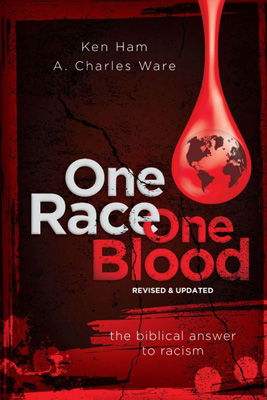
Most people do not realize how intimately connected the popular idea of evolution and the worst racist ideology in history are.
Read Online Buy Book
Master Books has graciously granted AiG permission to publish this book online sequentially. To purchase a paperback or digital copy, please visit our online store.
Footnotes
- Darwin, Origin of Species, chapter 14, 1st edition (1,250 copies; November 23, 1859), 2nd edition (3,000 copies; January 1860).
- Stephen Jay Gould, Ontogeny and Phylogeny (Cambridge, MA: Belknap Press of Harvard University Press, 1977).
- George William Hunter, A Civic Biology Presented in Problems (New York: American Book Company, 1914), 196.
- Natalie Angier, “Do Races Differ? Not Really, DNA Shows,” New York Times, Aug. 22, 2000, https://www.nytimes.com/2000/08/22/science/do-races-differ-not-really-genes-show.html.
- “Tiny Gene Difference Make Us Who We Are,” February 4, 2008, https://www.abc.net.au/science/articles/2008/02/04/2153889.htm.
- William Leonard, “Check Your Race in the Box Below,” The American Biology Teacher 73, no. 7 (2011): 379. doi:10.1525/abt.2011.73.7.2.
- Ibid.
- Lynn B. Jorde and Stephen P. Wooding, “Genetic Variation, Classification and ‘Race,’ ” Nature Genetics 36 (2004): S28–S33. doi:10.1038/ng1435.

Support the creation/gospel message by donating or getting involved!

Answers in Genesis is an apologetics ministry, dedicated to helping Christians defend their faith and proclaim the good news of Jesus Christ.
- Customer Service 800.778.3390
- Available Monday–Friday | 9 AM–5 PM ET
- © 2026 Answers in Genesis