

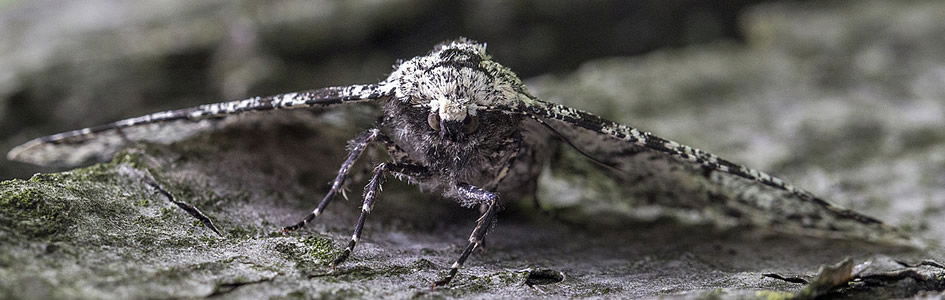
photo by Jerzy Strzelecki, via Wikimedia Commons
Adaptation
Adaptation Not Evolution
Natural selection prefers one lot of information over another, leading to adaptation. However, selection by itself can choose only from what is there—it can’t create new, more complex, functional information needed to transform one type of creature into another.
Peppered Moths
The story of peppered moths has become an almost legendary illustration for natural selection. Millions have been taught that the workings that (allegedly) caused different colored varieties of peppered moths are exactly the same as the workings that (supposedly) produced “goo-to-you” evolution over billions of years.
Evolving Bedbugs?
New studies of bedbug genes offer the latest supposed example of evolution in action. The creatures are now able to survive pesticide applications a thousand times greater than what was lethal just a decade ago.
Rapid Evolution of Lizards
Five adult pairs of the Italian wall lizard were moved from one Croatian island to another in an experiment now revealed to have “shocking” results. When the scientists returned, plenty of “evolution” had happened. So-called “evolution” is possibly just natural selection acting on pre-existing genetic information, helping a population adapt to its surroundings.
Articles About Adaptation
-
Book Chapter1.6 Adaptation and Ecology: The Marvelous Fit of Organisms to Their EnvironmentsFeb. 27, 2016 from Creation: Facts of Life
There are literally thousands of examples of the unique adaptations that suit each type of organism for its special role in the web of life.
-
Lizards Begat LizardsJuly 25, 2013 from News to Know
Evolutionists generally view “live-bearing” as an evolutionary advance over more primitive “egg-laying.”
-
Research PaperConquering CockroachesJune 1, 2013 from News to Know
Is evolution churning out smarter cockroaches skilled at evading and escaping your exterminator’s best tricks?
-
Vipers’ Reproduction Like Virgin Birth at First GlanceOct. 29, 2011 from News to Know
Sperm, or no sperm? That was the question.
-
Giant Crested Rat Painted With Poison Sends Predators PackingAug. 13, 2011 from News to Know
The African crested rat, 14 inches long, would make a hearty meal for predators were it not for its well-advertised deterrent.
-
Unisexual LizardsMay 14, 2011 from News to Know
Unisexual lizard species: evolutionary dead-end or created reproductive strategy?
-
-
Australian Lizard: Live Birth and EggsSept. 4, 2010 from News to Know
A strange Australian lizard that can, apparently, both give live birth and lay eggs: is it evolution “caught in the act”?
-
Feathered Lice: Example of Evolution in Action?Aug. 28, 2010
Are feather lice—like peppered moths—a black-and-white example of evolution in action?
-
June 6, 2009 from News to Know
Rapid evolution—“evolving in ways that would normally take millions of years to play out,” says National Geographic News. How does it confirm the Bible?
-
Peppered moths—back on the agenda?Sept. 3, 2007
Britain’s newspaper, The Independent ran a story on 25th August 2007 that Kettlewell’s famed peppered moth experiments had been vindicated as evidence of evolution occurring in nature.
-
Peppered Moths V. 2.0Sept. 1, 2007
Peppered moth experiments have been repeated and . . . confirmed? More inside.
-
Mustard Plant Adaptation: Evolution or Selection?Jan. 13, 2007
According to US scientists, fast-growing weeds have evolved over a few generations to adapt to climate change.
-
-
Magazine ArticleThe Cat in the CrateSept. 1, 1990, pp. 15–16
Travelling can be tiring. Even a short catnap is welcome if you’re going a long way. But if you’re confined to a small space for a long time, as Mercedes the cat was, there’s not much else to do.
-
Magazine ArticleHow Do Animals Become Resistant to Poisons?Nov. 1, 1980, pp. 5–6
Did you know that many Australian flies are just plain thick? This is not a reflection on the human population of the continent, but a statement of fact.
-
Magazine ArticleCatch 22—Toxotes ChatareusOct. 1, 1979, pp. 35–36
Evolution often presents us with a Catch 22, the belief that the physical characteristics essential for the survival of animals arose by mutation and were fine-tuned by natural selection.
Support the creation/gospel message by donating or getting involved!

Answers in Genesis is an apologetics ministry, dedicated to helping Christians defend their faith and proclaim the good news of Jesus Christ.
- Customer Service 800.778.3390
- Available Monday–Friday | 9 AM–5 PM ET
- © 2026 Answers in Genesis