

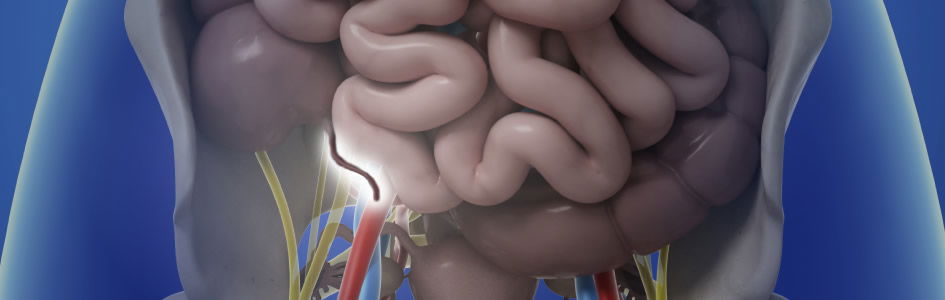
“Vestigial” Organs
The Appendix: Useless Vestige?
The appendix has long been maligned as an obsolete vestigial remnant of digestive evolution. Is it really as worthless as people say, or does it have a purpose after all?
Vestigial Organ Arguments: Useful or Unnecessary?
Do humans really still have 9 Useless Body Parts? From a biblical view accepting God as Creator, we understand vestigial structures are indeed vestiges—“footprints”—but not of a hypothetical, unwitnessed, unproven evolutionary origin. Vestigial structures are actually the “footprints” of embryology and the “footprints” of the efficiently engineered designs of our common Designer, God.
Vestigial Salmon Adipose Fin Actually Useful
Another so-called vestigial organ finds a function. Marine biologists have long thought the “adipose fin” on the back of some fish was vestigial. Located between the dorsal and tail fins, the small adipose fin is often clipped by hatcheries to track the salmon they produce. University of Victoria biologist Tom Reimchen, reasoning that the adipose fin would not persist “for 60 million years unless it had some use,” decided to investigate. He found that removal of the fin forced fish to expend more energy to swim.
Articles About “Vestigial” Organs
-
Technical Research PaperThe Plantaris and the Question of Vestigial Muscles in ManAug. 1, 2000, pp. 50–53
Evolutionists continue to propose a few of our smaller and least understood muscles as being vestiges of once useful organs left over from putative evolutionary ancestors.
-
Technical Research PaperDo Any Vestigial Organs Exist in Humans?Aug. 1, 2000, pp. 95–98
The standard definition of ‘vestigial’ is an organ that once was useful in an animal’s evolutionary past, but that now is useless or very close to useless.
-
Technical Research PaperAre Wisdom Teeth (Third Molars) Vestiges of Human Evolution?Dec. 1, 1998, pp. 297–304
Research now indicates that the reasons for most third molar problems today are not due to evolutionary changes but other reasons.
-
Technical Research PaperThe Human Vermiform AppendixApril 1, 1988, pp. 31–38
The appendix is commonly referred to as a classic example of a vestigial organ.
Support the creation/gospel message by donating or getting involved!

Answers in Genesis is an apologetics ministry, dedicated to helping Christians defend their faith and proclaim the good news of Jesus Christ.
- Customer Service 800.778.3390
- Available Monday–Friday | 9 AM–5 PM ET
- © 2026 Answers in Genesis