

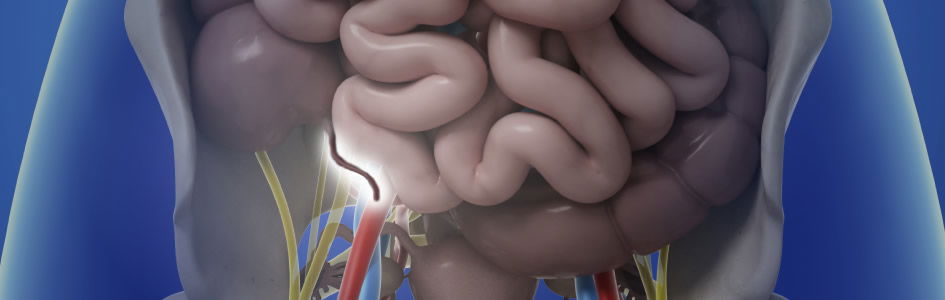
“Vestigial” Organs
The Appendix: Useless Vestige?
The appendix has long been maligned as an obsolete vestigial remnant of digestive evolution. Is it really as worthless as people say, or does it have a purpose after all?
Vestigial Organ Arguments: Useful or Unnecessary?
Do humans really still have 9 Useless Body Parts? From a biblical view accepting God as Creator, we understand vestigial structures are indeed vestiges—“footprints”—but not of a hypothetical, unwitnessed, unproven evolutionary origin. Vestigial structures are actually the “footprints” of embryology and the “footprints” of the efficiently engineered designs of our common Designer, God.
Vestigial Salmon Adipose Fin Actually Useful
Another so-called vestigial organ finds a function. Marine biologists have long thought the “adipose fin” on the back of some fish was vestigial. Located between the dorsal and tail fins, the small adipose fin is often clipped by hatcheries to track the salmon they produce. University of Victoria biologist Tom Reimchen, reasoning that the adipose fin would not persist “for 60 million years unless it had some use,” decided to investigate. He found that removal of the fin forced fish to expend more energy to swim.
Articles About “Vestigial” Organs
-
In-Depth ArticleVestigial Hiccups, Folding Fish-eyes, and Other Fables: Our Fishy Forebears . . . Again!May 18, 2011 from Answers in Depth
Time-lapse photos of a human embryonic face taking shape—unlike Haeckel’s fraudulent woodcuts—are authentic. But not even those assembled photos can peer back through time to prove evolution.
-
In-Depth ArticleSetting the Record Straight on Vestigial OrgansMay 28, 2008 from Answers in Depth
In a recent article, New Scientist discusses five supposed vestigial organs in the human body, but as Dr. David DeWitt shows, there’s more to the story than evolutionists will admit.
PDF Download
Support the creation/gospel message by donating or getting involved!

Answers in Genesis is an apologetics ministry, dedicated to helping Christians defend their faith and proclaim the good news of Jesus Christ.
- Customer Service 800.778.3390
- Available Monday–Friday | 9 AM–5 PM ET
- © 2026 Answers in Genesis